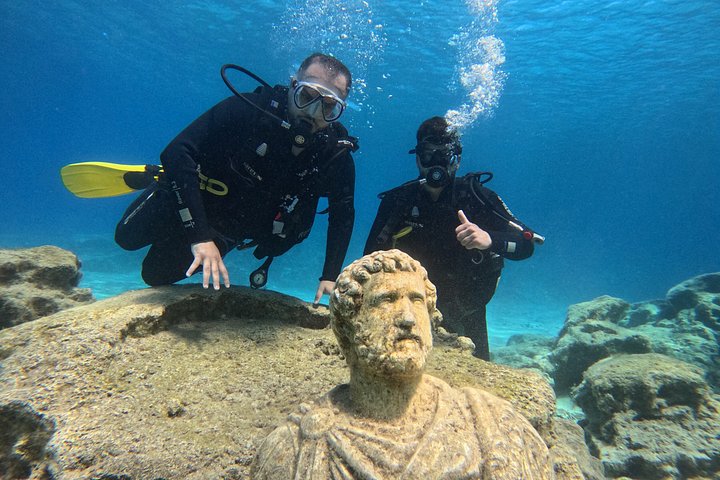
Cyprus has some of the calmest, clearest water in the Mediterranean, and the east coast around Ayia Napa and Protaras is where many first-time divers take their first breaths underwater. This discover scuba experience at the Green Bay statues is built for complete beginners: you get a briefing on the shore, a walk through the basic skills in shallow water with an instructor, and then a guided dive to a site where sculptures sit on the seabed, so there is something to look at as well as the fish. It is rated 4.9 from more than 500 reviews on the Ayia Napa activity page, which makes it one of the most consistently praised experiences in the area. This is a good choice if you have always wondered what diving feels like but do not want to commit to a full course. The depth stays shallow, the instructor stays close and the equipment is provided. You will need to be reasonably comfortable in water and able to follow simple instructions, and age and health rules apply, so read the requirements on the ticket page for your date. It is not a snorkelling trip: you breathe underwater through the regulator, which is the whole point. The water is warmest in late summer and cooler in winter, when a thicker wetsuit is used and visibility can still be very good. Because conditions depend on the sea, trips can be rescheduled when the weather turns, which is worth keeping in mind on a short stay.
How it works
You book a time slot and meet the dive centre at the stated meeting point. Expect a short briefing on equipment and hand signals, a practice session in shallow water, and then the dive itself, usually with a small group and an instructor for each pair or small set of divers. Check the exact timing, what is included and the minimum age on the ticket page, because these differ from operator to operator and season to season.
What to expect
You will be surprised how quickly the nervousness fades. The first minutes are about breathing and equalising your ears, then you glide along the bottom, with the statues and the marine life as the reward. Photographs are often available as an extra, so ask beforehand if you want them. You can usually go back to the surface at any moment if you feel uncomfortable, and the instructor keeps a close eye on everyone.
Making the most of it
Eat lightly beforehand, do not dive on the same day as a flight, and tell the instructor about any ear, sinus or heart problems. Bring a swimsuit, a towel and sun protection, and wear a warm layer for after the dive in cooler months. If you enjoy it, ask about a full open-water course, which can be started in Cyprus and completed on later trips.
What to expect
The experience
A guided discover scuba dive for beginners, with a shore briefing, skills practice in shallow water and a dive among underwater statues.
Best time
Late spring to autumn has the warmest water; winter dives are possible with a thicker wetsuit, and weather can cause rescheduling.
How long
A few hours in total, including the briefing, practice and the dive itself.
Tips
Eat lightly, avoid diving on the day of a flight, and tell the instructor about any ear, sinus or heart conditions.
Quick picks
- Best for
- Adventurous beginners who want to try scuba diving without a full course.
- Families
- Suitable for older children and teenagers who meet the minimum age; check the requirements for your date.
- Couples
- A memorable shared first, especially in the warm months.
- Pair with
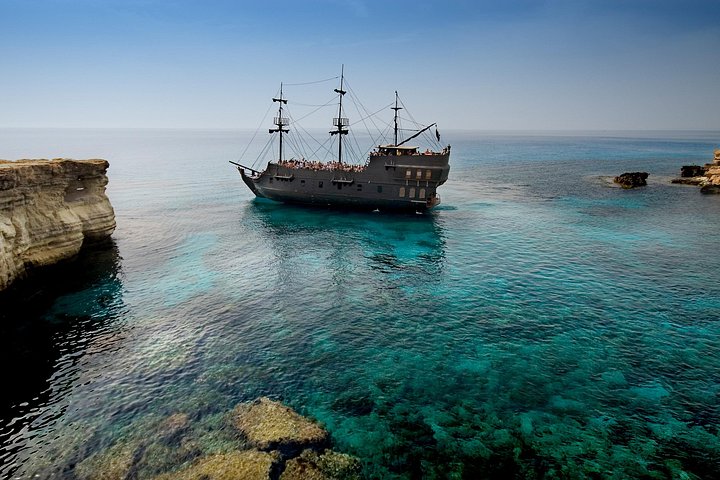
- A walk in Cape Gkreko National Forest Park or a pirate cruise from Ayia Napa harbour.
- Time needed
- Half a day, including the briefing and getting to the east coast.
Good questions
Do I need to be certified?+
No. This is a discover scuba experience for complete beginners, with all equipment and an instructor provided.
How deep do we go?+
Discover dives stay shallow and are designed for newcomers. Your instructor will confirm the depth and the plan during the briefing.
Can I dive in winter?+
Often yes, with a thicker wetsuit, but the sea is cooler and trips may be rescheduled in rough weather. Check availability for your dates.
What should I bring?+
A swimsuit, a towel, sun protection and a warm layer for after the dive. Most equipment is provided by the dive centre.
Can I fly after diving?+
Avoid flying on the same day as a dive, and follow your instructor’s advice on the recommended gap.