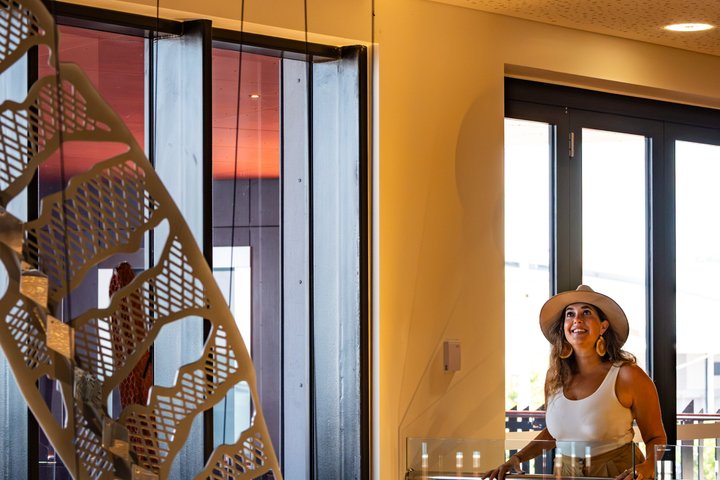
Darwin sits on Larrakia country, and the Larrakia Cultural Centre is a way to understand the people and the place before you head to Kakadu or Litchfield. The centre is run by the Larrakia Nation, the organisation that represents the Larrakia people, and a guided tour offers insight into their history, language, art and ongoing connection to land and sea. It is a more personal view than most museums, because the stories come from people with a direct link to the country. For visitors, the tour fills in a gap that many miss: that Darwin is not just a frontier city but one of the oldest continuously inhabited places on earth. It is a small, thoughtful stop that rewards curiosity and respect.
The tour typically begins with an introduction to Larrakia identity and the long history of the people around Darwin Harbour. Guides talk about the seasons, bush foods, fishing and the way families moved across the landscape. They also address the impact of colonisation, the wartime years and the cyclone that reshaped the city, and the continuing efforts of the Larrakia people to maintain culture and language. You are encouraged to ask questions, and guides welcome genuine interest. The experience works best when approached with openness and a willingness to listen.
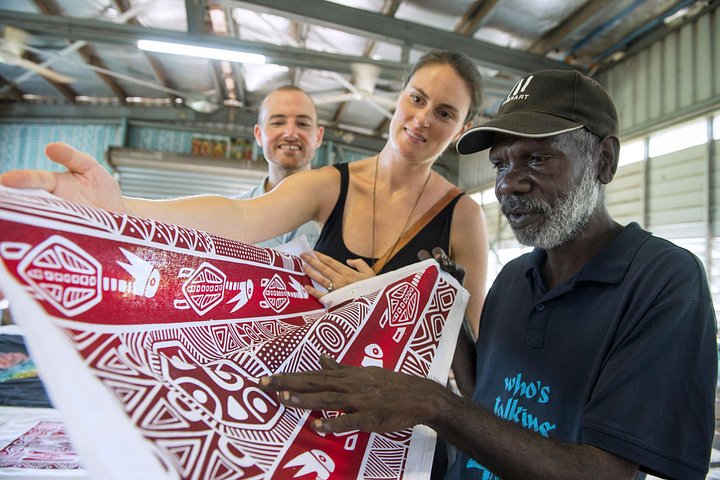
Art is an important part of the visit. The centre displays works by local artists, with designs that reflect saltwater country, ancestral beings and daily life. Depending on the day, you may see weaving, painting or other crafts in progress. Purchasing art or crafts supports the community and gives you a meaningful souvenir that is more authentic than mass-produced items. If you are interested in Aboriginal art in general, this is a good counterpart to the rock art at Kakadu, since it shows how traditions continue and evolve.
Practical advice
Check opening days and tour times before you go, as small community-run organisations often have limited schedules. Wear comfortable clothing and bring water, especially in the hot months. The tour is suitable for most ages, though younger children may find the commentary slow. If you only have a day or two in the city, pair the visit with the Museum and Art Gallery of the Northern Territory, which has a major Aboriginal art collection, and the Bombing of Darwin heritage tour for a layered picture of the city's past.
Many visitors find that this tour is one of the most memorable parts of their stay, because it turns a stopover into a conversation. Be respectful, ask before taking photographs of people or artworks and follow any guidance from your guide about sensitive material.
What to expect
The experience
A guided visit to a Larrakia-run cultural centre with stories, art and conversation about the people of the Darwin area.
Best time
Any dry-season day; check opening days and tour times ahead.
How long
One to two hours.
Tips
Ask questions with respect, check before photographing people or artworks, and consider buying art directly to support the community.
Quick picks
- Best for
- Anyone who wants to understand whose country Darwin sits on.
- Families
- Suitable for school-age children, though younger ones may find it slow.
- Couples
- A quiet, thoughtful stop for couples interested in culture.
- Pair with
- The Museum and Art Gallery of the Northern Territory and Kakadu rock art.
- Time needed
- A morning or afternoon.
Good questions
Who are the Larrakia?+
The Larrakia are the Traditional Owners of the Darwin area, with a long connection to the land and the harbour.
Is the tour led by Aboriginal guides?+
The centre is run by the Larrakia Nation and the tours offer Larrakia perspectives. Check the tour description for details.
Can I buy art?+
Yes, when available. Buying directly supports the community and artists.
Is it suitable for children?+
Yes, for school-age children, though the pace is slower than a wildlife park.
How does it connect to Kakadu?+
It provides local context. Kakadu is the country of other Aboriginal groups, but this tour helps visitors appreciate the continuity of culture across the Top End.