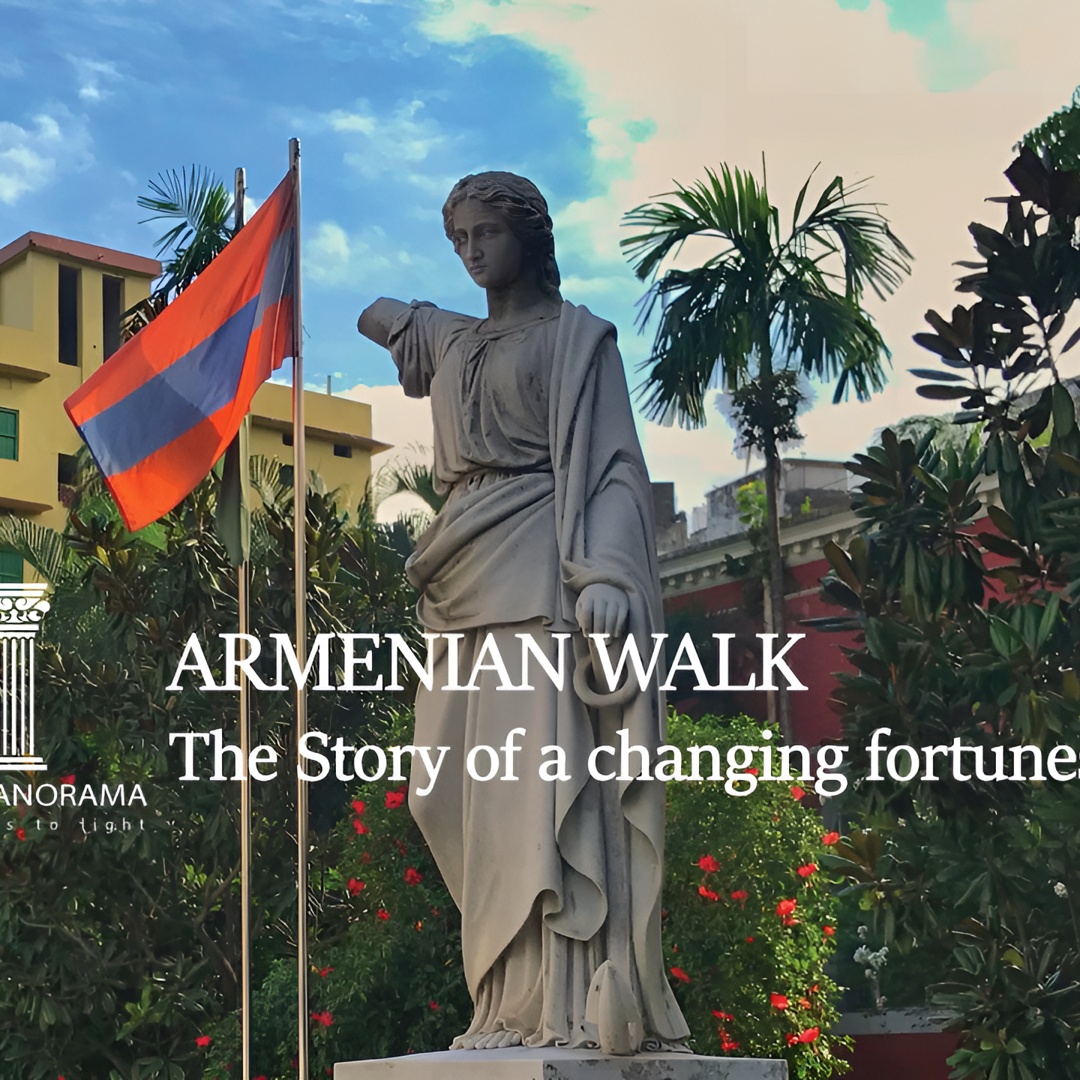
Armanitola takes its name from the Armenian merchants who settled in Dhaka from the seventeenth century, trading in jute, leather and cloth and building one of the most distinctive communities in the old city. Their surviving landmark is the Armenian Church of the Holy Resurrection, finished in 1781, a white colonial-style church set in a quiet garden behind high walls. Inside the grounds are old tombstones carved with Armenian inscriptions, and the church interior carries a simple dignity that contrasts sharply with the streets outside. The community has all but vanished, and the site is looked after by a small caretaker group. The guided walk titled The Story of a Changing Fortune follows these traces through the neighborhood, linking the church to the lanes, houses and trade routes that shaped Armanitola. It is a quieter, more reflective Old Dhaka experience than the dockyards or food streets, and a perfect complement to them.
The story is worth the walk. Armenians arrived in Bengal as traders and brokers, and by the eighteenth century they were prominent in the commercial life of Dhaka. Their church became a center of community life, with a burial ground that holds the graves of merchants and their families.
Walking among the stones, you meet names and dates that tell a story of migration, fortune and decline. The guide fills in what the stones cannot: why the community came, what they traded and how the neighborhood changed after partition and the loss of their commercial base.
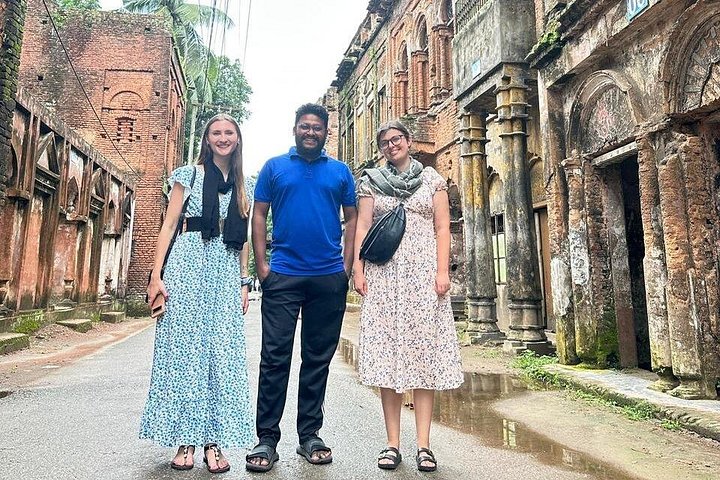
The walk usually extends beyond the church into the surrounding lanes. You pass old residential buildings with colonial-era details, small workshops and tea stalls, and the Star Mosque is a short stroll away. The pace is slow and conversational, and the tour is a good fit for travelers who prefer stories to sights. Wear comfortable shoes and carry water, as the walk is on foot through busy streets.
Church etiquette is simple
Dress modestly, keep your voice low and ask before photographing inside. The grounds may have limited opening hours and access sometimes depends on a caretaker, so a guide's help is genuinely useful. Combine the visit with a food stop in the neighborhood and the Star Mosque to build a half-day around Armanitola. The experience is especially rewarding for history lovers, writers and photographers who appreciate small places with big stories, and it shows a more cosmopolitan side of the old city that many visitors never see.
Take a moment in the churchyard to read the inscriptions you can and to notice the care with which the grounds are kept. The silence is unusual for Dhaka and offers a rare place to sit and reflect. Afterward, a cup of tea at a nearby stall lets you watch the neighborhood go by and ties the story of the Armenian merchants to the living city around you.
Bring a notebook or use your phone to record the names on the tombstones that interest you, as they make good starting points for reading about the community later at home or in a library. Take your time, speak softly and let the garden set the pace; the hour you spend here is often remembered as the calmest of the whole Dhaka stay.
What to expect
The experience
A guided walk through Armanitola that includes the Armenian Church and the surrounding lanes.
Best time
Morning, when the lanes are quieter and the light is soft.
How long
Two to three hours; confirm with the operator.
Tips
Wear comfortable shoes, dress modestly and ask before photographing inside the church grounds.
Quick picks
- Best for
- History lovers who want the quieter, more human side of Old Dhaka.
- Families
- Suitable for older children who like stories; younger ones may tire on foot.
- Couples
- A thoughtful, low-key walk with plenty of photo moments.
- Pair with
- The Star Mosque, Ahsan Manzil and an Old Dhaka food stop.
- Time needed
- Two to three hours.
Good questions
Who were the Armenians of Dhaka?+
Merchants who settled from the seventeenth century and traded in jute, leather and cloth. The neighborhood Armanitola is named for them.
When was the church built?+
The Armenian Church of the Holy Resurrection was completed in 1781.
Is the church open to visitors?+
Usually, with a caretaker's help. Hours can vary, so a guide is useful.
What else is nearby?+
The Star Mosque and Ahsan Manzil are both within a short ride.
Is there a community left?+
Very few Armenians remain; the site is looked after by a small caretaker group.