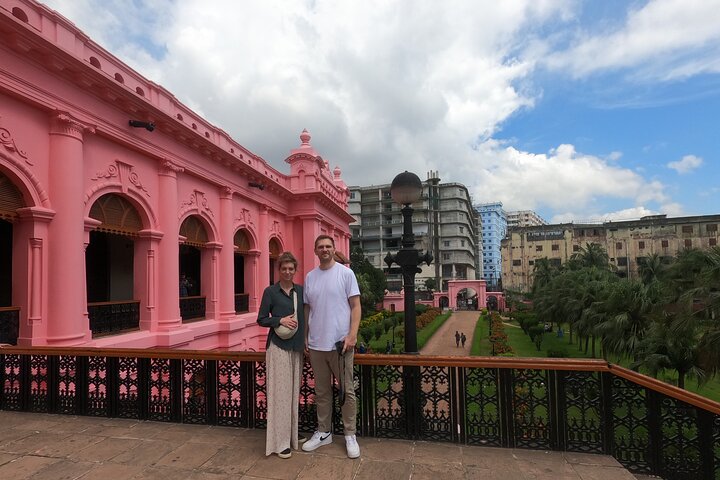
Lalbagh Fort is the Mughal capital's great unfinished project. Construction began in 1678 under Prince Muhammad Azam, son of the emperor Aurangzeb, who was recalled before the walls were completed. His successor as governor, Shaista Khan, continued parts of the work, but the fort was never fully finished, which is partly why it feels more like a walled garden than a military stronghold. Inside the compound three structures survive in good order: the Tomb of Pari Bibi, the small domed resting place of Shaista Khan's daughter; the Lalbagh Fort Mosque, a three-domed prayer hall in the Mughal manner; and the Diwan-i-Aam, the hall of public audience that now holds a small museum. A quiet central pathway, reflecting pools and mature trees tie them together, and the lawns are a favorite with local families, school groups and photographers. The tomb is the star, with its marble interior and its history of local legend. The guided day tour from Dhaka folds the fort into a wider Old Dhaka route, so the context arrives with the stones: the Buriganga waterfront, the Pink Palace and the shipyards are the other stops the tour's name promises.
The advantage of seeing Lalbagh with a guide is sequencing. The fort sits at the southwestern edge of the old city, a short ride from the river, and most visitors approach through lanes so crowded that a driver who knows the turns matters. Go early in the day: the compound is calmer, the light on the mosque domes is better and the heat is easier.
A guide will explain what is original and what was restored, and will point out the elements that catch the eye only once named, such as the layered gateway, the stepped water features and the way the tomb chamber was divided into rooms for a family member rather than a ruler.
Allow roughly an hour inside the fort itself. The small museum in the council hall holds Mughal-era artefacts, coins, arms and paintings, and the mosque is open to respectful visitors outside prayer times with covered shoulders and knees. The complex is generally closed one day a week and has set opening hours, so confirm both with the operator when you book. Wear shoes that slip on and off easily, carry small notes for entry and tips, and bring water, because shade is limited between the buildings.
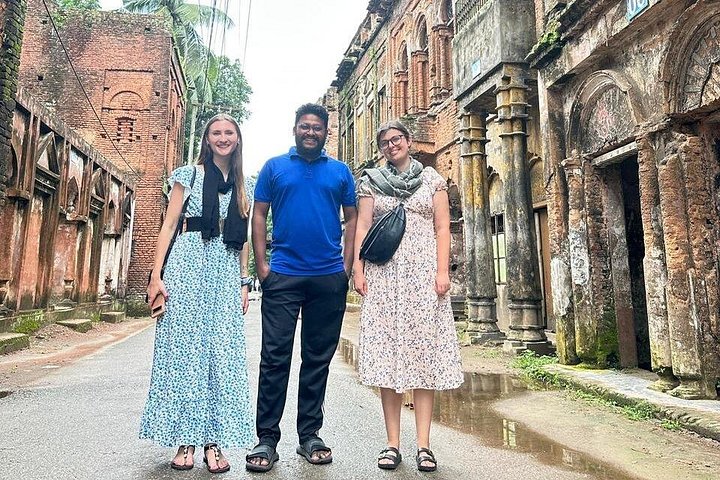
The rest of the day stitches the quarter together: the Pink Palace by the river, the sensory storm of the dockyards and the streets between them, where rickshaws, hand-pulled carts and delivery boys share the same few metres. It is an intensive way to meet the old city, and the route is paced so that a first-time visitor is not left alone with the crowds. Travelers who prefer to wander can still use the fort as an anchor, since many of Old Dhaka's best food streets and the Armenian Church are within a short rickshaw ride of its gate.
One more tip
The fort is a favorite with local school groups and families on weekends, so a weekday visit feels quieter and gives cleaner photographs of the tomb and the mosque.
What to expect
The experience
A private guided day through Old Dhaka that combines Lalbagh Fort with the Pink Palace and the riverside shipyards.
Best time
Start early, ideally by mid-morning, and avoid the hottest hours; the winter months of November to February are the most comfortable.
How long
A full day; allow about an hour inside the fort itself.
Tips
Dress modestly, carry small notes and water, and confirm the fort's weekly closing day with the operator.
Quick picks
- Best for
- First-timers and history lovers who want Old Dhaka explained rather than endured.
- Families
- Workable with older children who can handle heat and crowds; the lawns give younger ones room to run.
- Couples
- A strong shared day, with the garden setting offering quiet moments between busy streets.
- Pair with
- The Pink Palace, the Armenian Church and an Old Dhaka food tour.
- Time needed
- A full day for the tour, or about an hour for the fort alone.
Good questions
Who built Lalbagh Fort?+
Work began in 1678 under Prince Muhammad Azam and was continued by the governor Shaista Khan, but the fort was never fully completed.
What is inside the compound?+
The Tomb of Pari Bibi, a three-domed mosque and the Diwan-i-Aam, which houses a small museum, set among lawns and water channels.
Can I enter the mosque?+
Respectful visitors can usually enter outside prayer times. Cover shoulders and knees and remove your shoes.
Is the fort open every day?+
There is usually one weekly closing day and set hours, so check with the operator before you commit to a date.
Is a guide necessary?+
Not required, but a guide gives context on what is original, and the tour handles the Old Dhaka traffic for you.