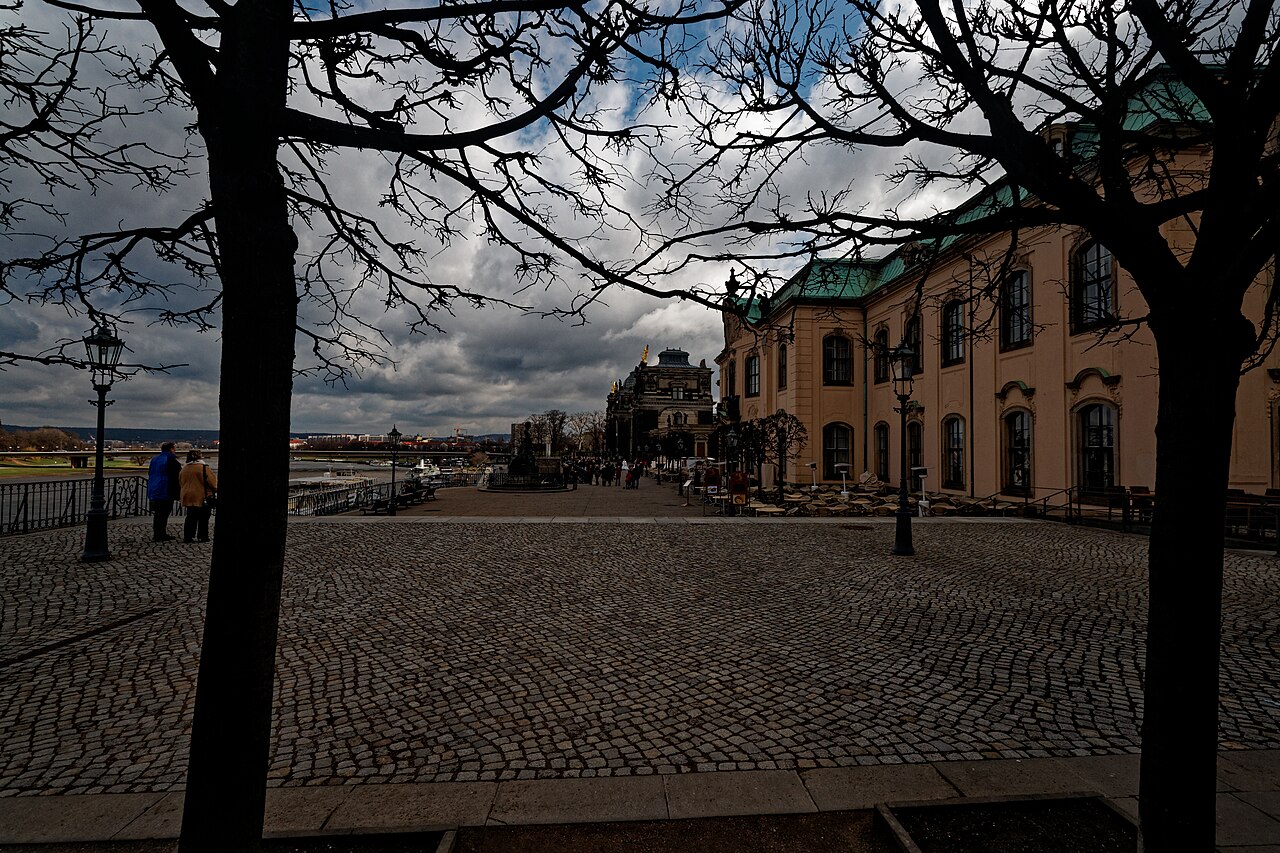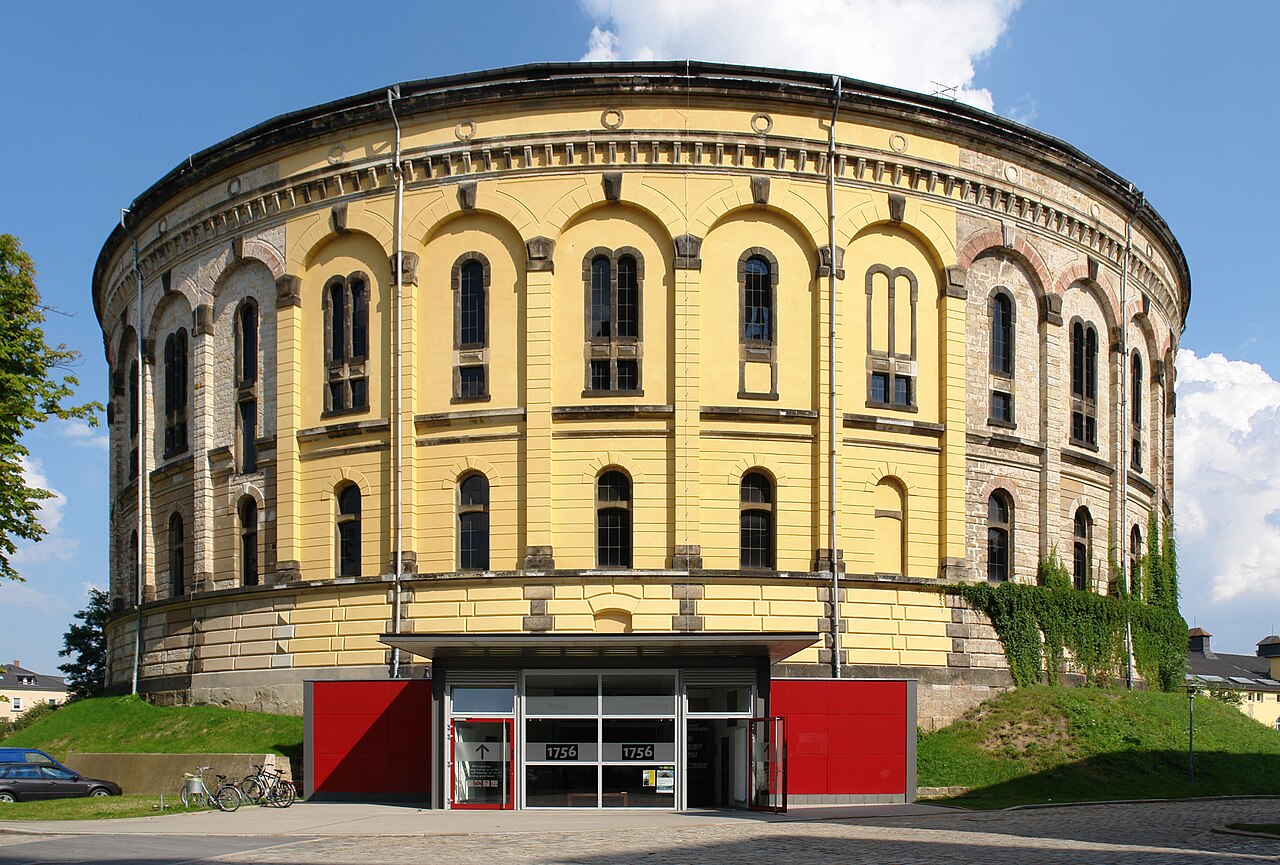
The Albertinum is where Dresden keeps its art from the nineteenth century onwards, and it is the natural counterweight to the Baroque treasures elsewhere in the city. The building began life as the Saxon arsenal and sits on Brühl’s Terrace beside the Elbe, with its entrance on Georg-Treu-Platz. After the 2002 flood, which filled the lower floors and depots, it was rebuilt and reopened in 2010 with a glass-roofed courtyard, new galleries and deep storage beneath. Two big collections share the house. The New Masters Gallery (Galerie Neue Meister) shows painting and sculpture from Romanticism to the present day, with Caspar David Friedrich’s moonlit and misty landscapes at the start, Dresden Impressionists and the Brücke Expressionists in the middle, and Otto Dix and Gerhard Richter in the later rooms. The Sculpture Collection (Skulpturensammlung) covers a far longer span, from ancient Greek and Roman marble to Rodin and the sculptors of the twentieth century. The Gerhard Richter Archive, held here by the State Art Collections, adds study material on one of the most important living painters, who grew up in and around Dresden.
How to visit
The Albertinum belongs to the State Art Collections Dresden, so tickets are sold on the day at the desk or online, and a combined ticket for several Dresden museums is available. Like most of the city’s major museums it has a weekly closing day, generally Monday, and special exhibitions can change the opening pattern, so check the calendar for your date.
The entrance is on Georg-Treu-Platz at the back of the building, on the Old Town side, a short walk from the Frauenkirche and the Brühl’s Terrace steps. The building has lifts, and the glass-roofed Lichthof courtyard is a good place to orient yourself before heading to the floors you want.
What to expect
Allow two hours for one collection and three or more for both. The paintings are hung in a way that tells the story of German art in chapters, so you can follow the line from Friedrich’s solitary figures looking out over mist, through the colour of Kirchner and the Brücke painters, to Dix’s war works and the cool grey and photo-based paintings of Richter.
Many of the pieces here, including the Dix war triptych, are among the most reproduced images of the twentieth century and are much smaller or larger in person than you expect. The sculpture galleries are quieter, with rooms of ancient figures and portrait busts, and they reward a slow pace. Contemporary works often rotate, so a revisit can feel different.
Making the most of it
Go in the morning, when the Terrace outside is quiet, and finish with coffee and a view over the river. The museum is a good rainy-day plan and pairs naturally with the Zwinger Old Masters Gallery, since together they cover most of Western painting from the Renaissance to the present in one walkable afternoon.
If you only have time for one picture, make it a Friedrich, which is the clearest link between this museum and the city’s Romantic painters. Ask at the desk about guided tours and audio guides, and check whether a combined museum ticket suits your plans before paying for single entries.
What to expect
The experience
Two major art collections in a rebuilt arsenal on Brühl’s Terrace, with ticketed entry and a weekly closing day.
Best time
A weekday morning, when the galleries are quiet and the Terrace outside is calm.
How long
Two hours for one collection, three or more for both.
Tips
Check the calendar for the weekly closing day and for exhibition changes, and use the Georg-Treu-Platz entrance.
Quick picks
- Best for
- Art lovers who want German painting from Romanticism to Richter and a strong sculpture collection.
- Families
- Older children like the big, bold twentieth-century works, while younger ones tire quickly in the quiet rooms.
- Couples
- A rainy-afternoon museum visit followed by a drink on Brühl’s Terrace.
- Pair with
- The Zwinger Old Masters Gallery and the Frauenkirche, both a few minutes on foot.
- Time needed
- Two to three hours.
Good questions
What is in the Albertinum?+
It houses the New Masters Gallery, with art from Romanticism to the present, and the Sculpture Collection, with works from antiquity to today. The Gerhard Richter Archive is also based here.
Where is the Albertinum?+
It stands on Brühl’s Terrace on the Elbe in the Old Town, with its entrance on Georg-Treu-Platz. It is a short walk from the Frauenkirche and the Zwinger.
Is the Albertinum open on Mondays?+
Dresden’s State Art Collections museums generally have a weekly closing day, and for the Albertinum this is usually Monday. Check the calendar for your date, since exhibitions and holidays change the pattern.
Which artists can I see at the Albertinum?+
Highlights include Caspar David Friedrich, the Brücke Expressionists, Otto Dix and Gerhard Richter, plus sculpture ranging from ancient marbles to Rodin.
How long does the Albertinum take?+
Plan on two hours for one collection and three or more if you want both. Free time after the museum is easy to fill on the Terrace outside.