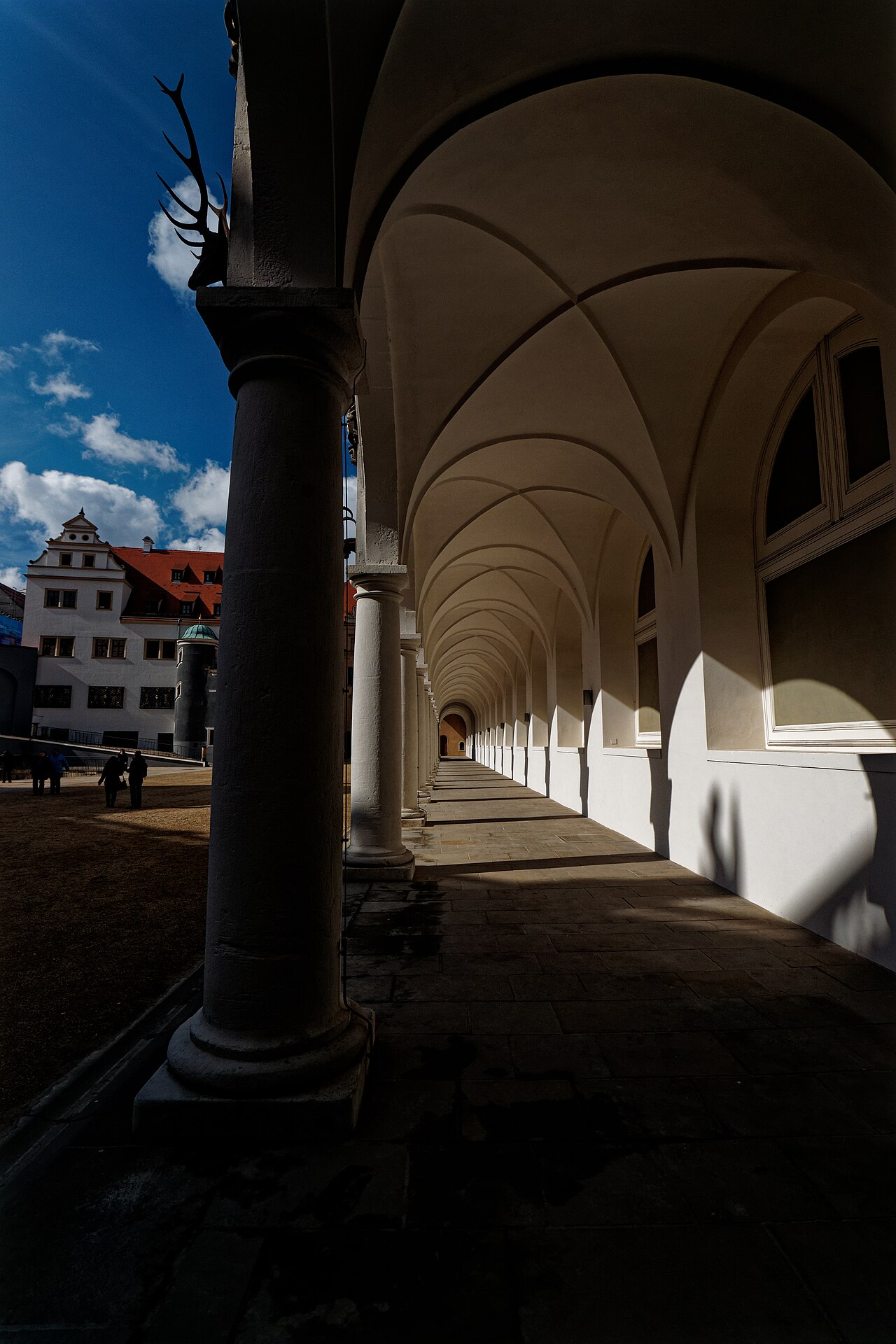
The Fürstenzug is one of the largest murals in the world and one of the quietly astonishing sights in the Old Town. It runs for about 102 metres along the outer wall of the Stallhof, on Augustusstrasse beside the Residenzschloss, and shows the rulers of Saxony in a long procession on horseback, from Margrave Konrad of Meissen in 1127 through to Friedrich August III, the last king, with scholars, artists, craftsmen and soldiers following at the end. The work began in the 1870s as a sgraffito mural, painted by Wilhelm Walther, but it weathered quickly, and between 1904 and 1907 the design was reproduced on Meissen porcelain tiles, around 25,000 of them, which have lasted far better and mostly survived the bombing in 1945. Behind the wall, the Stallhof is a Renaissance courtyard built in the sixteenth century for the electors’ stables and later used for tournaments, with arcades whose columns carried the saddles and the horses’ names. Together they form a short, free stop in the middle of the historic centre that adds depth to every other visit.
How to visit
The mural is outdoors and free, on Augustusstrasse between the Schlossplatz and the Neumarkt, a minute from the Frauenkirche, and can be seen at any hour. The Stallhof courtyard is also free, and it is open to the public on most days, though its use for events, concerts and the Advent market can affect when you can walk through. The Green Vault in the Residenzschloss is just around the corner, so you may already be passing it on the way.
What to expect
Allow fifteen to thirty minutes. The rulers are shown in order, and the figures are named on the wall, so you can trace the Wettin line from the twelfth to the twentieth century, including Augustus the Strong, whose figure is among the best known. At the end of the procession you will see portraits of scientists, craftsmen, farmers and others, a reminder that the work is a celebration of the whole society as well as the rulers.
The tiles are glazed, so the colours are strongest in sunlight, and the scale is easiest to appreciate if you stand at one end and look along the wall. In the Stallhof, look up at the arcades and the long gallery that connects the stables to the castle.
Making the most of it
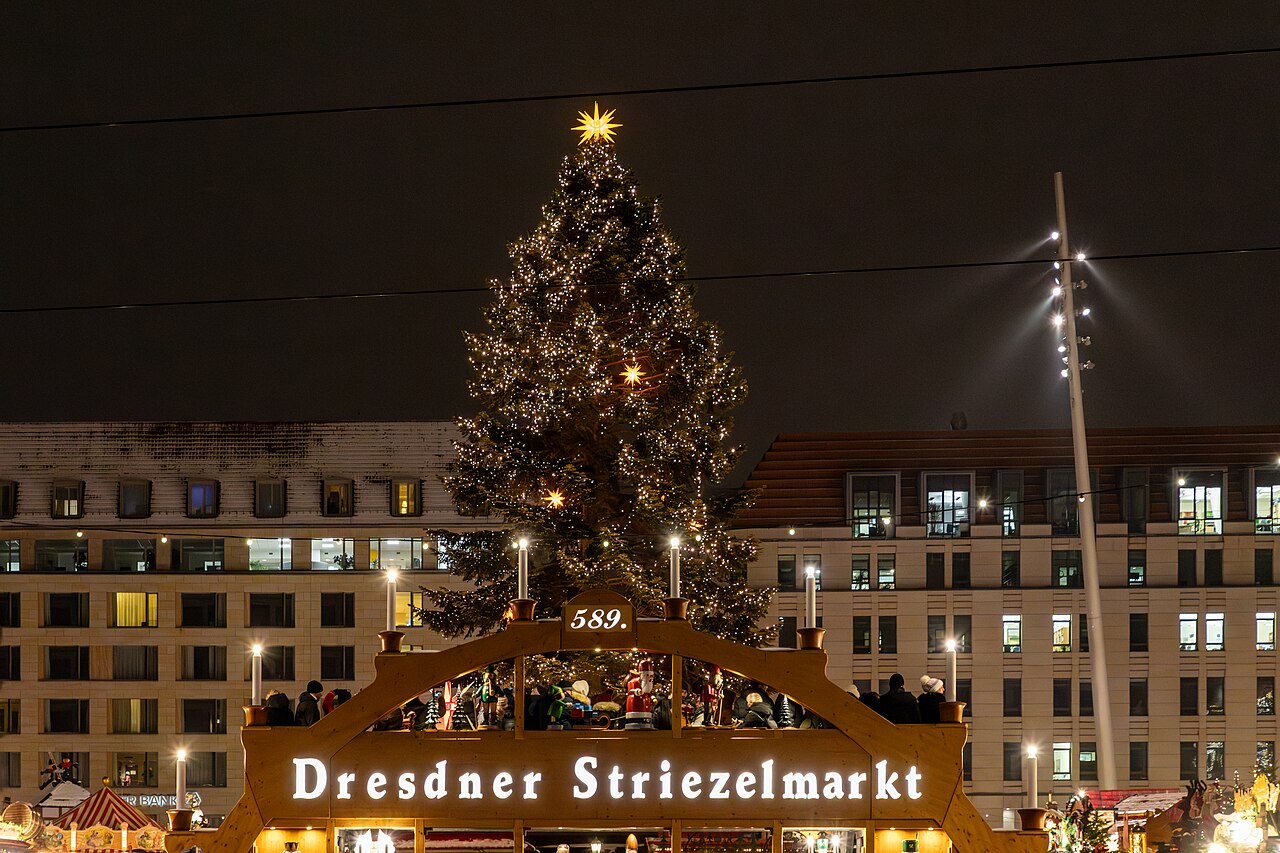
Visit in the morning or on a bright day when the light is on the wall, and combine the stop with the Residenzschloss, the Zwinger and the Frauenkirche for an Old Town circuit. In the Advent season the Stallhof usually hosts a medieval-style market, which adds atmosphere, so check the dates if you come in winter. Guides often stop at the mural on city walks, and a short explanation of the figures adds a lot, so listen in if you pass a group.
The wall is long, so take a few minutes at each stage, and keep an eye out for details in the horses and costumes. It is a quick stop, but one that rewards patience. A pair of binoculars is not needed, but a short guidebook or a phone with a list of the rulers helps you recognise the figures, and an evening visit, when the wall is quiet, gives a more reflective view of the procession.
What to expect
The experience
A free outdoor mural, 102 metres long, beside a Renaissance courtyard in the Old Town.
Best time
Morning or a bright day, when the sun lights the tiles.
How long
Fifteen to thirty minutes.
Tips
Walk its full length, look for Augustus the Strong, and check the Stallhof for events or the Advent market.
Quick picks
- Best for
- Everyone on an Old Town walk; it is free, quick and memorable.
- Families
- Children can look for the horses and the different costumes along the wall.
- Couples
- A short stop on an evening stroll between the Frauenkirche and the Zwinger.
- Pair with
- The Residenzschloss, the Frauenkirche and Brühl’s Terrace.
- Time needed
- Fifteen to thirty minutes.
Good questions
What is the Fürstenzug?+
It is a 102-metre mural of the Wettin rulers of Saxony on the outer wall of the Stallhof in Dresden’s Old Town.
What is it made of?+
It was painted as sgraffito in the 1870s and then reproduced between 1904 and 1907 on around 25,000 Meissen porcelain tiles.
Is the Fürstenzug free?+
Yes, it is outdoors on Augustusstrasse and can be seen at any time.
Did it survive 1945?+
Most of the porcelain tiles survived the bombing, though the wall needed repair and restoration afterwards.
What is the Stallhof?+
It is a Renaissance courtyard built for the electors’ stables, later used for tournaments and today for events and the Advent market.