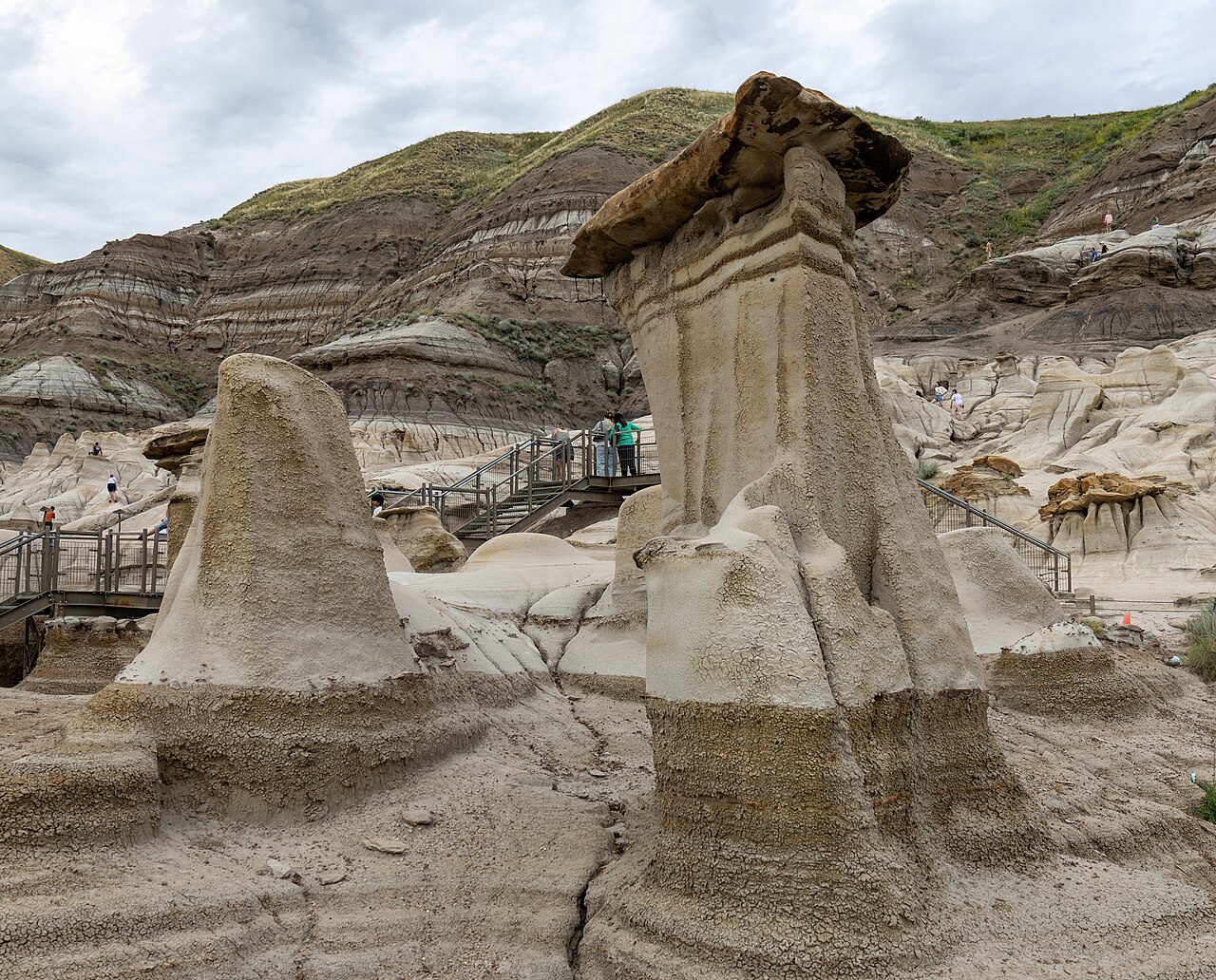
The Hoodoos are one of Alberta's best-known geological formations, a cluster of mushroom-shaped sandstone pillars standing beside the road between Drumheller and East Coulee. Each column is topped by a harder cap of rock that has shielded the softer sandstone beneath it, while wind and rain have worn the rest away over thousands of years. Travel Drumheller describes the pillars as five to seven metres tall, and the site is a protected viewing area with pathways and information boards. Cacti grow on the dry slopes around them, which surprises many visitors who expect only prairie grass. The stop is about fifteen minutes east of Drumheller on Highway 10, and you can see the formations well in half an hour. It is free to look, although there are mixed signals about a small parking charge.
What to do
Walk the marked pathways, read the boards and take photographs from the viewing areas. The light is best in the morning and evening, when the pillars glow orange against the sky, and snow gives them a completely different look in winter. Children enjoy spotting the shapes, and the stop is short enough that it never drags.
Practical planning
The single most important rule is that visitors may not climb the hoodoos, because the sandstone is very fragile year-round and every touch speeds up erosion. Stay on the designated pathways, follow posted signs and keep the area clean. Hours and fees are not published in a form we could confirm, so carry a little cash for parking in case, and wear shoes with grip, since paths can be icy in the cold months. The site has few facilities, so bring water and use the washroom in town beforehand.
Fitting it in
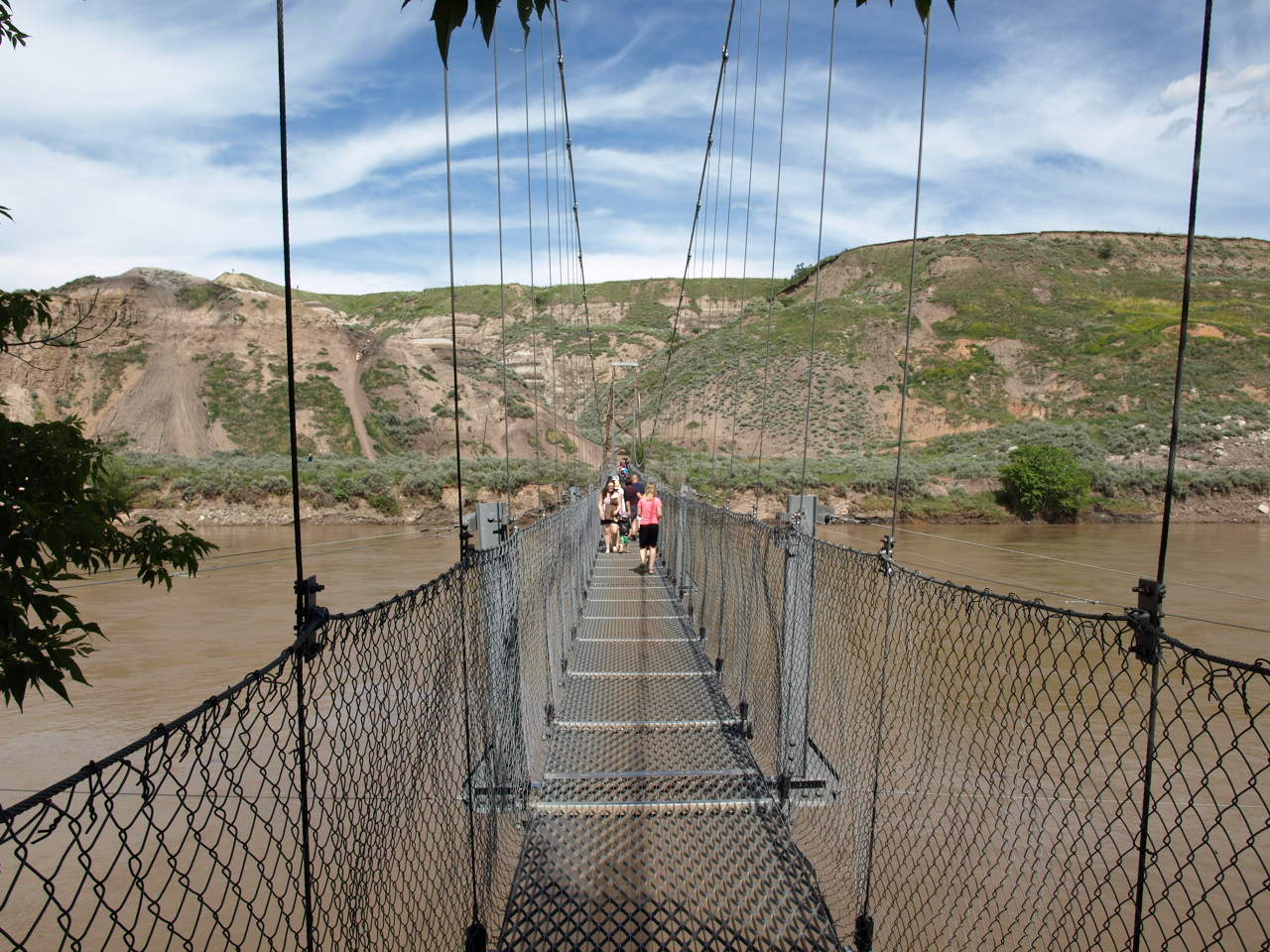
The Hoodoos sit on the road to East Coulee, where the Atlas Coal Mine National Historic Site stands. The mine is closed for the season and reopens in May 2027, apart from its Christmas in the Coulee evenings in early December, so in November this is a stop in its own right. Pair it with the Rosedale Suspension Bridge on the same side of town, or with a drive on to East Coulee for the scenery.
What to expect
The experience
A short, self-guided walk along pathways at a protected roadside viewing area, with information boards and no climbing.
Best time
Early morning or late afternoon, when low light turns the pillars orange, or after a dusting of snow for a different look.
How long
Thirty to forty-five minutes is enough for the paths and plenty of photographs.
Tips
Stay on the pathways, never climb the pillars, wear shoes with grip in the cold months and bring water because facilities are limited.
Quick picks
- Best for
- Photographers and anyone who wants a quick, memorable look at the badlands' strangest formations.
- Families
- Children love the shapes, but keep them on the paths and explain early that the pillars are fragile.
- Couples
- Come near sunset for warm light and quiet, then drive back to town for dinner.
- Pair with
- The Rosedale Suspension Bridge and a drive on to East Coulee fit well on the same side of town.
- Time needed
- About half an hour.
Good questions
Where are the Hoodoos?+
They are about fifteen minutes east of Drumheller on Highway 10, on the road to East Coulee. The address used by Travel Drumheller is Coulee Way.
Can I climb on them?+
No, climbing is not permitted. The sandstone is very fragile year-round, so stay on the designated pathways.
How tall are the Hoodoos?+
Travel Drumheller describes the pillars as five to seven metres tall. Each one is capped by harder rock that protects the softer sandstone below.
Do I have to pay?+
Looking at the hoodoos is free, although sources disagree about a small parking fee, so carry a little cash. Check the Travel Drumheller page before you go.
Is it worth visiting in winter?+
Yes, snow gives the pillars a different look and the stop is short. Wear grip shoes because the paths can be icy.