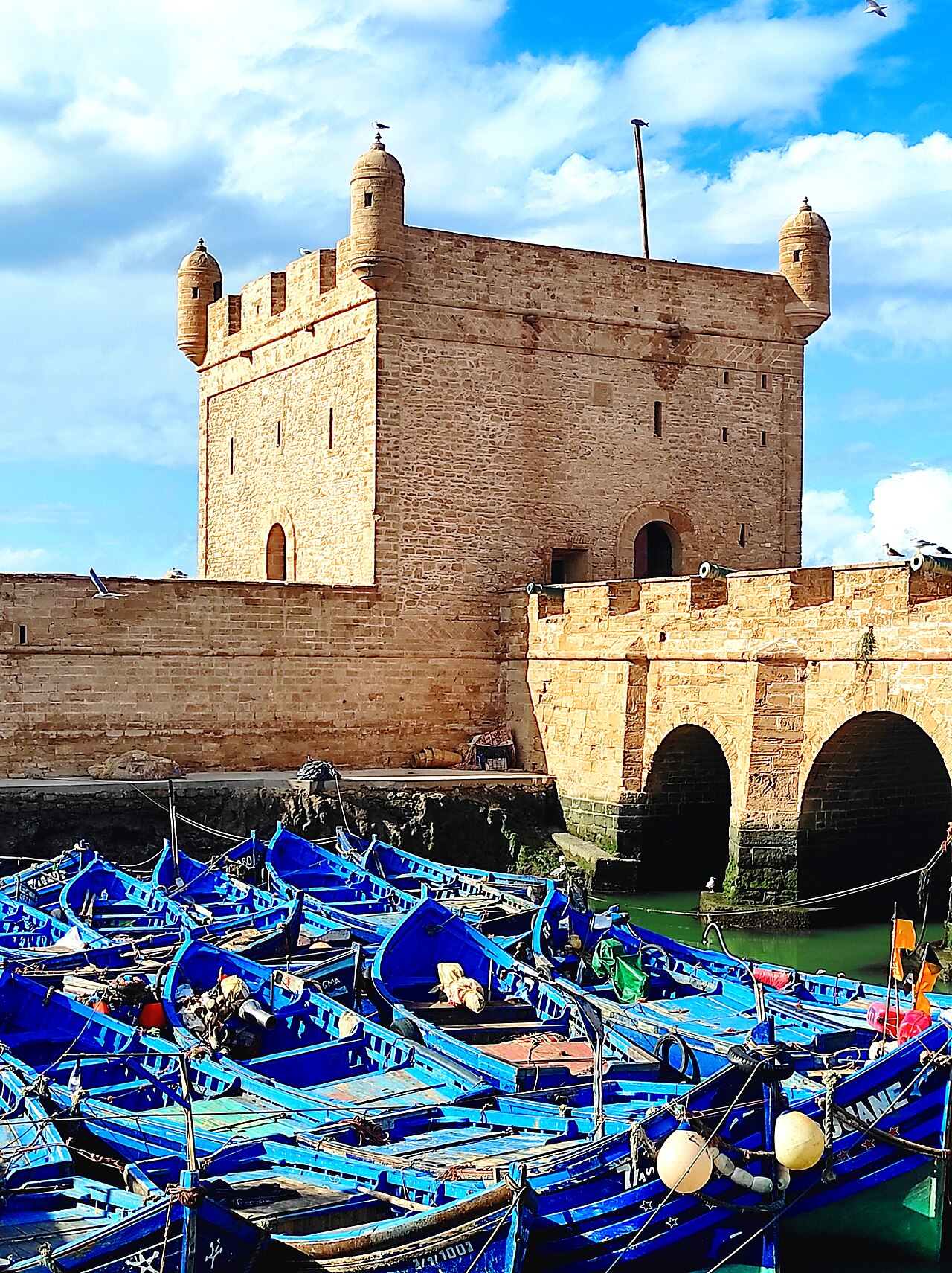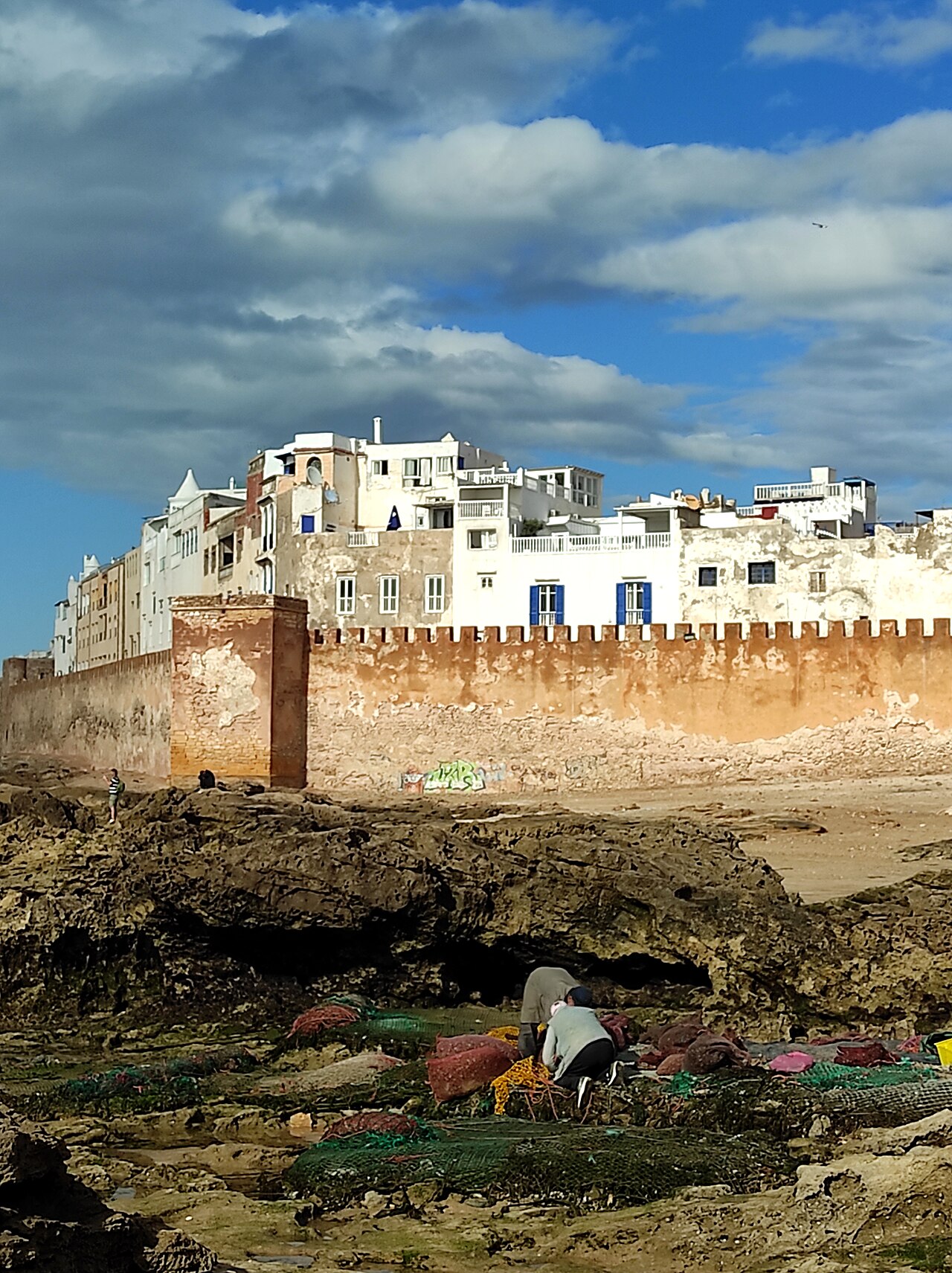
The medina of Essaouira, once called Mogador, is one of the easiest and most rewarding old towns in Morocco to explore on foot. UNESCO describes it as a fortified seaport laid out to European military design but adapted to North African building and town-planning traditions, and the result is unusual: the lanes run in a comparatively orderly grid, so you can wander without the disorientation of Fes or Marrakech. Whitewashed walls and blue doors line the streets, small workshops spill onto the pavement, and the sound of the sea is never far away. Spend your time on the main thoroughfares and the quiet side lanes, stopping for mint tea, browsing woodwork and spices, and watching daily life at the squares. Entry is free, there are no gates to queue at and most travellers need half a day to feel they have seen the essentials.
The history explains the layout. UNESCO records that the town was founded under Sultan Sidi Mohamed Ben Abdallah, who reigned from 1757 to 1790, as a royal port and a commercial centre open to the outside world. It was planned by a French architect influenced by the work of Vauban at Saint-Malo, which is why the ramparts and street plan feel so European, while the houses, courtyards and craft traditions are thoroughly Moroccan.
The port grew into a major Atlantic trading post, long nicknamed the Port of Timbuktu, and its population was strikingly mixed, with Amazigh, Arab, African and European residents and Muslim, Christian and Jewish communities living side by side.
On the ground, think in zones. The main square and the lanes around it are the liveliest and most touristed, with cafes, galleries and shops. Further in you will find the souks, the carpenters working local woods and the quieter residential streets. The mellah, the former Jewish quarter in the north-east of the medina, is the most faded corner, and UNESCO notes that some of its buildings have deteriorated, so expect a more weathered, less polished atmosphere there.
Local stone called manjour is a key original building material, and you will see it in doorways and walls.
A few practical points make the day smoother. Wear shoes with grip, because the stone lanes can be slippery after rain, and bring a windproof layer, since the Atlantic breeze is strong all year. Agree prices before buying, and take your time, because the pace is gentler here than in the big imperial cities. Early morning is the quietest and best for photographs, and late afternoon light on the white walls is beautiful. If you want context, a guided walk is a good complement to wandering alone.
What to expect
The experience
A free, self-guided wander through a compact walled town of lanes, squares, workshops and cafes, with no tickets or gates.
Best time
Early morning for quiet lanes and good light, or late afternoon when the white walls turn warm.
How long
Plan on three to four hours, or a full day if you add the ramparts and the port.
Tips
Wear grippy shoes, bring a windproof layer, agree prices before you buy and keep small notes for tips and tea.
Quick picks
- Best for
- First-time visitors, photographers and anyone who enjoys wandering a walkable old town.
- Families
- Good: lanes are mostly car-free and short distances keep children engaged, though stairs and uneven stone need care with strollers.
- Couples
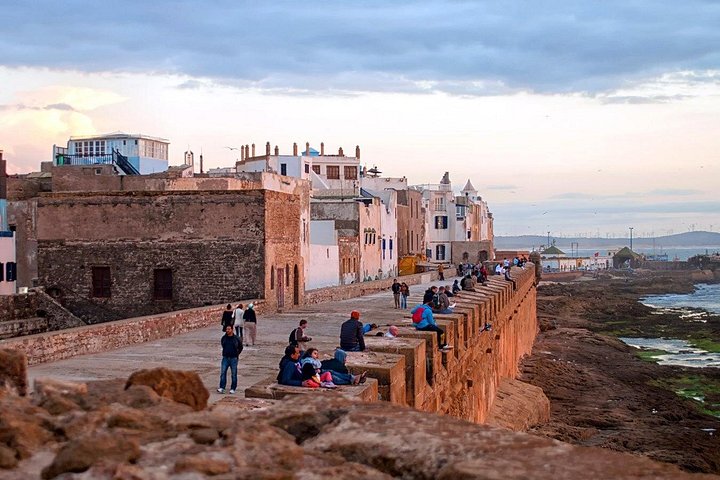
- Excellent for slow strolls, rooftop mint tea and sunset from the walls.
- Pair with
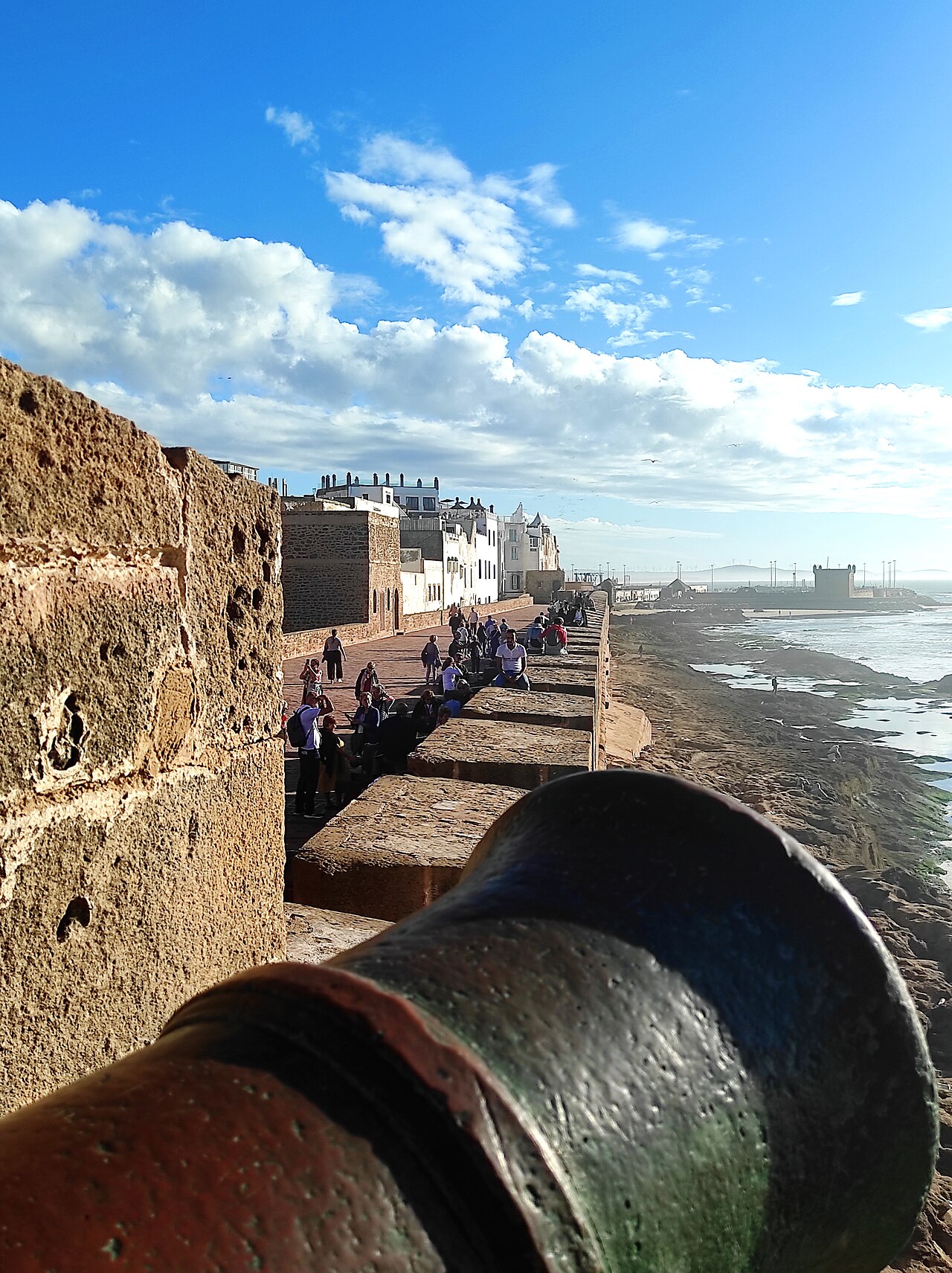
- Pair it with the Skala de la Ville ramparts and a fish lunch at the harbour.
- Time needed
- Half a day for the essentials, a full day to linger.
Good questions
Is the medina of Essaouira free to enter?+
Yes, the lanes and squares are public and there is no entry fee. Some museums, workshops and ramparts platforms may charge separately.
How long do I need in the medina?+
Half a day covers the main lanes, squares and a long lunch. A full day lets you add the ramparts, the port and a slow afternoon in a cafe.
Is it easy to get lost?+
Much less than in Fes or Marrakech, because the streets follow a more regular plan laid out in the 18th century. A phone map and the sea as a landmark are usually enough.
Is the medina safe to walk around?+
It is generally relaxed and walkable, as in most Moroccan old towns. Keep your belongings secure in crowded spots and politely decline unwanted offers of guiding.
What is the best time of day to visit?+
Early morning is the calmest, and late afternoon gives lovely light on the white walls. Midday can be breezy and busy, especially when tour groups arrive.