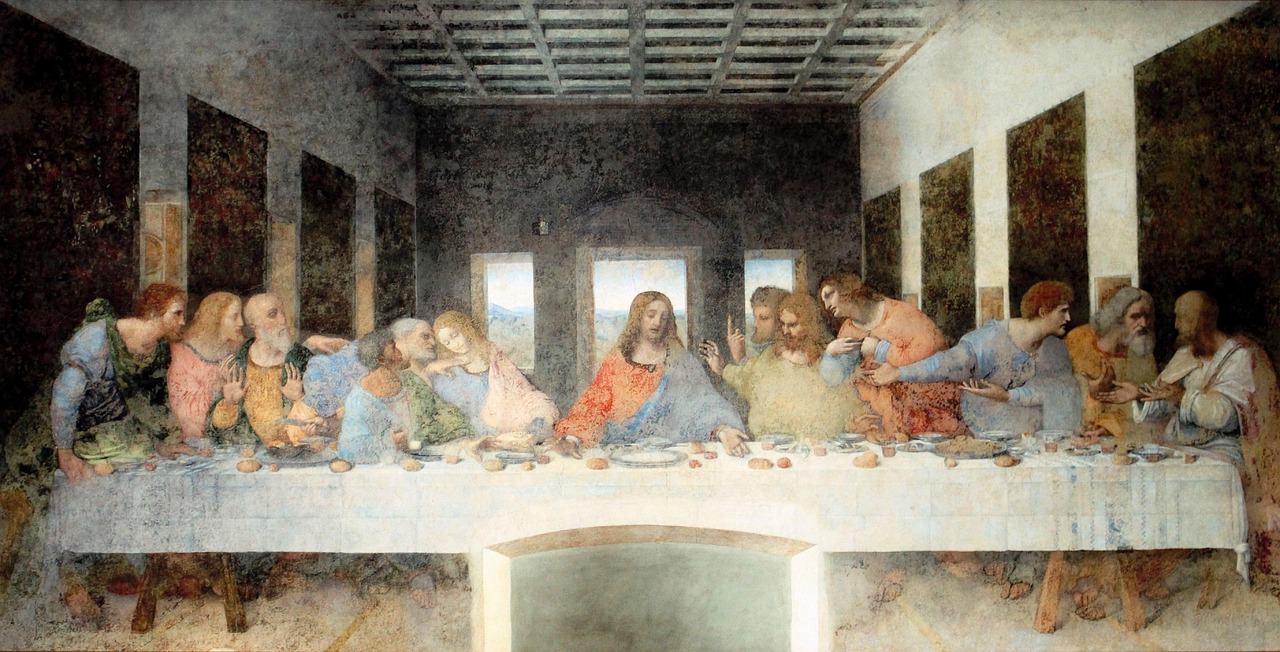
The Museo di San Marco is the most moving museum in Florence and the city's best-kept major secret: the Dominican convent rebuilt by Cosimo de' Medici in the 1430s (Michelozzo's architecture — the city's first Renaissance cloisters) and frescoed by its own resident friar, Fra Angelico, into something unique in art history: an entire monastery as one painter's devotional masterpiece — 44 monks' cells, each with its own fresco painted for an audience of one (the friar who prayed beneath it): sparse, radiant scenes stripped of every worldly detail, the mocking of Christ rendered as floating symbols, crucifixions in empty luminous space — painting as prayer, and the single most concentrated experience of one artist's vision anywhere in the city. The Annunciation at the top of the dormitory stairs is the summit: the fresco every art-history survey reproduces, met exactly where the friars met it climbing to bed — the placement is the meaning, and no reproduction survives the encounter. The ground floor compounds it: the Pilgrims' Hospice hall holds the world's best collection of Angelico's panel paintings (the Last Judgment's dance of the blessed, the San Marco Altarpiece, the Linaiuoli tabernacle's giant grace), the chapter house's great Crucifixion, and Ghirlandaio's Last Supper in the small refectory (the Ognissanti composition's sibling — birds, cherries and all). The history runs darker upstairs: Savonarola was prior here — his three cells at the corridor's end keep his hair shirt, his banner and the painted record of his burning on the Signoria (the museum holds the Bonfire-of-the-Vanities preacher's actual rooms, and the little anonymous panel of his execution is the most chilling object in Florence) — and Cosimo's own double cell (the patron kept a retreat among the friars; Gozzoli's fresco inside) completes the Medici-and-God argument the convent embodies. The craft: one hour is enough and unforgettable, mornings run near-empty (the museum's limited hours — check days; it keeps odd closures — are the only trap), and the Accademia is three minutes away: David first, Angelico after is the north-quarter morning done right. Fit: the art chip's profoundest entry, history readers (Savonarola's rooms), couples and solo travelers (the quiet is the point), and anyone the Uffizi left overstimulated.
The convent's story is the Renaissance arguing with itself: Cosimo il Vecchio poured banking fortune into rebuilding San Marco (guilt-gilding at monastery scale — he kept cell 38-39 as his own retreat, luxury renounced performatively), Michelozzo's library became Europe's first public one (the humanist collection open to scholars — the room's colonnaded calm survives), Fra Angelico painted the house he prayed in (Giorgio Vasari already marveled that no artist ever matched subject to setting so perfectly; the friar reportedly wept as he painted crucifixions and never retouched — the brushwork as devotion), and sixty years later the same corridors produced Savonarola: the prior whose sermons emptied the Medici palaces, burned the vanities, ruled the city as God's republic and ended on the Signoria's pyre in 1498 — his cells' relics (the notebooks, the crucifix he carried to execution) make the corridor's end a different kind of shrine.
The visiting craft
Take the dormitory corridor slowly — the cells' frescoes are a sequence (the novices' corridor runs repeated crucifixions for discipline; the clerics' cells get the narrative scenes; the corner cells hold the strangest: the Mocking's disembodied hands), the Annunciation demands the stair approach (do not shortcut to it), the Hospice hall's panels reward the close look (gold-ground paradise meadows, the predella's miniature cities), and the library's manuscripts rotate. The quiet is structural: the museum caps comfortably, tour groups skip it (no Botticellis, no gift-shop celebrity), and the cloister's cedar holds the hour's mood. The one trap is hours: historically closed some Sunday-and-Monday rotations and early afternoons — verify the current schedule before building the morning around it.
Practicals and fit
Piazza San Marco (three minutes from the Accademia; the 1-and-C1 buses pass), modest ticket, one hour honest, limited hours checked ahead. Fit: art travelers at the pilgrimage level, the history chip (Savonarola's rooms are primary-source Florence), contemplatives and Uffizi-overwhelmed refugees — and the pairing: Accademia's David, then Angelico's cells, is the city's best-balanced morning.
What to expect
The experience
Fra Angelico's own monastery — a fresco in every monk's cell, the Annunciation met at the top of the stairs, the world's best collection of his panels below, and Savonarola's actual rooms at the corridor's end.
Best time
Mornings run near-empty; the only trap is the museum's limited hours and odd closure rotations — verify the current schedule first.
How long
One unforgettable hour.
Tips
Climb the dormitory stairs without shortcutting — the Annunciation's placement is the meaning. Walk the cells as a sequence. Pair with the Accademia three minutes away: David first, Angelico after.
Quick picks
- Best for
- The art chip's profoundest hour — one painter's vision at full concentration, in the rooms it was made for.
- Families
- Short, quiet and story-rich — the monk-cell treasure hunt works for patient kids.
- Couples
- The city's most contemplative museum — cloister cedar, radiant cells, no crowds.
- Pair with
- The Accademia's David three minutes south; the San Lorenzo market quarter on the walk back.
- Time needed
- One checked-the-hours morning hour.
Good questions
Why is it so special?+
Nowhere else does one artist's complete vision survive in the building it was painted for — Fra Angelico frescoed a private devotional scene in each of 44 monks' cells, and the stair-top Annunciation is met exactly as the friars met it.
What is downstairs?+
The world's best Fra Angelico panel collection in the Pilgrims' Hospice — the Last Judgment, the San Marco Altarpiece — plus the chapter-house Crucifixion and Ghirlandaio's small-refectory Last Supper.
What about Savonarola?+
He was prior here — his three cells keep his hair shirt, notebooks and the anonymous painting of his 1498 burning on the Signoria: the most chilling object in Florence, at the corridor's end.
How crowded does it get?+
It is the city's quietest great museum — tour groups skip it, mornings run near-empty, and the only planning trap is its limited hours and closure rotations; check before you build the morning.
How long do we need?+
One honest hour — and it pairs perfectly with the Accademia three minutes away: David's crowds first, Angelico's silence after.