Orsanmichele is the strangest great building in Florence and the Renaissance's actual starting line: a 14th-century grain market (the open loggia stored and sold the commune's wheat; the grain chutes still pierce the pillars inside — find them) walled into a church when its pillar-painted Madonna started working miracles, and then turned by civic decree into the city's most consequential public art gallery: each of the great guilds was ordered to fill one exterior niche with a statue of its patron saint — and the resulting competition (1399-1430, the guilds one-upping each other in bronze and marble as naked corporate rivalry) is where Renaissance sculpture happened: Ghiberti's St John the Baptist (the first large bronze cast in Florence since antiquity — the banking-adjacent Calimala flexing), his St Matthew for the bankers answering it, Donatello's St Mark (the 1411 marble whose shifted weight and living gaze made Michelangelo reportedly ask why it didn't speak) and his St George for the armorers (the alert-boy knight that invented Renaissance psychological presence — plus the relief below it, the earliest true perspective carving), Verrocchio's Doubting Thomas drama, Giambologna's late St Luke, and Nanni di Banco's Four Crowned Saints solving the group-portrait problem — fourteen niches circling the block as a free, open-air, 24-hour museum of the moment sculpture woke up (the street statues are now high-grade copies; the weathered originals moved upstairs). The interior doubles the visit: the church's dark Gothic hall holds Orcagna's tabernacle (1359 — the plague generation's thank-you: a marble-and-gold jewel case the size of a chapel around Daddi's miracle Madonna, encrusted in reliefs and lapis; the most sumptuous object of its century in Tuscany), the painted vaults and the grain-chute archaeology; and the museum upstairs (the old granary halls — entry managed by the Bargello museums; the upper floors' access days vary, check) ranks the originals eye-to-eye: Donatello's actual St Mark, Ghiberti's bronzes and the guild saints lined in the raw brick hall where the wheat once was, with the top floor's skyline windows as the bonus. The craft: the exterior circuit is free and best in raking morning or evening light (via dei Calzaiuoli's crowds stream past blind — walk the full ring with the niche-by-niche story), the interior is a short visit (free historically, managed hours), and the location — dead center between Duomo and Signoria — makes it the ten-minute insert every itinerary already walks past. Fit: the art chip's origin story, history travelers (guild Florence in one building), and every first trip that wants the Renaissance explained standing in the street where it started.
The building's biography is Florence compressed: the 8th-century garden oratory (San Michele in Orto — the name's root), the 1290 grain loggia, Daddi's 1347 miracle Madonna drawing pilgrim crowds into a working market (the commune ran grain upstairs and grace below for decades — the chutes-and-tabernacle coexistence is the city's mercantile soul in architecture), the 1380 walling-in, and the guild-niche decree that turned the block into the proving ground: the statutes assigned niches by guild rank (the wool, silk, bankers and judges' prime corners; the lesser trades' sides), the materials signaled budget (bronze cost ten times marble — Ghiberti's castings were declarations), and the sequence 1399-1430 reads as the style being invented commission by commission: Ghiberti's International-Gothic grace, Nanni's Roman turn, Donatello's psychological break (St Mark's contrapposto earned Michelangelo's praise a century later; St George's tension — the shield-forward stance, the worried brow — made the saint a citizen), and Verrocchio's theatrical close. The St George relief below the niche deserves its own pause: Donatello's rilievo schiacciato (squashed relief) carved atmosphere and depth in millimeters — the first perspective landscape in sculpture, 1417.
The interior-and-museum craft
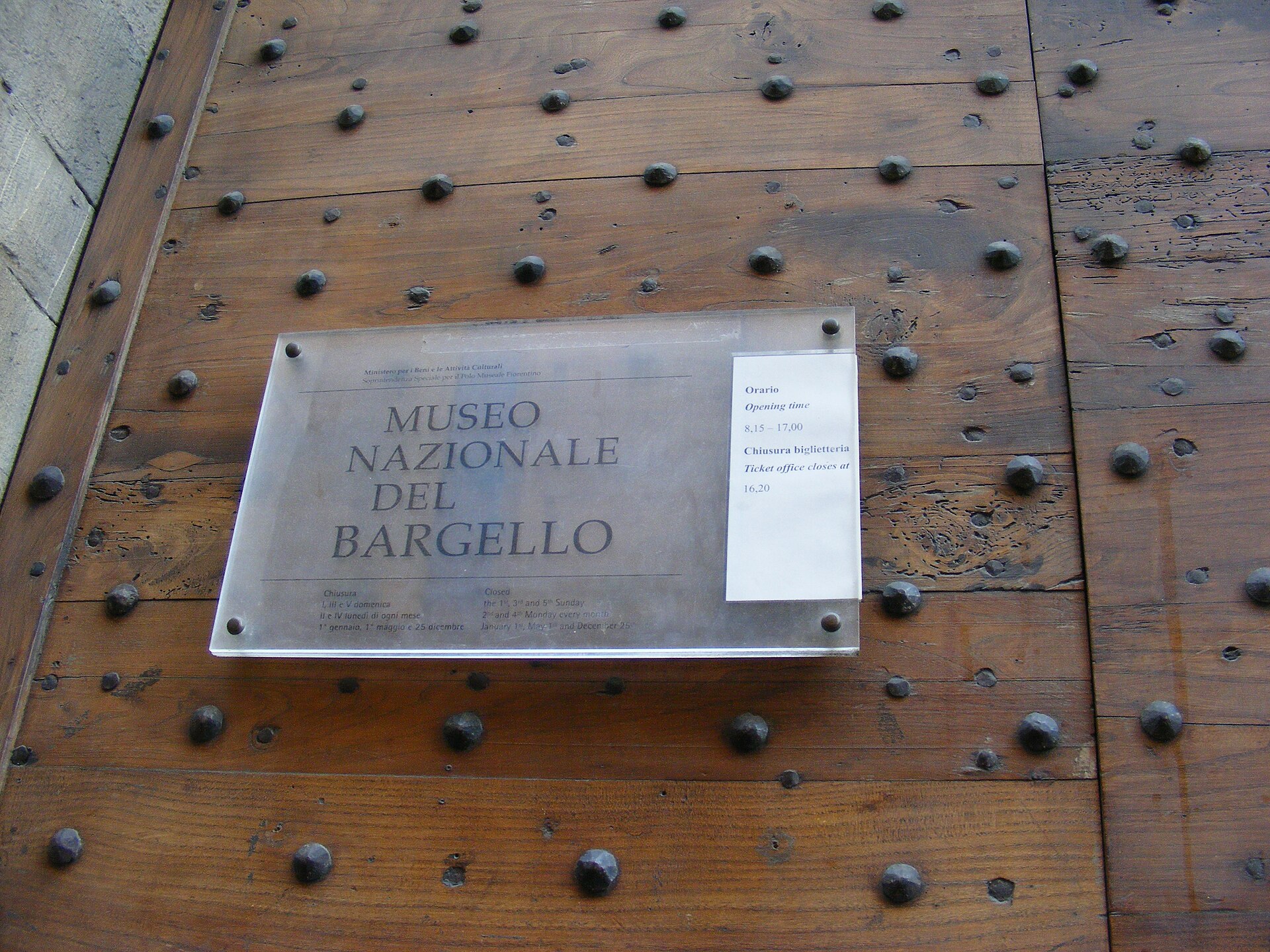
Orcagna's tabernacle rewards circling (the back's Dormition relief, the lapis-and-gold encrustation, the plague-era inscription), the vault frescoes' guild saints echo the street program, and the upstairs hall — when open — is among the city's great free-or-near-free rooms: the originals' weathering tells the outdoor centuries, the brick granary's scale explains the civic machine, and the third floor's windows ring the skyline at rooftop level. Access notes: the Bargello museums manage the complex with the church's hours generous and the museum floors' schedule narrower and shifting — verify the current days rather than promising the upstairs; the exterior ring needs no ticket ever.
Practicals and fit
Via dei Calzaiuoli at via Orsanmichele (the Duomo-Signoria spine — everyone passes it), exterior free always, church free-to-modest with managed hours, museum floors on their published days. Fit: the art chip's ground zero (the niche circuit IS the Renaissance survey course), history travelers (guild Florence embodied), first trips (ten inserted minutes that reframe the whole city), and sculpture pilgrims for the upstairs originals.
What to expect
The experience
The grain market turned church ringed by the guilds' statue contest — Donatello and Ghiberti in the niches (copies outside, originals in the upstairs granary museum), Orcagna's jeweled tabernacle in the dark hall within.
Best time
Raking morning or evening light for the niche circuit (free, always open); museum-floor days vary under the Bargello's management — check before promising the upstairs.
How long
Forty-five minutes to an hour, exterior ring included.
Tips
Walk the full ring with the niche-by-niche story — the crowds stream past blind. Pause at Donatello's St George relief: perspective carved in millimeters, 1417. Find the grain chutes still piercing the pillars inside.
Quick picks
- Best for
- The art chip's origin story — the street corner where Renaissance sculpture woke up.
- Families
- A statue scavenger ring on the walk everyone already takes — and secret grain chutes inside.
- Couples
- The lit niches after dark on an empty via Orsanmichele — ten free minutes of the 1400s.
- Pair with
- It sits mid-spine between Duomo and Signoria — insert it into the walk, then the Bargello for the sculpture sequel.
- Time needed
- One inserted hour on the center's spine.
Good questions
Why does it matter so much?+
The guild niche contest of 1399-1430 — corporations one-upping each other in bronze and marble — is where Renaissance sculpture was invented: Ghiberti's first great castings, Donatello's St Mark and St George, Verrocchio's Thomas, ringing one block.
Are the street statues real?+
High-grade copies — the weathered originals moved upstairs to the granary-hall museum, where Donatello and Ghiberti stand at eye level under the Bargello's management; the floor's open days vary, so check.
What is inside the church?+
Orcagna's 1359 tabernacle — a chapel-sized marble-and-gold jewel case around the miracle Madonna, the most sumptuous object of its plague-scarred century — plus the grain chutes still piercing the pillars.
Why a church in a grain market?+
The market pillar's painted Madonna began working miracles, the pilgrims outcompeted the wheat, and Florence — ever practical — ran grain upstairs and grace below before walling the whole thing holy.
Does the exterior cost anything?+
Never — the niche ring is a free, open-air, 24-hour museum on the Duomo-Signoria spine; the lit circuit after dark is the center's best ten quiet minutes.