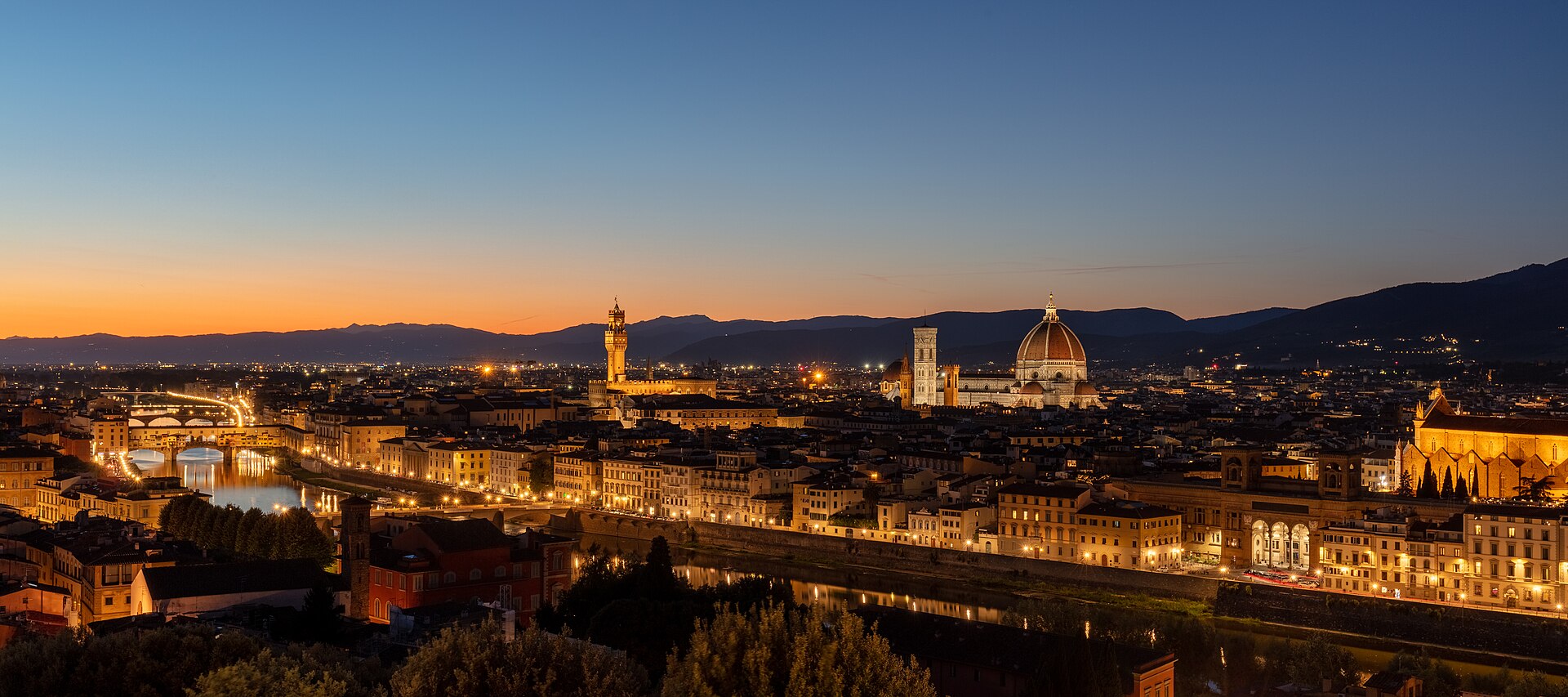
San Miniato al Monte is the reward for walking ten minutes past where the buses stop: the thousand-year Benedictine basilica crowning the hill above Piazzale Michelangelo — the finest Romanesque church in Tuscany and the most spiritually intact monument in Florence — whose green-serpentine-and-white-marble facade (the geometric perfection the Duomo's later decorators studied; the gilded eagle of the wool guild crowning it catching the sunset first) has watched the city for nine centuries from the spot where, the legend runs, the martyred Saint Minias carried his own severed head uphill to die: the church marks where he stopped. The interior is the city's time machine: unrestored Romanesque at full atmosphere — the marble-intarsia nave floor's 1207 zodiac wheel (the lions, doves and signs the connoisseurs trace), the raised choir's carved screens and mosaic apse (the 1297 Christ Pantocrator blazing gold when the afternoon light enters), the crypt's forest of mismatched antique columns under Taddeo Gaddi frescoes, Michelozzo's Chapel of the Crucifix jewel-boxing the nave's center, the Portuguese Cardinal's chapel (the one Renaissance intrusion, and the quarter's best: Rossellino's tomb, della Robbia's ceiling medallions, the ensemble art historians cross oceans for), and the sacristy's complete Spinello Aretino fresco cycle of Saint Benedict's life. The living layer makes the visit: the hilltop remains a working Olivetan monastery — the monks sing Gregorian vespers daily in the crypt (typically late afternoon — the half-hour of plainchant in the thousand-year stone is the most moving free experience in Florence; check the day's time at the door and sit quietly), the pharmacy shop sells their honeys, tisanes and liqueurs, and the monumental cemetery wrapping the church (Collodi, Pinocchio's author, among its residents — the 19th-century tomb architecture is its own museum) holds the city's quietest marble avenues. The craft: pair it with Piazzale Michelangelo (the famous terrace is the appetizer; San Miniato's forecourt, higher and emptier, is the better view with a basilica attached), time the climb to vespers-then-sunset (the sequence — chant, facade gold, city lights igniting — is the perfect Florence evening), and the walk up through the Porta San Miniato's lanes and the rose garden makes the approach half the pleasure. Free always (offerings welcome), modest dress, silence in the services. Fit: the history chip at millennium depth, couples (the vespers-sunset sequence), art travelers (the Cardinal's chapel), and every visitor the crowds have worn thin.
The basilica's history runs Florence's whole arc: the 1013 founding on the martyr's hill (Bishop Hildebrand's rebuild over earlier shrines; Minias's 3rd-century legend — Florence's first martyr, the decapitated soldier-hermit walking his head across the Arno and uphill — is told in the apse mosaic's iconography), the wool guild's medieval patronage (the Calimala's eagle crowns the facade; their money built the marble geometry that taught the city its black-green-white language), Michelangelo's fortification cameo (he ringed the hill in 1529's siege — the basilica survived as his gun platform; the ramparts below remain), the Napoleonic and cemetery eras, and the Olivetan monks' modern revival keeping the liturgy sung. The millennium celebrations (2018) restored the complex to full working glory — the church is neither museum nor ruin but a living argument that Florence's holiest site was always the one above the selfie terrace.
The connoisseur's inventory
The zodiac floor's 1207 inscription and the nave's intarsia panels (walk the marble carpet slowly — the aquatic-bird and lion cycles repay it), the pulpit-and-screen ensemble's carved geometry, the apse mosaic's afternoon ignition (the gold needs the western light — time it), the crypt's 36 salvaged columns (Roman and Byzantine capitals in conversation) and Gaddi's vault saints, the Cardinal of Portugal chapel's complete program (the 1459-66 ensemble — Rossellino tomb, Baldovinetti Annunciation, della Robbia vault, Pollaiuolo altarpiece context — the Renaissance's most unified small room), and Spinello's sacristy Benedict cycle (the restored colors sing). The rhythm notes: vespers times shift seasonally (the door placard and the abbey's communications carry the day's schedule — typically later afternoon), the shop's monastic products make the city's best honest souvenirs, and the cemetery's avenues (Collodi's tomb findable by map at the gate) add the contemplative half hour.
Practicals and fit
Via delle Porte Sante 34, ten minutes' climb past Piazzale Michelangelo (the 12/13 buses serve the piazzale; the Porta San Miniato stair-lanes and rose garden make the walking approach), free with offerings, modest dress, services silent. Fit: the history chip's deepest hour, couples at vespers-sunset, art pilgrims for the Cardinal's chapel — and anyone needing the city's crowds washed off at altitude.
What to expect
The experience
Tuscany's finest Romanesque basilica on the hill above the famous terrace — zodiac marble floor, gold apse mosaic, the Cardinal's Renaissance chapel, and the monks' sung vespers in the thousand-year crypt.
Best time
Time the climb to vespers then sunset — chant, facade gold, city lights igniting is the perfect Florence evening; vespers times shift seasonally, check at the door.
How long
An hour to ninety minutes, cemetery stroll included.
Tips
Walk ten minutes past where the Piazzale crowds stop — the forecourt view is higher and emptier. Trace the 1207 zodiac wheel in the nave floor. The monks' shop sells the honest souvenirs: honey, tisanes, liqueurs.
Quick picks
- Best for
- The history chip at millennium depth — and the city's holiest free view.
- Families
- The head-carrying martyr legend, the zodiac-floor hunt and the crypt's column forest hold kids rapt.
- Couples
- Vespers in the crypt, then the facade going gold — Florence's most moving free evening.
- Pair with
- Piazzale Michelangelo and the rose garden on the climb; the Oltrarno's lanes on the descent.
- Time needed
- One late-afternoon-to-dusk ascent.
Good questions
What are the vespers?+
The resident Olivetan monks sing Gregorian plainchant daily, typically late afternoon in the crypt — a free half hour of thousand-year sound in thousand-year stone; check the day's time at the door and sit silently.
How does it compare to Piazzale Michelangelo?+
The famous terrace is the appetizer ten minutes below — San Miniato's forecourt sits higher, emptier, and attaches Tuscany's finest Romanesque basilica to the view.
What is the legend of the name?+
Saint Minias, Florence's first martyr, was beheaded by the Arno and — the legend runs — carried his head uphill to this spot to die; the 1013 basilica marks where he stopped.
What should we not miss inside?+
The 1207 zodiac intarsia floor, the apse mosaic blazing in afternoon light, the crypt's 36 salvaged antique columns, and the Cardinal of Portugal's chapel — the Renaissance's most unified small room.
Does it cost anything?+
Nothing — a working monastery welcoming visitors free, with offerings appreciated, modest dress expected and silence during services; the monks' shop funds the house honestly.