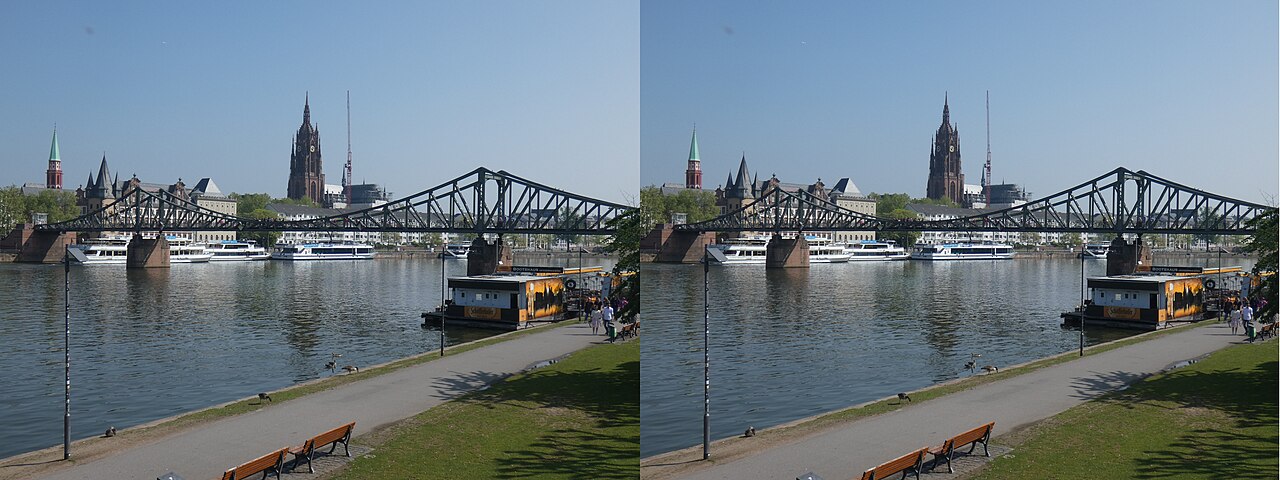
The Eiserner Steg, or Iron Footbridge, is a pedestrian bridge across the Main that connects the old town at the Römerberg with the Sachsenhausen riverbank and the Museumsufer. It dates from the nineteenth century, was rebuilt after the war and is one of the best-loved landmarks in the city, partly because it is simple and partly because the view from the middle is the most photographed in Frankfurt: the skyline of towers on one side, the red cathedral tower and the rooftops of the old town on the other. It is free, open at any hour and a few minutes from the cathedral and the Historisches Museum. For visitors the bridge works as a hinge between the two halves of a city walk, taking you from the historic quarter across the river to the museums, the apple wine taverns and the riverside lawns. In the past couple of decades it has also become a place where couples leave padlocks, and it is a favourite for photography around sunrise, sunset and after dark when the towers are lit.
Why it works
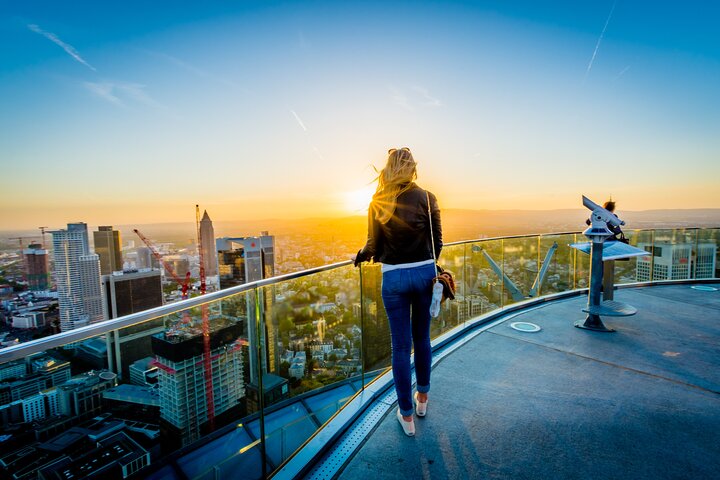
Frankfurt does not have a single hilltop viewpoint, so the bridge is the closest thing to a public lookout at ground level. From the middle of the span you see the skyline in one direction and the cathedral in the other, and the river quays on both sides give space to stop and look without getting in anyone's way. It is the easiest way to see the contrast that defines the city, a medieval core set beside a skyline of banks, in a single frame.
Practicalities
The bridge is for pedestrians and cyclists share the nearby riverside paths, so keep an eye out as you walk. There is no ticket and no schedule, so you can come in the early morning for empty views and good light or in the evening for the lit towers. It can be windy and cold on the water in winter, so bring a coat.
If you plan to take photos, early morning and sunset give the best light, and weekends around the museums are busier. The surface is flat and suitable for most visitors, though you should check the access to the quays if you use a wheelchair.
Pairing it
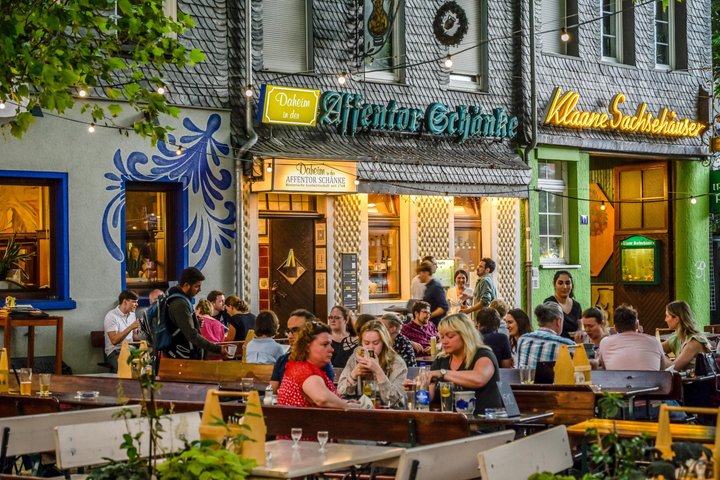
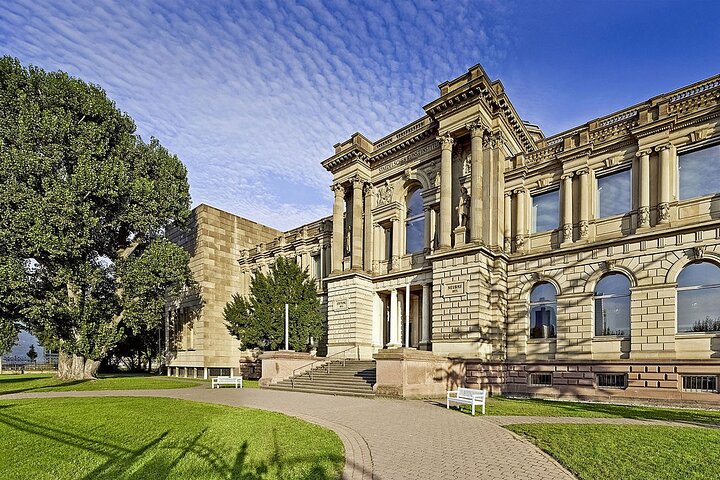
Use the bridge as the middle of a loop. Start at the Römerberg and the cathedral, cross the Eiserner Steg to the Museumsufer for an hour in a museum such as the Städel, then walk along the river and return by a different bridge or a Main river cruise. If you cross in the evening, the taverns of Sachsenhausen are a short walk from the southern end, which makes the bridge a natural link between a day of sights and an apple wine dinner.
What to expect
The experience
A free walk across a pedestrian bridge with views of the skyline, the cathedral and the river, and access to the quays on both banks.
Best time
Early morning or sunset for the best light, or after dark when the towers are lit.
How long
Fifteen to thirty minutes, longer with photos and a riverside stroll.
Tips
Bring a coat in winter because the span is exposed, and watch for cyclists on the nearby riverside paths.
Quick picks
- Best for
- Photographers and first-time visitors who want the classic skyline and old town view for free.
- Families
- Easy and flat, a short walk children can handle, with riverside lawns on the south bank.
- Couples
- Cross at sunset and continue to Sachsenhausen for dinner.
- Pair with
- The Römerberg, the Museumsufer and the Sachsenhausen taverns.
- Time needed
- Fifteen to thirty minutes.
Good questions
Is the Eiserner Steg free?+
Yes, it is a public pedestrian bridge with no ticket and no opening hours, so you can cross at any time.
What is the best view from the bridge?+
From the middle you see the skyline of towers in one direction and the cathedral and old town rooftops in the other, which is the classic Frankfurt photograph.
Where does it lead?+
It links the Römerberg and the old town on the north bank with the Museumsufer and Sachsenhausen on the south bank.
When is the best time to photograph it?+
Early morning and sunset give the best light, and the lit towers after dark are also popular.
Can I cross with a bicycle or stroller?+
Strollers are fine on the flat surface, and cyclists should walk their bikes on the bridge and take care on the nearby paths.