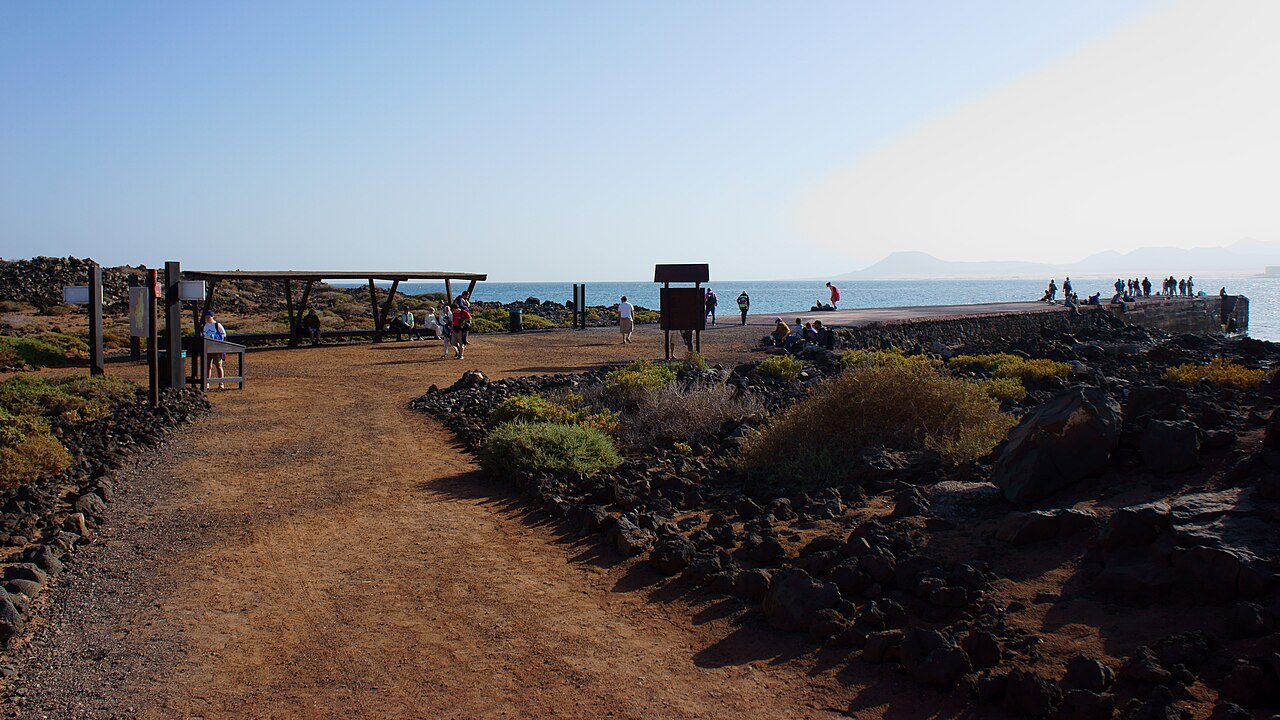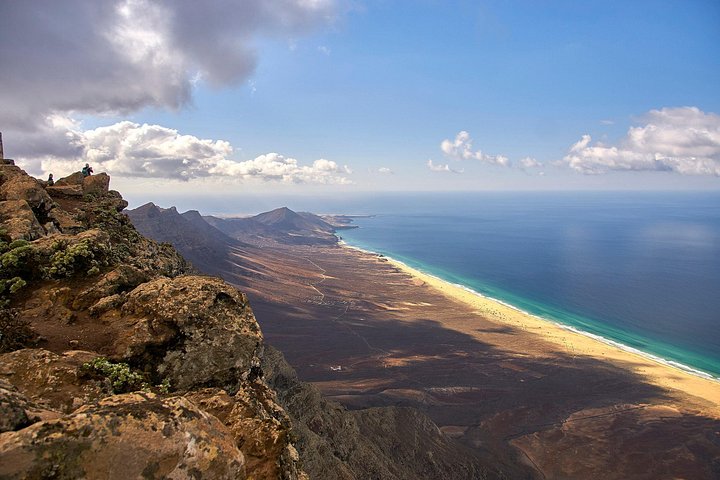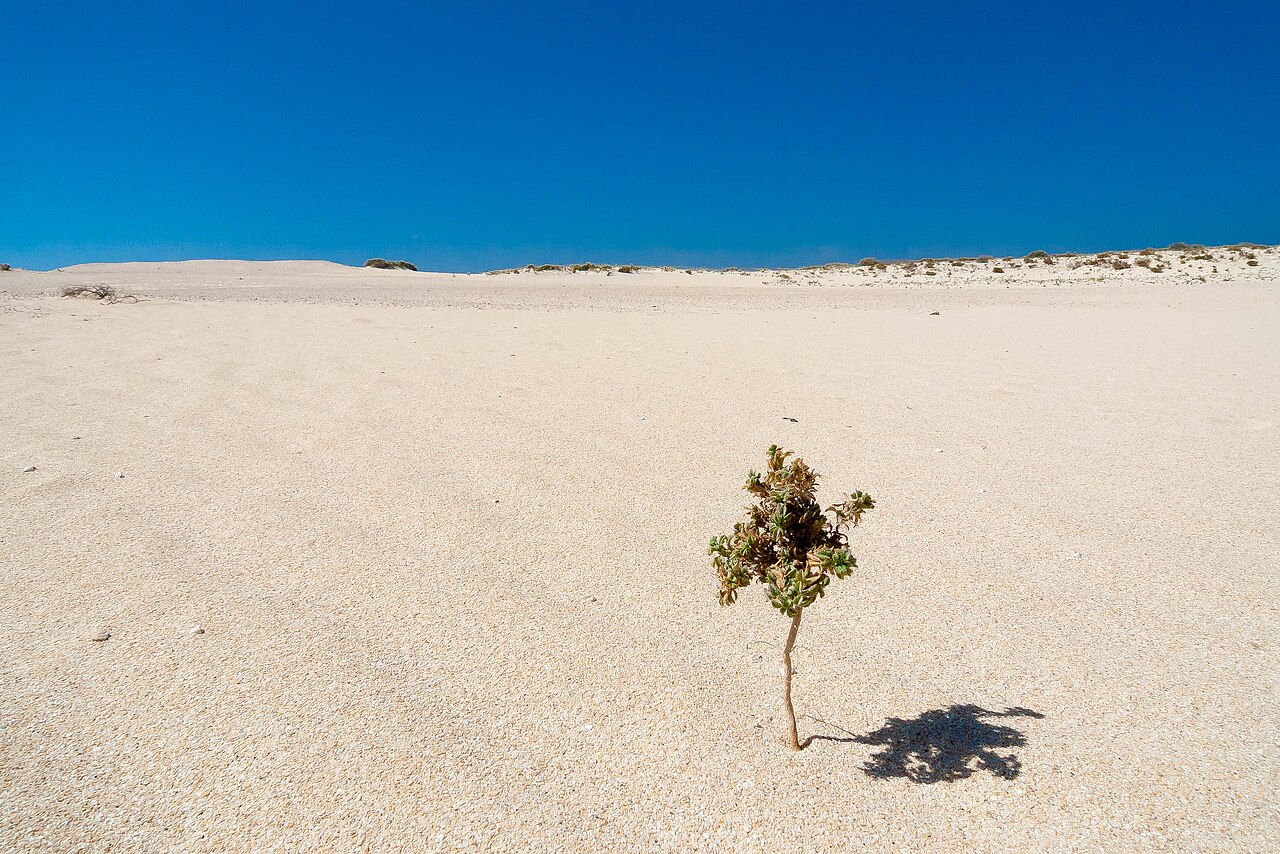
The Corralejo Natural Park is the picture most people have in mind when they think of Fuerteventura. It covers about 2,670 hectares of dunes on the north-east coast, running from Puerto Remedios beach in the north to the volcanic cone of Montaña Roja in the south. The sand is pale and fine, shaped by the wind into long ridges, and it ends in some of the island’s most beautiful beaches. Across the strait you can see Isla de Lobos and, on a clear day, the hills of Lanzarote. The park is protected for its geology and for the dune plants and wildlife that live in it, including seabirds, waders, reptiles and beetles. There is no entrance gate or fee. You can see the dunes from several points along the FV-104 road between Puerto del Rosario and Corralejo, and you can walk down to the beaches from the lay-bys. The main rule is simple and matters a great deal: keep to the marked trails.
How to see it
The easiest approach is to drive or take a taxi along the FV-104 and stop at the viewpoints and beach car parks, where short paths lead down to the sand. Walk to the water’s edge and then follow the shoreline rather than climbing the dune crests, which are fragile and are what the park exists to protect.
The beaches here are wide and open, with strong sun, limited shade and often a stiff breeze, so bring water, a hat and a layer. Swimming is popular, but the sea can be rough on windy days, so pay attention to the flags and to any lifeguard advice.
November notes
The winter-sun season brings warm days, cooler evenings and a sea of about 21 degrees, which most people find fine for a swim. The wind tends to strengthen at this time of year, which makes open dune beaches feel cooler and blows sand about, while sheltered corners stay calm. An international kite festival is held around La Oliva and Corralejo in November, when giant kites fly over the beaches against the dunes, so check the dates for your trip and expect a livelier atmosphere and more traffic along the coast that week.
Making the most of it
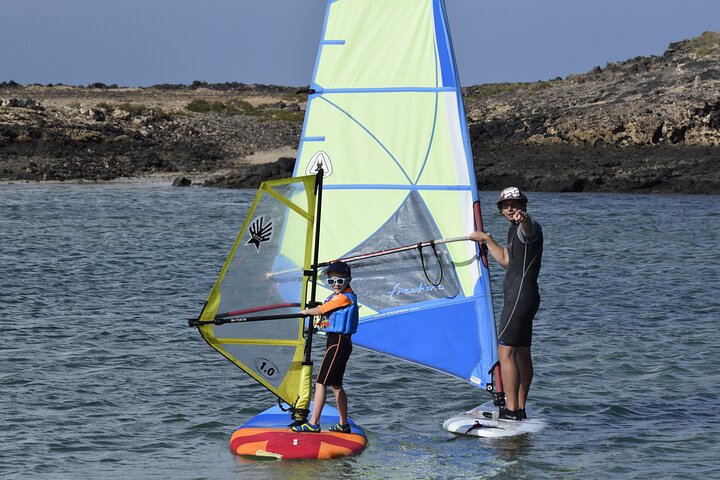
Go early or late for softer light and fewer people, and bring a camera for the colours at sunset. The tourist office on Avenida Marítima in Corralejo can give maps and current advice. Nearby, the little town of Corralejo has the harbour for the Lobos ferry, and the same beaches are where windsurfers and kitesurfers practise, so you can combine a walk on the sand with watching the sails. Take your litter with you, and never drive onto the dunes.
What to expect
The experience
A self-guided visit along the FV-104 road and the beaches of the park, with viewpoints, marked paths and open sand.
Best time
Early morning or the last hour before sunset for soft light, cooler air and fewer people on the sand.
How long
Allow one to three hours, longer if you plan to swim, picnic or watch the kitesurfers.
Tips
Keep to the marked trails, bring water, a hat and a layer for the wind, and take your rubbish with you.
Quick picks
- Best for
- First-time visitors who want the island’s signature landscape at no cost.
- Families
- Children love the sand and the shallow edges, but the sun is strong, shade is scarce and the sea can be rough on windy days.
- Couples
- Walk the beach at sunset with the island of Lobos on the horizon, then have dinner in Corralejo.
- Pair with
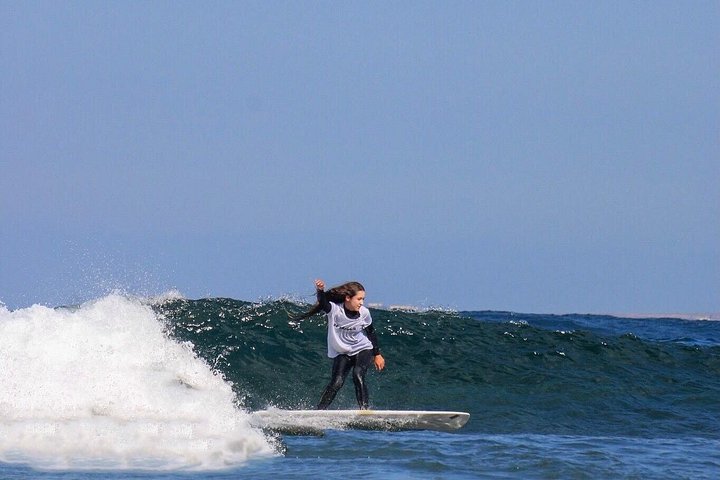
- The Lobos ferry from Corralejo harbour and a windsurf or surf lesson on the same coast.
- Time needed
- A morning or an afternoon, depending on how long you want on the beach.
Good questions
Is there an entrance fee for the Corralejo dunes?+
No, the natural park is free to visit and has no gate. You can stop at viewpoints along the FV-104 road and walk down to the beaches.
Can I walk on the dunes?+
You may follow the marked trails and the shoreline, but the park asks visitors to keep to designated paths. The dune ridges are fragile and protected.
Is the sea safe for swimming?+
Many people swim here, but the water can be rough and windy, so check the flags and any lifeguard advice before you go in. The sea is about 21 degrees in November.
Is there shade or a café on the beach?+
Shade is limited, so bring a hat, sunscreen and water. Corralejo town is a short drive away for food and drink.
What is happening at the dunes in November?+
An international kite festival is held around La Oliva and Corralejo in November, with giant kites over the beaches. It makes the coast livelier and busier that week, so check the dates for your trip.