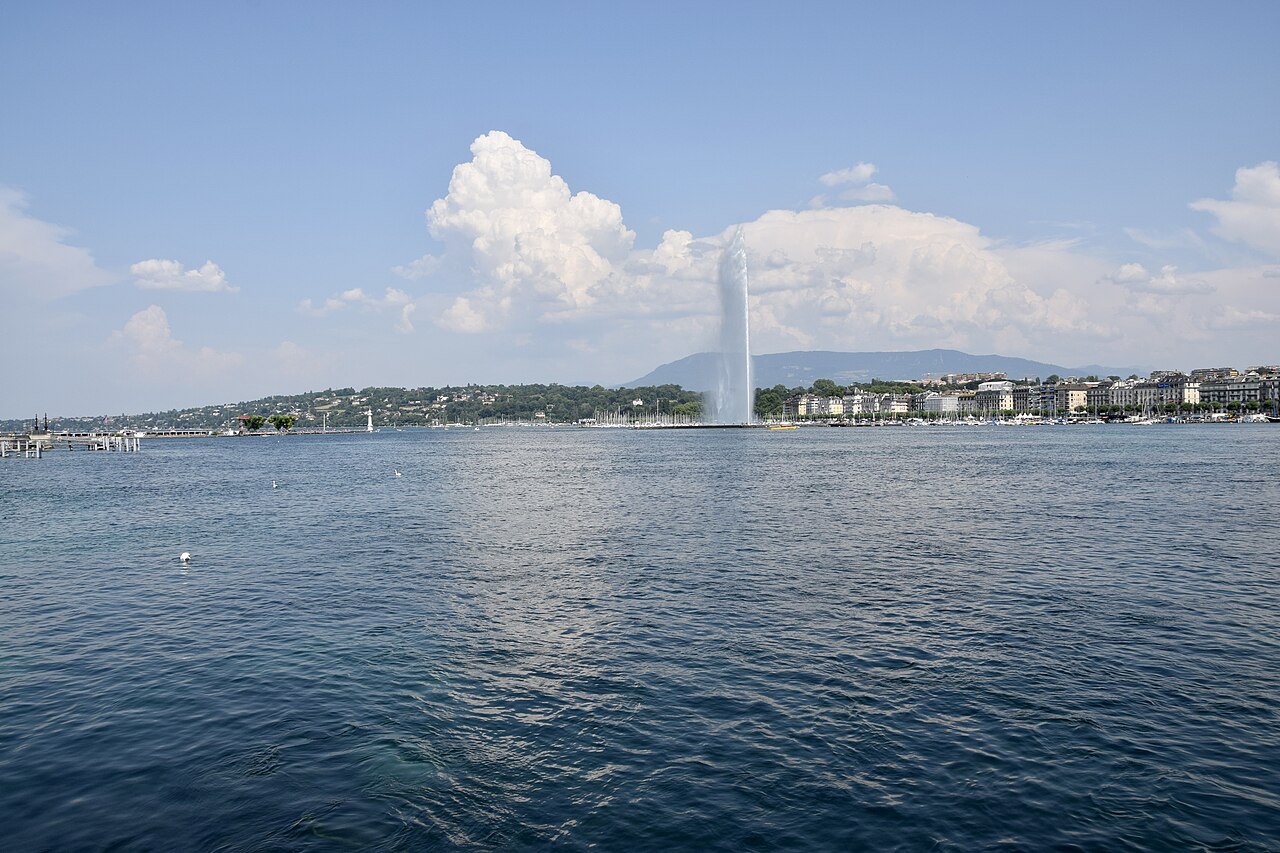
Geneva’s Old Town crowns a low hill on the left bank, and at its summit stands St Pierre Cathedral. Begun in the 12th century and remodelled in the 16th, it became a Protestant church during the Reformation in 1535, and it was here that John Calvin preached and turned Geneva into the Protestant Rome. The result is a striking contrast: Romanesque and Gothic architecture behind an 18th-century neoclassical portico, and inside a nave stripped of most of its decoration, with fine carved capitals, stained glass and the ornate Gothic chapel of the Maccabees as exceptions. Entry to the cathedral is free. The real treat is the climb to the towers, 157 steps up the north tower, for a sweeping panorama of the roofs, the lake, the Jet d’Eau and, on clear days, the Alps. Beneath the cathedral is an extensive archaeological site, described as the largest north of the Alps, where walkways lead through the remains of earlier churches and Roman and pre-Roman settlements. Around the cathedral, the Old Town’s lanes lead to the Place du Bourg-de-Four, Geneva’s oldest square, lined with cafés, and down to the Reformation Wall in the Parc des Bastions.
Planning the visit: from 1 October to 31 May the cathedral opens from Monday to Saturday, 10:00 to 17:30, and on Sunday from 12:00 to 17:30, with the towers closing at 17:00. From June to September it opens earlier and closes later. Entry to the church is free; the towers charge a small fee, and the archaeological site has its own ticket. Services and concerts can restrict access to parts of the building, so check the cathedral website before a special trip.
Making the most of it: climb the towers first, while your legs are fresh, then visit the nave and the chapel of the Maccabees, and finish underground in the archaeological site, which needs about an hour. The stairs are narrow and steep near the top, so they do not suit everyone. On a clear day the view stretches from the Jura to Mont Blanc.
Around the Old Town: allow a couple of hours to wander. Maison Tavel, the oldest house in the city, is a short walk away, and the Place du Bourg-de-Four is the place for a coffee or a fondue. Walk down through the Parc des Bastions to see the Reformation Wall, with its giant statues of Calvin and his fellow reformers. The lakefront and the Jet d’Eau are ten minutes downhill.
What to expect
The experience
A free self-guided visit to the cathedral, with a paid climb up the towers and a separate ticket for the archaeological site beneath.
Best time
A clear weekday morning for the tower views, avoiding Sunday mornings and services.
How long
About two hours for the cathedral, towers and archaeology, plus time to wander the Old Town.
Tips
Climb the towers first, check for services and concerts, and combine with the Bourg-de-Four and the Reformation Wall.
Quick picks
- Best for
- History lovers and anyone who wants the best view over Geneva.
- Families
- Children enjoy the tower climb and the underground walkways, but the stairs are steep near the top.
- Couples
- Climb the towers at golden hour, then dine on the Place du Bourg-de-Four.
- Pair with
- Maison Tavel, the Reformation Wall in the Parc des Bastions and a walk down to the lakefront.
- Time needed
- Half a day with the Old Town.
Good questions
Is St Pierre Cathedral free to visit?+
Yes, entry to the cathedral itself is free. The towers and the archaeological site charge separate fees.
How many steps are there up the cathedral tower?+
The north tower climb is 157 steps. The view takes in the Old Town, the lake and, on clear days, the Alps.
What are the cathedral opening hours in winter?+
From October to May it opens Monday to Saturday from 10:00 to 17:30 and on Sunday from 12:00, with the towers closing at 17:00. Hours are longer in summer.
What is under St Pierre Cathedral?+
Beneath the cathedral lies an archaeological site with remains of earlier churches and ancient settlements. It is described as the largest such site north of the Alps.
Did Calvin preach at St Pierre Cathedral?+
Yes, John Calvin preached here after the city adopted the Reformation in 1535. You can see a chair traditionally associated with him inside.