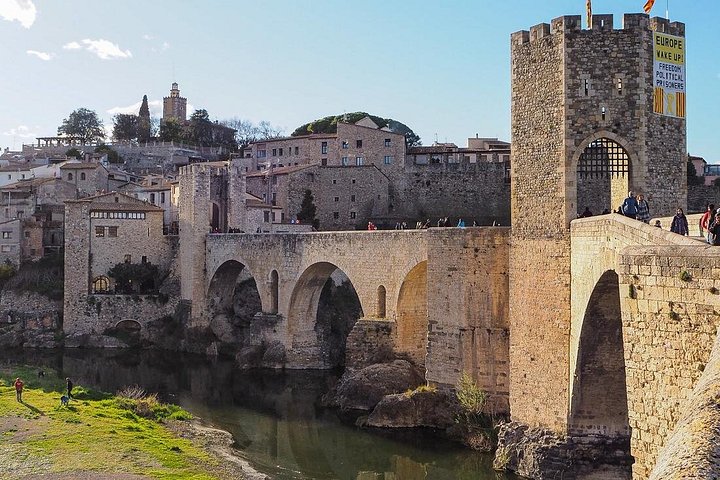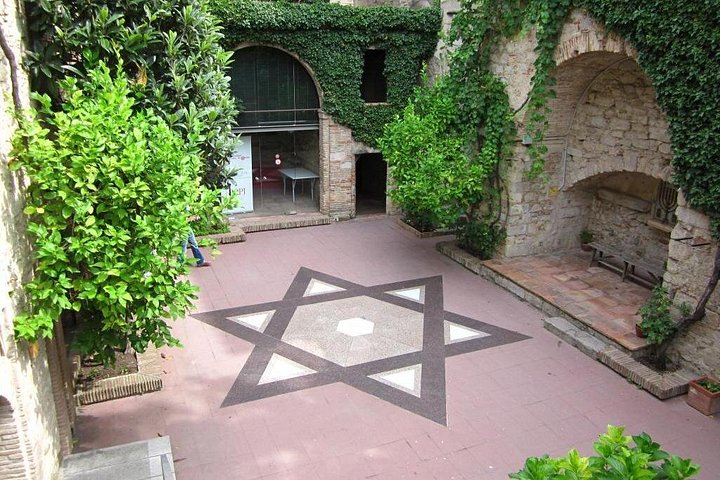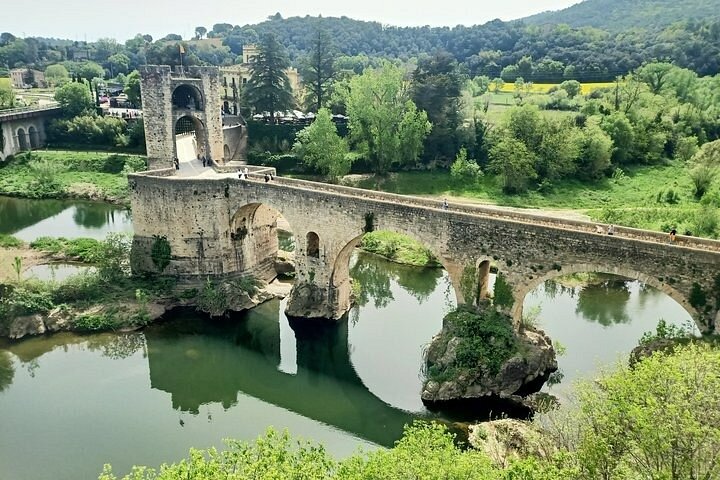
Besalu is the kind of village that makes people reach for their cameras before they have even parked. A fortified stone bridge, rebuilt after the Civil War from its twelfth-century model, leads into a compact medieval centre of arched lanes, Romanesque churches and a main square lined with cafes. The village was once the seat of a powerful county and later home to a significant Jewish community, and one of its treasures is the miqveh, a ritual bath discovered in the 1960s and among the very few of its kind in Europe. This guided visit adds history and tastings of local wine and food to a walk through the old centre, and it sits about an hour from Girona, making it an easy half-day or day excursion.
The walk usually starts at the bridge, where the guide explains its role in medieval trade and defence. Inside the walls, the main squares open one after another: the Placa de la Llibertat with its arcades, the Romanesque monastery of Sant Pere and the narrow lanes of the old Jewish quarter.
At the miqveh, you descend into a vaulted stone chamber with a pool fed by the river, and the guide explains how it was found and what it tells us about the community. Visits to the bath are normally guided and limited, so a booked tour is a convenient way in.
The tastings are a pleasant addition. Catalan food culture is easiest to understand with something on the plate, and the tour typically includes local wine and regional flavours, which might include cheeses, cured meats and sweets. The guide explains how the volcanic soils and the mountain climate shape the produce of the Garrotxa and the Emporda foothills. These tastings give the walk a social, unhurried rhythm, with a stop in the shade at midday and time to chat.
Besalu is small, so you can see the centre in two to three hours, but it rewards lingering. Return in the evening if you can, when the day-trippers have left and the stone glows. Markets, festivals and medieval fairs bring crowds on some weekends, so check the calendar if you prefer quiet.
Wear comfortable shoes for the cobbles, bring a hat in summer, and confirm the language of the guide at booking. Many visitors combine Besalu with Banyoles lake or the volcanic landscape of La Garrotxa, which sits just to the west and can be reached on a separate day trip.
A final tip is to look for the small details that give medieval villages their character: the stone mason marks on the bridge, the worn doorsteps in the lanes and the wells hidden in courtyards. Ask the guide about the legends attached to the town, from stories of counts and bishops to tales of the river. Evening light, when the bridge is lit and reflected in the water, is the best moment for photographs, so linger if your transport allows.
If you plan to extend your visit, Besalu has several small museums and a lively weekly market, and its restaurants specialise in mountain cooking, with grilled meats, wild mushrooms and rich stews in the colder months. Children enjoy the bridge and the river, and the lanes are compact enough for a pushchair outside the steepest sections. Arriving by public transport is possible but slow, so most visitors combine the village with a guided day trip from Girona or a rental car.
What to expect
The experience
A guided visit to Besalu's bridge, squares and medieval Jewish bath, with local wine and flavours.
Best time
Weekday mornings or evenings, when the village is quieter.
How long
Two to three hours; check the details when you book.
Tips
Wear comfortable shoes for cobbles and check the calendar for fairs and festivals.
Quick picks
- Best for
- History lovers and photographers.
- Families
- Fine for families with older children; the lanes are walkable.
- Couples
- A charming and romantic stop for two.
- Pair with
- Banyoles lake or the Garrotxa volcanoes on the same day.
- Time needed
- Two to three hours.
Good questions
What is the miqveh in Besalu?+
A medieval Jewish ritual bath, rediscovered in the twentieth century, one of the few of its kind preserved in Europe.
Is the bridge original?+
The bridge dates from the medieval period, though it was rebuilt after damage in the twentieth century.
How far is Besalu from Girona?+
About an hour by road, depending on traffic.
Does the tour include tastings?+
The title mentions wine and local flavours. Check the details for exact inclusions.
When is the village busiest?+
Weekends and festival days in spring and summer.