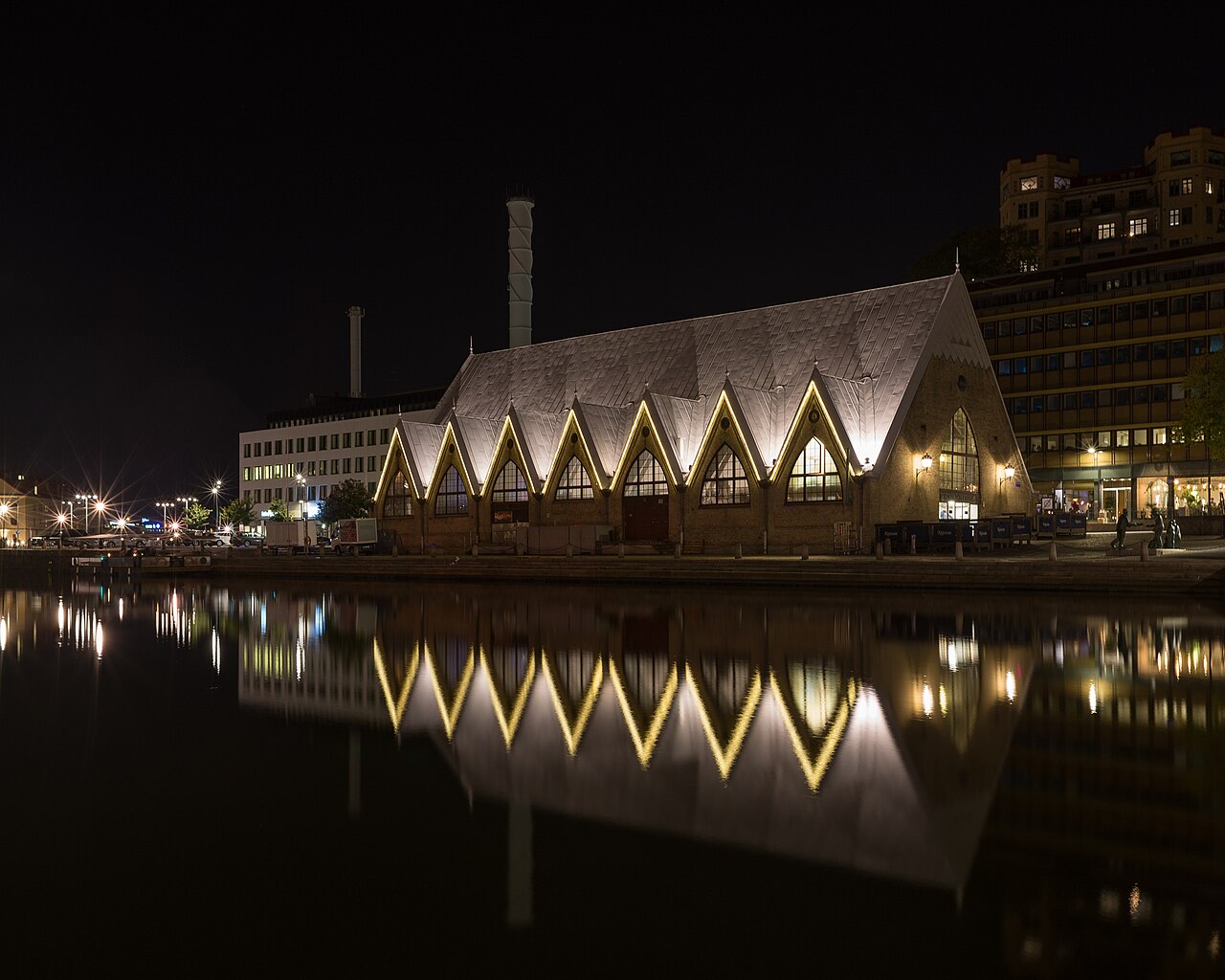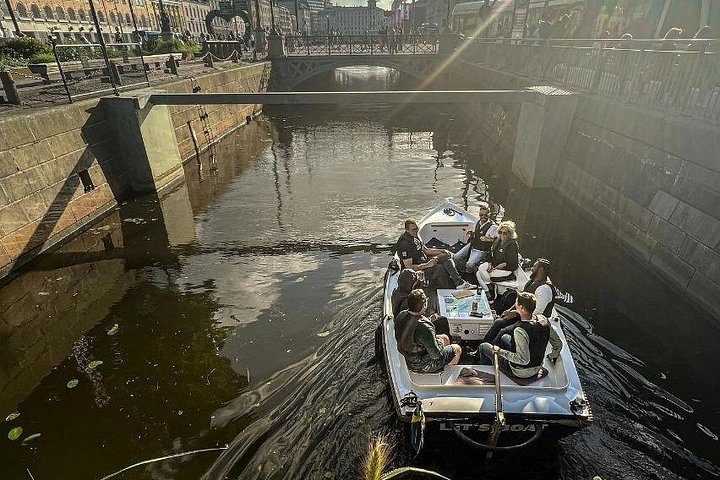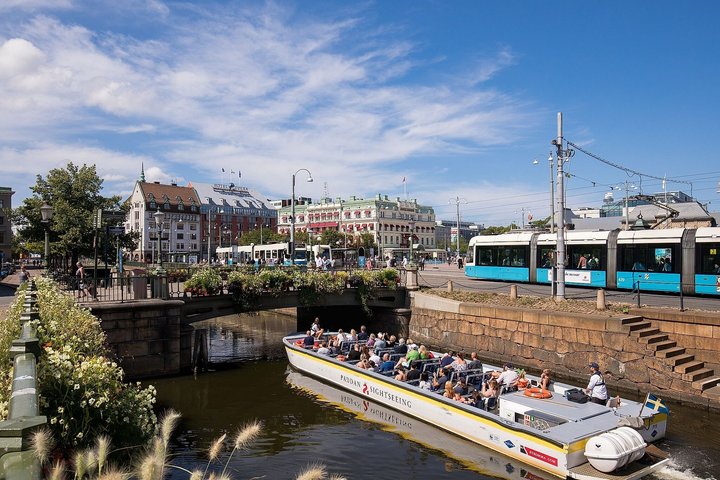
The Paddan boats are the city's best-known sightseeing trip, and the nickname translates roughly as the toad, for the low, flat shape that lets them pass under the stone bridges. They leave from the quay near Kungsportsplatsen, loop along the moat canals that were dug by Dutch engineers when Gothenburg was founded in 1621, and then move into the harbour. Along the way you pass the old fortification line, the Gothenburg Opera, the Feskekôrka fish church and the shipyards that built the city's fortune. Commentary is given in English and Swedish, and the tour takes a bit under an hour. The boats are open or semi-covered, with blankets and a roof for light rain, and the trip runs through the warmer months, usually from spring to early autumn.
What makes Paddan work is the pace. The boat moves slowly, the water level is close enough to hand, and the canal sections show a side of Gothenburg that you do not see from the pavement: the back gardens of the old merchant houses, the moat-line that once defended the town, the green slopes of the old ramparts and the statues and bridges that set the scale of the old centre. When the boat reaches the harbour, the view widens towards the modern waterfront, with the Opera, the Barken Viking sailing ship, the Lipstick tower and the shipyard cranes of Eriksberg across the river in sequence.
Choose a seat on the side with the best view of the commentary, and bring a layer because it can feel cool on the water even on a sunny day. The first trips of the day are quieter and photograph better, while late afternoon runs have golden light in the harbour. Because the boats are low, tall visitors need to duck under the bridges, and the crew will remind everyone. The tour suits children, who love the bridge ducking, and it is one of the easiest ways to get oriented in a few days.
Book in advance in summer; walk-up places on the day are available outside peak weekends but can sell out. Some companies sell the Paddan together with the hop-on hop-off boat or a city pass, so check whether the ticket you choose is a single trip or part of a bundle. If you want a longer harbour view, pair Paddan with the hop-on hop-off boat; if you want to steer yourself, try the electric canal boats.
A little context makes the commentary richer. The moat canals follow the line of the seventeenth-century fortifications, built when Gothenburg was a frontier town facing Denmark, and the broad ring of water and grassy ramparts is the reason the old centre feels so compact today. As you glide along, notice how the bridges differ in height and style: some are low stone arches, others are modern steel spans, and each marks a gate or a crossing that once had a name and a toll.
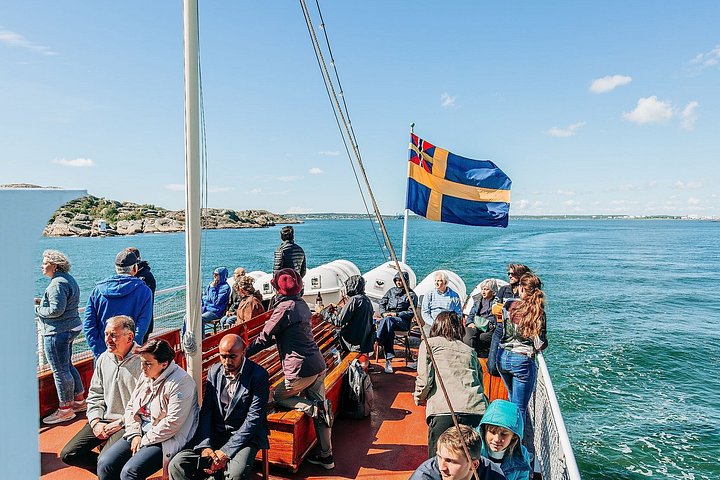
Out in the harbour, look for the contrast between working quays and the glass towers of the new waterfront, which tells the story of the city's change from shipbuilding to services and design. If you sit near the front you will hear the guide best; if you sit near the back you may get the better photographs of the wake and the bridges closing behind you. Whichever you choose, keep your hands inside the boat when passing under arches, and keep phones and cameras on straps.
What to expect
The experience
A guided sightseeing trip in a low boat through the old moat canals and out into the harbour, with commentary in English and Swedish.
Best time
Morning or late afternoon on a dry day between spring and early autumn.
How long
A little under an hour.
Tips
Bring a layer, duck under the bridges when the crew says so, and book ahead on summer weekends.
Quick picks
- Best for
- First-time visitors who want an easy orientation to the city.
- Families
- Children enjoy the low bridges; suitable for most ages with a layer for the wind.
- Couples
- A relaxed, scenic hour; late-afternoon runs have the best light.
- Pair with
- Feskekôrka or Saluhallen for lunch afterwards, or the hop-on hop-off boat for a longer harbour view.
- Time needed
- About an hour including boarding.
Good questions
Where does the Paddan leave from?+
From the quay by the Kungsportsbron bridge near Kungsportsplatsen, in the middle of the city. Check your ticket for the exact meeting point.
When does it run?+
Mostly spring to early autumn, with the most departures in summer. Winter operation, if any, is limited.
Is the commentary in English?+
Yes, English and Swedish commentary is standard, though some departures may be in Swedish only. Check the ticket for language details.
What if it rains?+
The boats are partly covered and blankets are provided, but heavy rain can mean a cancellation. Refund policies depend on the ticket you buy.
Is it suitable for wheelchair users?+
Access to the low boats is limited. Contact the operator before you book to ask about the current arrangements.