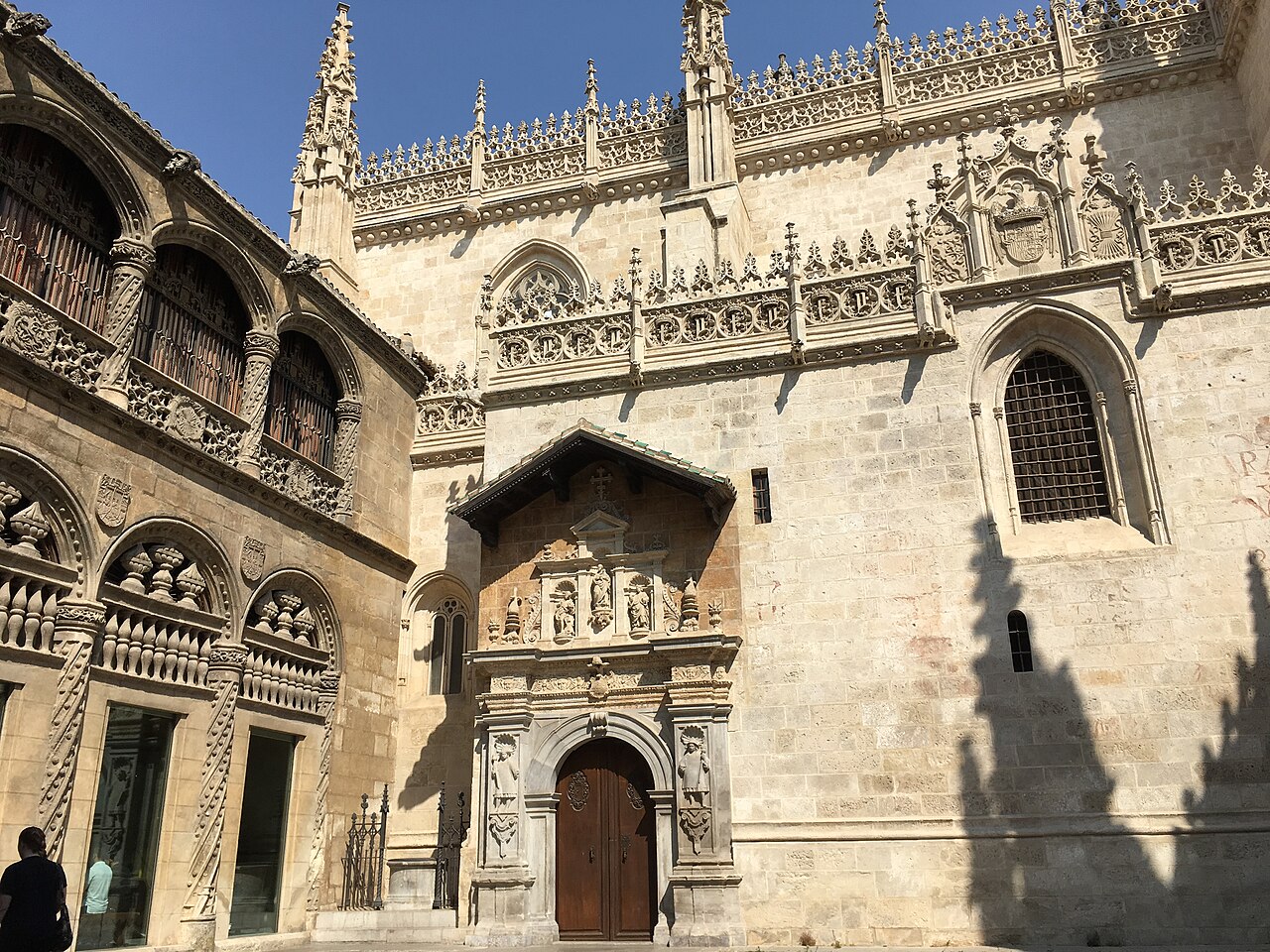
The Royal Chapel stands beside the cathedral and is one of the most important monuments in Spain, because it holds the tombs of the monarchs who completed the Reconquista. Isabella of Castile and Ferdinand of Aragon asked to be buried in Granada, the city whose conquest in 1492 crowned their reign, and the chapel was built in the first years of the sixteenth century in the ornate late Gothic style associated with the Isabelline era. Inside, an iron grille of extraordinary workmanship closes off the main chapel. Behind it lie two Renaissance marble tombs: those of Isabella and Ferdinand, carved in Italy and decorated with their effigies lying side by side, and those of their daughter Joanna and her husband Philip the Fair, whose monument is richer still. The altarpiece behind them, painted and carved with scenes from the lives of the saints and the conquest of Granada, is a masterpiece of the period. Below, in a simple crypt, the royal coffins themselves rest in plain lead, in striking contrast to the splendour above. The sacristy museum holds the crown and sceptre of Isabella, the sword of Ferdinand, liturgical objects and a fine collection of Flemish and Italian paintings gathered by the queen.
How it fits with the cathedral
The Royal Chapel has its own entrance and is visited separately from the cathedral, though the two are physically joined and are often sold together. The combined cathedral and Royal Chapel visit covers both. This entry is for travellers who want to give the chapel its own time, with a guided walking visit centred on the tombs, the altarpiece and the museum, rather than treating it as a short stop on a longer cathedral tour.
What to look for
Start with the grille, then move to the tombs and compare them, since the contrast between the more restrained monument of Isabella and Ferdinand and the more flamboyant one of Joanna and Philip tells you a lot about changing taste. Look at the carved reliefs on the altarpiece, which show the surrender of the city and the baptism of the Muslims who stayed.
Then go down to the crypt, which is plain and moving, before ending in the museum, where the royal regalia and the paintings are displayed in a small, well-lit space. A guide adds a great deal here, because the chapel is dense with political symbolism about the end of Moorish Spain and the start of a new empire.
Practical points
The chapel is small and visits are often managed in a steady flow, so it can feel busy in the middle of the day. Mornings and the last hour before closing are usually calmer. Photography is generally not allowed inside the chapel, so plan to look rather than shoot. Dress respectfully, as this is a working place of worship and burial, and expect a short security check at the entrance. The surrounding streets, the Alcaicería and the Plaza Bib-Rambla, have plenty of places for coffee or tapas afterwards.
A note on perspective
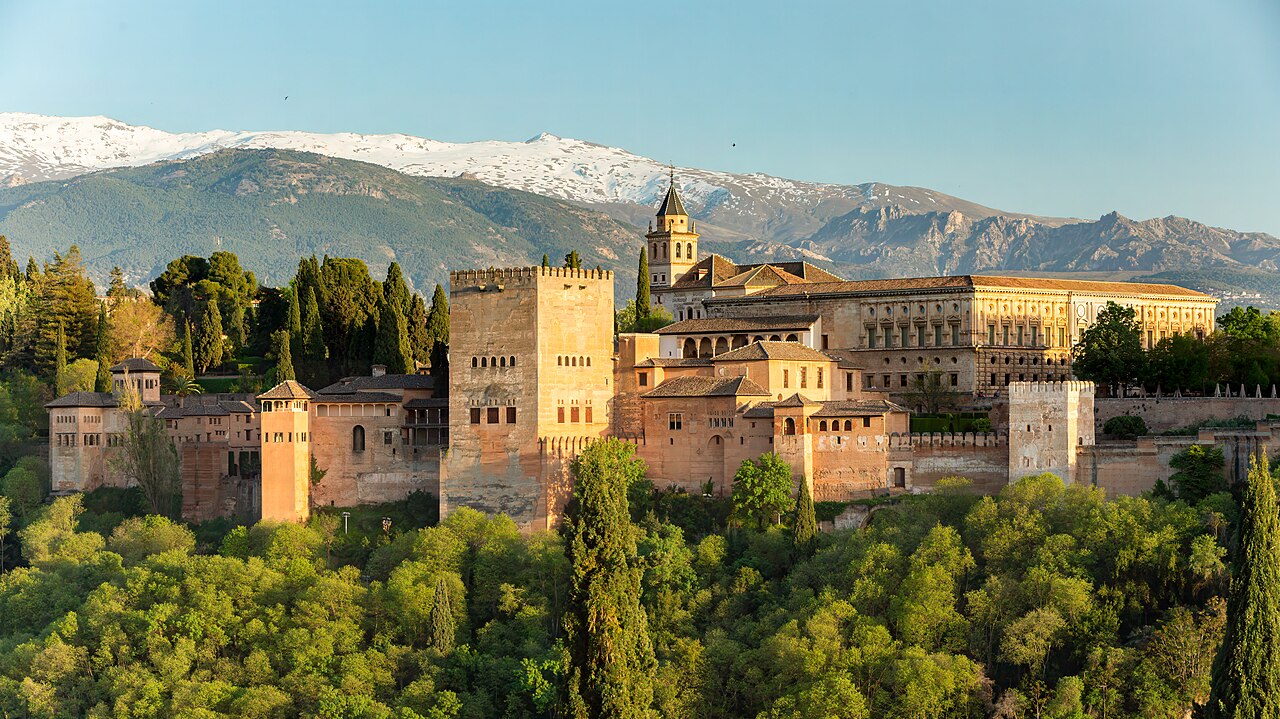
The chapel celebrates a victory that was also the end of eight centuries of Muslim rule in Granada and the start of the expulsions that followed. Seen alongside the Alhambra, it makes the layered, sometimes painful history of the city much easier to understand. Visit the Nasrid Palaces first, then the chapel, and the sequence will make sense.
What to expect
The experience
A guided walking visit to the chapel, covering the wrought-iron grille, the royal tombs, the altarpiece, the crypt and the museum.
Best time
Morning or the last hour before closing, when the chapel is calmer.
How long
About an hour for the chapel on its own.
Tips
Dress respectfully, expect no photography inside and allow time for the museum, which many visitors skip.
Quick picks
- Best for
- History lovers and anyone who wants to understand what 1492 meant for Granada.
- Families
- Best for older children with an interest in kings and queens; the visit is short and quiet.
- Couples
- A compact, atmospheric stop between the Moorish and Christian halves of the city.
- Pair with
- The cathedral, the Alcaicería and the Nasrid Palaces.
- Time needed
- About an hour, plus time for coffee in nearby Plaza Bib-Rambla.
Good questions
Who is buried in the Royal Chapel?+
Isabella of Castile and Ferdinand of Aragon, their daughter Joanna and her husband Philip the Fair, and Prince Miguel, a young grandson. The coffins rest in a plain crypt beneath the marble tombs.
Is the Royal Chapel part of the cathedral?+
It is a separate building next to the cathedral with its own entrance. The two are often visited together on a combined visit.
Can I take photos inside the Royal Chapel?+
Photography is generally not allowed inside the chapel, so check the signs and staff instructions.
How long should I spend at the Royal Chapel?+
About an hour for the chapel, tombs, crypt and museum. Allow longer if you also visit the cathedral.
What is in the Royal Chapel museum?+
The sacristy museum holds the crown and sceptre of Isabella, the sword of Ferdinand, religious objects and paintings from the queen's collection.