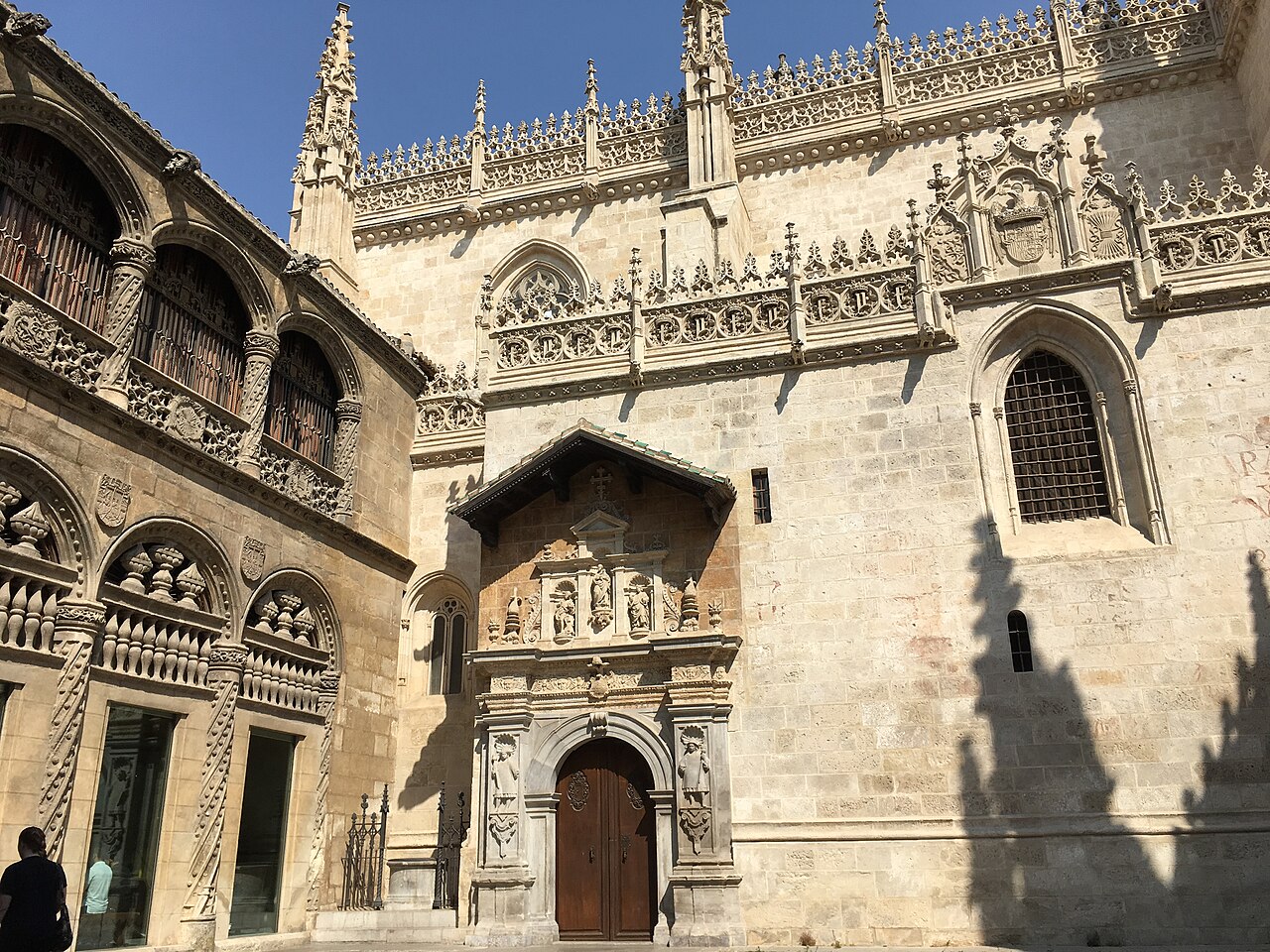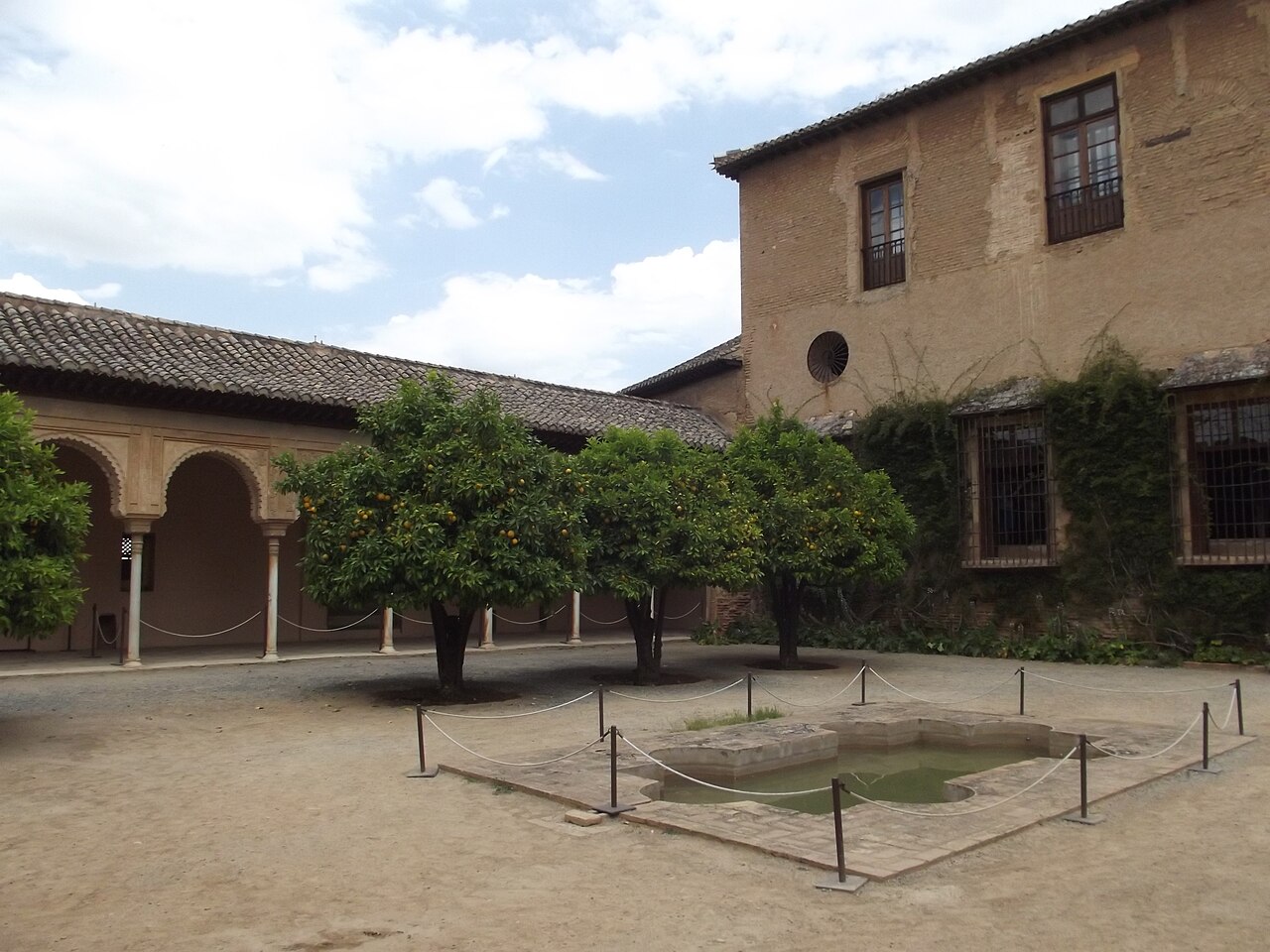
The Royal Monastery of San Jerónimo was founded by the Catholic Monarchs for the Hieronymite order soon after the conquest, and it moved to its present site in the early sixteenth century. Its great claim to fame is the church, a masterpiece of the Spanish Renaissance designed largely by Diego de Siloé, one of the leading architects of his age. From the outside it looks plain, but the interior is astonishing: tall vaults, ribbed and coffered, are covered in painted scenes and figures, while the high altar rises in a monumental carved altarpiece filled with saints and biblical stories. Gonzalo Fernández de Córdoba, the Gran Capitán, who had fought alongside the monarchs in the conquest of Granada and in Italy, is buried at the foot of the altar, and the monastery was once the grandest burial place in the city for the noble families who endowed it. Before you reach the church you pass through the cloister, a two-storey Renaissance courtyard planted with orange trees and surrounded by galleries whose walls carry paintings and decorated arches. It is a quiet, sheltered space, and it is a pleasant place to pause. The monastery still shelters a small community of nuns in part of the complex, so the atmosphere is one of devotion rather than display.
Why it is worth the detour
San Jerónimo does not receive the crowds of the Alhambra or the cathedral, so you can often look at the church in near silence. The paintings on the vault reward a careful look, with scenes of saints and military heroes, cherubs and architectural trompe l'oeil, all designed to glorify the monarchy and the faith.
The effect is of a vast illuminated manuscript turned into a building. It helps to pause in the middle of the nave and then look slowly in each direction, starting at the altarpiece and working up.
Getting there
The monastery is a short walk north-west of the cathedral, on a quiet street near the university buildings and the Hospital Real. It is flat, easy walking from the centre and takes only five to ten minutes from Plaza Bib-Rambla. Tickets are sold through the Granada Cristiana heritage ticketing system, which also covers some other religious monuments in the city, so it is worth checking whether a combined ticket suits your plans.
Visiting etiquette
This is a religious site, so cover your shoulders and knees, keep your voice low and respect any areas marked as reserved for the community. Photography rules vary, so follow the signs. Opening hours often include a break around midday and may vary by day of the week and season, so check before you go and avoid arriving at the very end of the morning or afternoon sessions.
Making a route
Pair the monastery with the Royal Chapel and the cathedral for a morning of Renaissance and late Gothic Granada, then walk to the Cartuja for the Baroque contrast, or return through the Realejo and the Alcaicería for lunch. The monastery works well on a cool or rainy day, since most of the visit is indoors, and its garden-like cloister is a good place to rest during a hot afternoon. Allow about an hour. If you only visit one lesser-known church in Granada, this is the one that most repays the time.
What to expect
The experience
A self-paced visit to a two-storey cloister and a fully painted Renaissance church, with the tomb of the Gran Capitán at the altar.
Best time
Mid-morning or mid-afternoon, avoiding the midday break.
How long
About an hour, with time to sit in the cloister.
Tips
Cover shoulders and knees, check the opening times for the day and look slowly at the vault before you leave.
Quick picks
- Best for
- Art and architecture fans and anyone looking for a peaceful, under-visited sight.
- Families
- Short and quiet; best for older children with an interest in history or painting.
- Couples
- A calm half hour in the cloister and the church, followed by coffee in the old centre.
- Pair with
- The Royal Chapel, the cathedral and the Cartuja.
- Time needed
- About an hour, plus a short walk from the cathedral.
Good questions
Who is buried at San Jerónimo?+
Gonzalo Fernández de Córdoba, the Gran Capitán, rests at the foot of the high altar, alongside members of the noble family who funded the monastery.
Is San Jerónimo worth visiting if I have seen the cathedral?+
Yes. The painted church and the orange-tree cloister are very different from the cathedral, and the visit is quieter and shorter.
How far is it from the cathedral?+
A flat five to ten minute walk north-west of the cathedral area, near the university buildings.
Is there a dress code?+
It is a place of worship, so cover your shoulders and knees and keep your voice low.
How long does a visit take?+
About an hour for the cloister and the church at an easy pace.