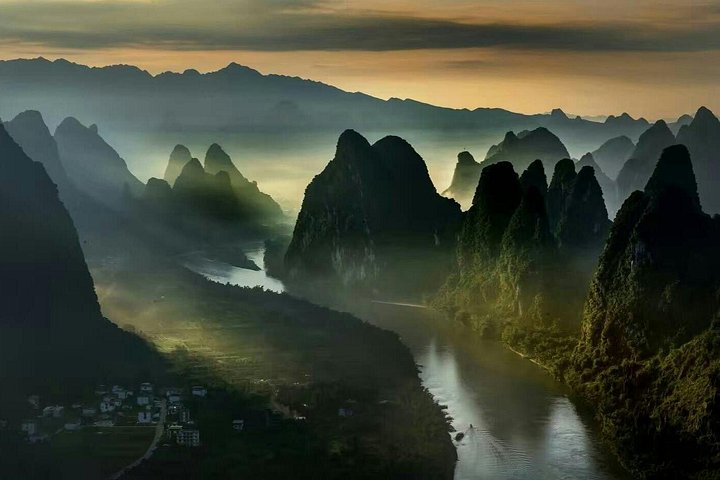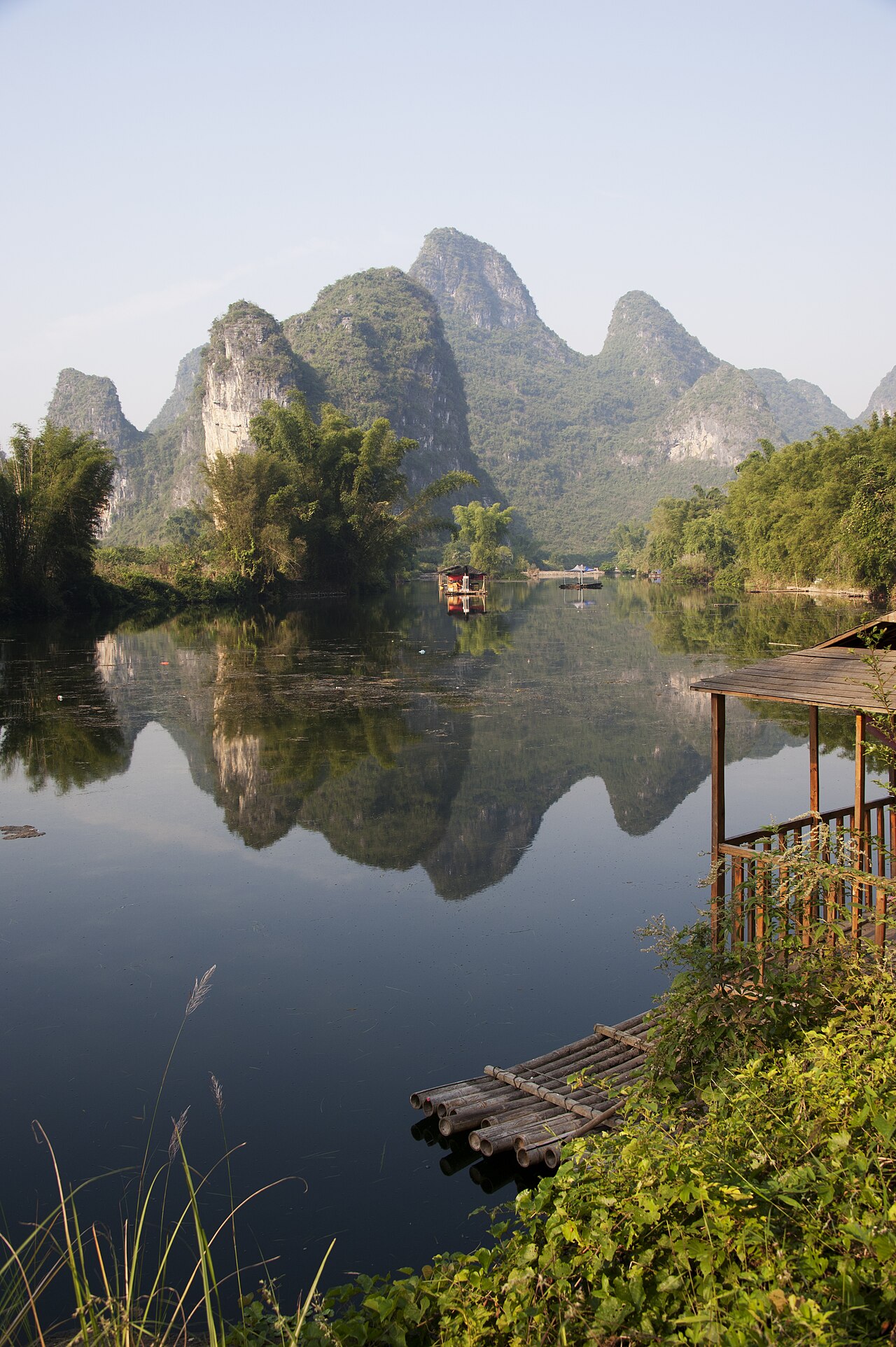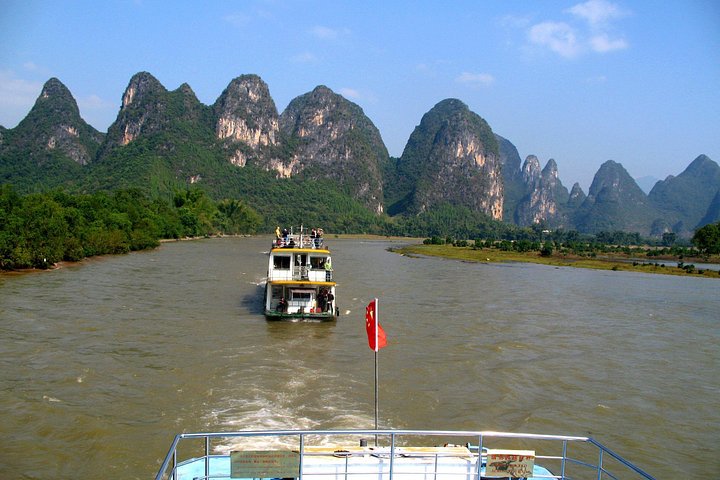
Guilin and Yangshuo sit in the same landscape, a plain dotted with thousands of green limestone peaks that has been painted, poeticised and photographed for centuries. Guilin is the city, with the airport, the railway stations and a handful of sights, while Yangshuo is the small town about ninety minutes away by road, where most travellers end up spending their time. Between them runs the Li River, and around them lie rice terraces, caves, villages and bamboo-lined streams. This guide covers the essentials for a first trip.
How many days
Three full days is the minimum to see the highlights without rushing, and four or five is better if you like to slow down. A good shape is one day for Guilin city, one day for the Li River cruise to Yangshuo, and then two days in and around Yangshuo for the Yulong River, the countryside and an evening on West Street. If you also want the Longji rice terraces, add a day, or two if you plan to sleep in a village. Short on time? A single day that combines the cruise with Yangshuo is the classic compromise.
What to book ahead
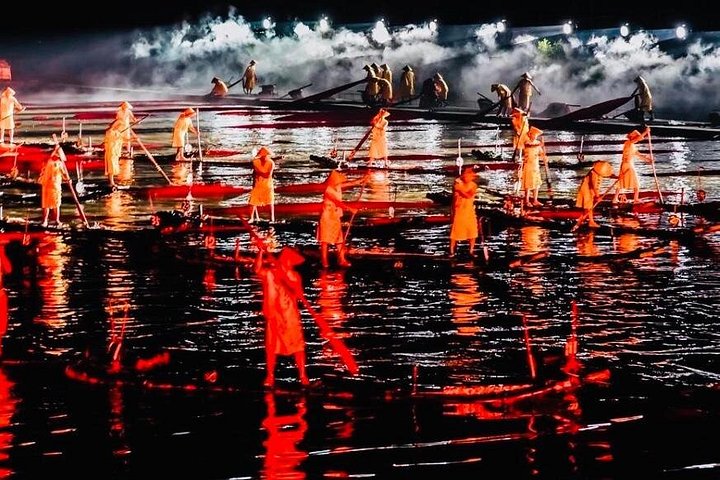
A few things are worth arranging before you arrive. The Impression Liu Sanjie show has several seat zones and a break in January and February, so choose your zone and confirm the schedule for your date. The Li River cruise has different boat classes, and the smaller boats with English commentary are worth asking for. A Longji trip needs a driver or small-group tour because public coaches are slow and have little English service, and a Xianggong Hill sunrise requires a private car and a very early start. Cooking classes and bike tours can usually be booked a day or two ahead.
Where the sights fit
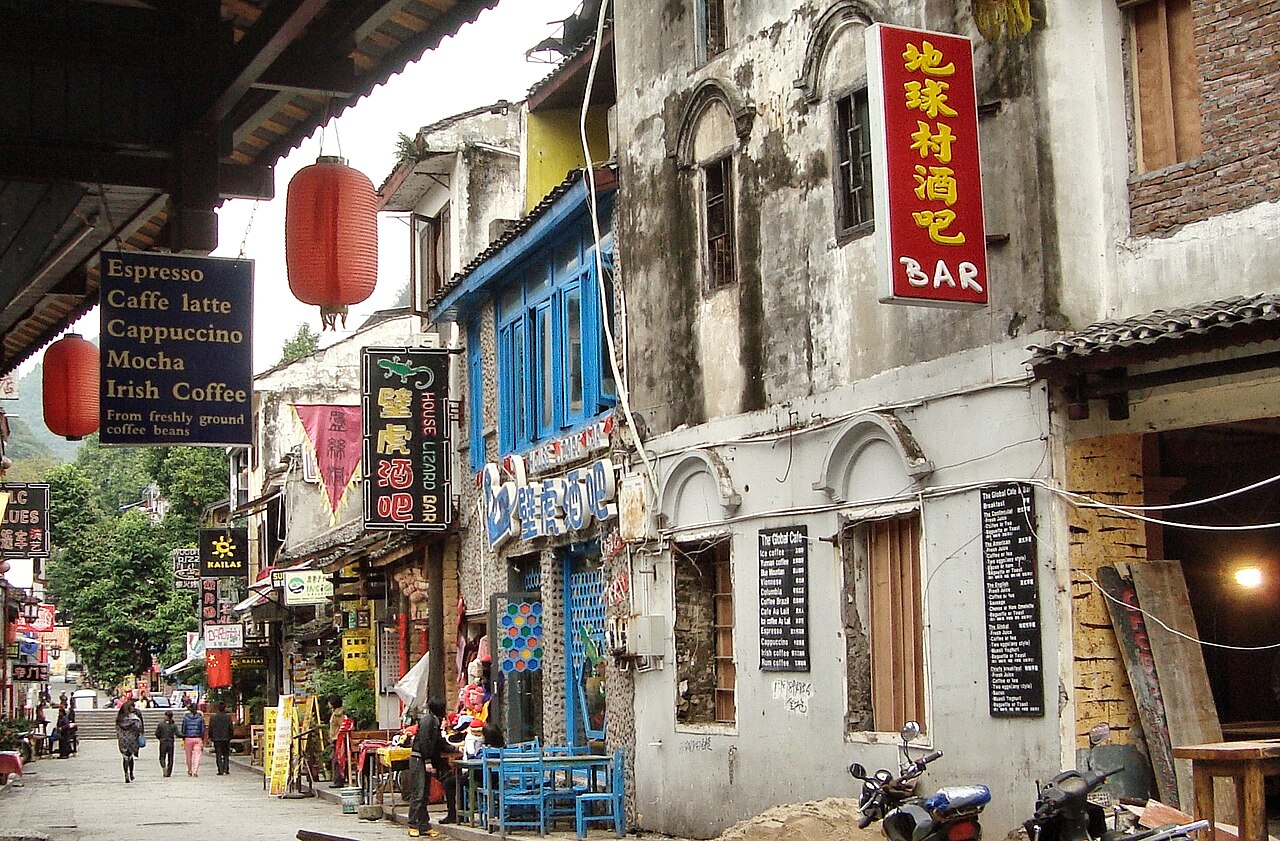
In Guilin, Elephant Trunk Hill and Reed Flute Cave are the two city sights most visitors see, and both can be done in a half day. The Li River cruise is the centrepiece, and the most beautiful stretch is the section between Yangdi and Xingping. In Yangshuo, the Yulong River bamboo rafts, a countryside bike ride, Xianggong Hill at dawn and the evening scene on West Street are the heart of the visit. The cooking class makes a good break on a wet day.
When to go
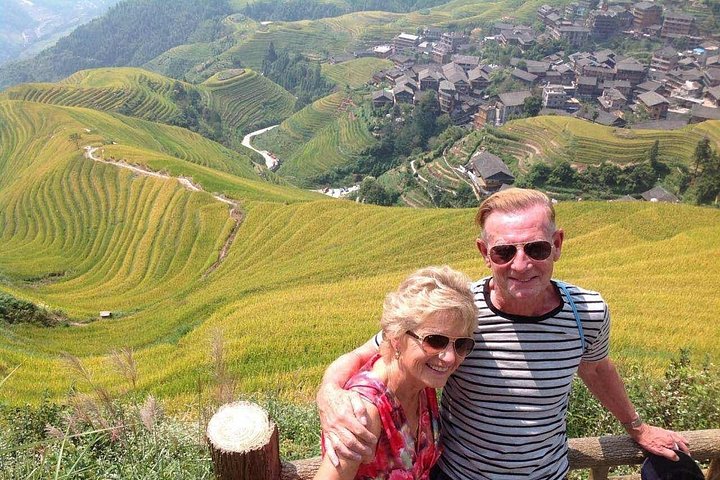
Spring and autumn are the best seasons, with clearer air and comfortable temperatures. The terraces at Longji are at their best in late May, when the paddies are flooded, and in late September and early October, when the rice turns gold, while the colder months are browner and quieter. The river is highest between May and September and the rainy summer months can bring heavy showers and flooding, so check conditions before you travel. Chinese national holidays, especially the early-October Golden Week, are extremely crowded and expensive, so avoid them if you can.
Getting around
Guilin Liangjiang airport is about forty minutes from the city centre and roughly an hour to an hour and a quarter from Yangshuo by road. Guilin has railway stations close to the centre, and pre-booked private transfers are the simplest way to link the airport, Guilin and Yangshuo. In Guilin, taxis and ride-hailing are cheap and city buses reach Elephant Trunk Hill. In Yangshuo, the main way to explore is by bike, electric bike or scooter, and taxis are readily available for the Liu Sanjie show or Xianggong Hill. Check the brakes before riding off and agree prices in advance.
Practical tips
Mobile payment dominates in China, so set up an international payment app or carry some cash for market stalls and small shops. Download an offline translation app and a map that works in China, and keep your hotel name written in Chinese to show a driver. Bring layers and a light waterproof jacket in every season, and sturdy shoes with grip for caves, terraces and wet steps. Early starts are rewarded with calmer scenery, so plan your days around the morning light and keep evenings for West Street.
Sample plan
Day one: Elephant Trunk Hill and Reed Flute Cave in Guilin. Day two: the Li River cruise to Yangshuo, then dinner on West Street. Day three: a bamboo raft on the Yulong River and a countryside bike ride. Day four: a sunrise at Xianggong Hill or a cooking class, followed by the Liu Sanjie show. Day five, if you can: the Longji terraces. Each day leaves room for rest, which is the secret of enjoying this slow, beautiful corner of China.