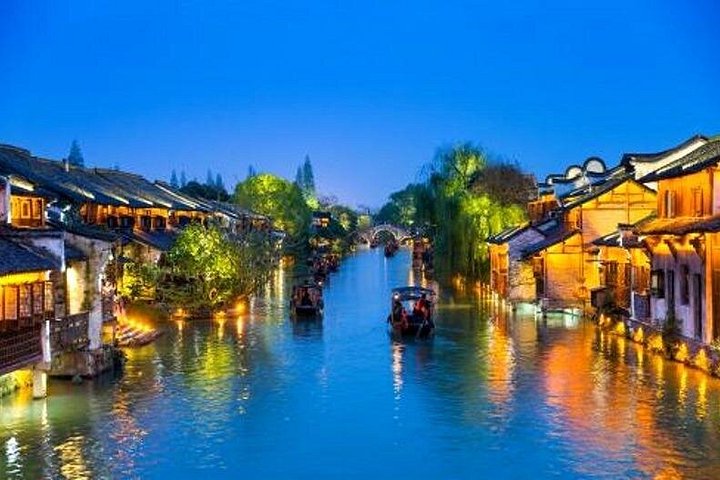
The Grand Canal is the longest artificial waterway in the world, and Hangzhou is its southern terminus. The canal as a whole is a UNESCO World Heritage site, and its Hangzhou stretch is a pleasant district of old warehouses, tea houses, museums and riverside paths in the north of the city. The Beijing-Hangzhou Grand Canal Museum, which opened in 2007, is China’s only museum devoted to the canal, with four exhibition halls covering how it was dug, how it carried grain and goods, how the Hangzhou section is protected and the culture of the towns along it. Nearby, Gongchen Bridge, a high triple-arched stone bridge from the Ming period, crosses the canal and lights up at dusk. The area is free to walk, the museums are free with ID, and the canal itself is still working, with barges passing beneath the bridge. Together they make a local, low-key outing that shows a side of Hangzhou most visitors miss.
How to visit
The district is in the north of the city and is served by metro line 5, with several stations a ten to fifteen minute walk from the waterfront. Entry to the museum and the neighbouring canal-side museums is free with an ID or passport, and weekends can require a reservation. The Beijing-Hangzhou Grand Canal Museum is generally closed on Mondays, while the smaller Qiaoxi museums are generally closed on Tuesdays, so check the opening days before you go. Hours are roughly nine to half past four, with last entry a little earlier.
What to expect
The museum is calm and well organised, with models, maps and a few remarkable objects, including a Qing-era transport vessel. Outside, the canal-side promenade is lined with tea houses and cafes, and a water bus and an evening canal cruise run from nearby piers for a modest fare. Gongchen Bridge is at its best at dusk, when the lights come on and the crowds thin.
Making the most of it
Arrive in the morning for the museum, have lunch beside the water and finish with a walk to the bridge at dusk. The weather is cool and pleasant in autumn, and evening cruises are the most atmospheric way to see the canal. Bring your passport for entry, and do not count on English everywhere.
Combine it sensibly
The district is a good evening outing after a day at West Lake, or it pairs with a morning at Xixi Wetland, which lies a little to the west.
What to expect
The experience
A free museum visit, then a walk along the canal to Gongchen Bridge, with an optional evening boat.
Best time
Morning for the museum, and dusk for the lit bridge and canal.
How long
Two to three hours, longer with a canal cruise.
Tips
Bring your passport for free entry, check closing days because the museums close on different weekdays, and reserve ahead on weekends.
Quick picks
- Best for
- Curious travellers who like local history, waterways and quieter places than the lakeshore.
- Families
- Models and boats keep children engaged, and the canal-side paths are flat and easy.
- Couples
- Time the walk to the bridge for dusk, then take an evening canal cruise.
- Pair with
- Xixi Wetland in the morning, or Hefang Street in the evening.
- Time needed
- Half a day.
Good questions
Is the Grand Canal Museum free?+
Yes, entry is free with an ID or passport, and weekends can require a reservation. Check opening days before you go.
Which day is the museum closed?+
The Beijing-Hangzhou Grand Canal Museum is generally closed on Mondays. The smaller canal-side museums are generally closed on Tuesdays.
What is Gongchen Bridge?+
It is a high, triple-arched stone bridge from the Ming period over the canal. It is lit up in the evening.
Can I take a boat on the canal?+
Yes, a water bus and an evening cruise run from nearby piers. Fares are modest, and evening cruises are the most atmospheric.
How do I get there?+
Metro line 5 serves the district, with stations a short walk from the waterfront. Taxis and ride-hailing are also easy.