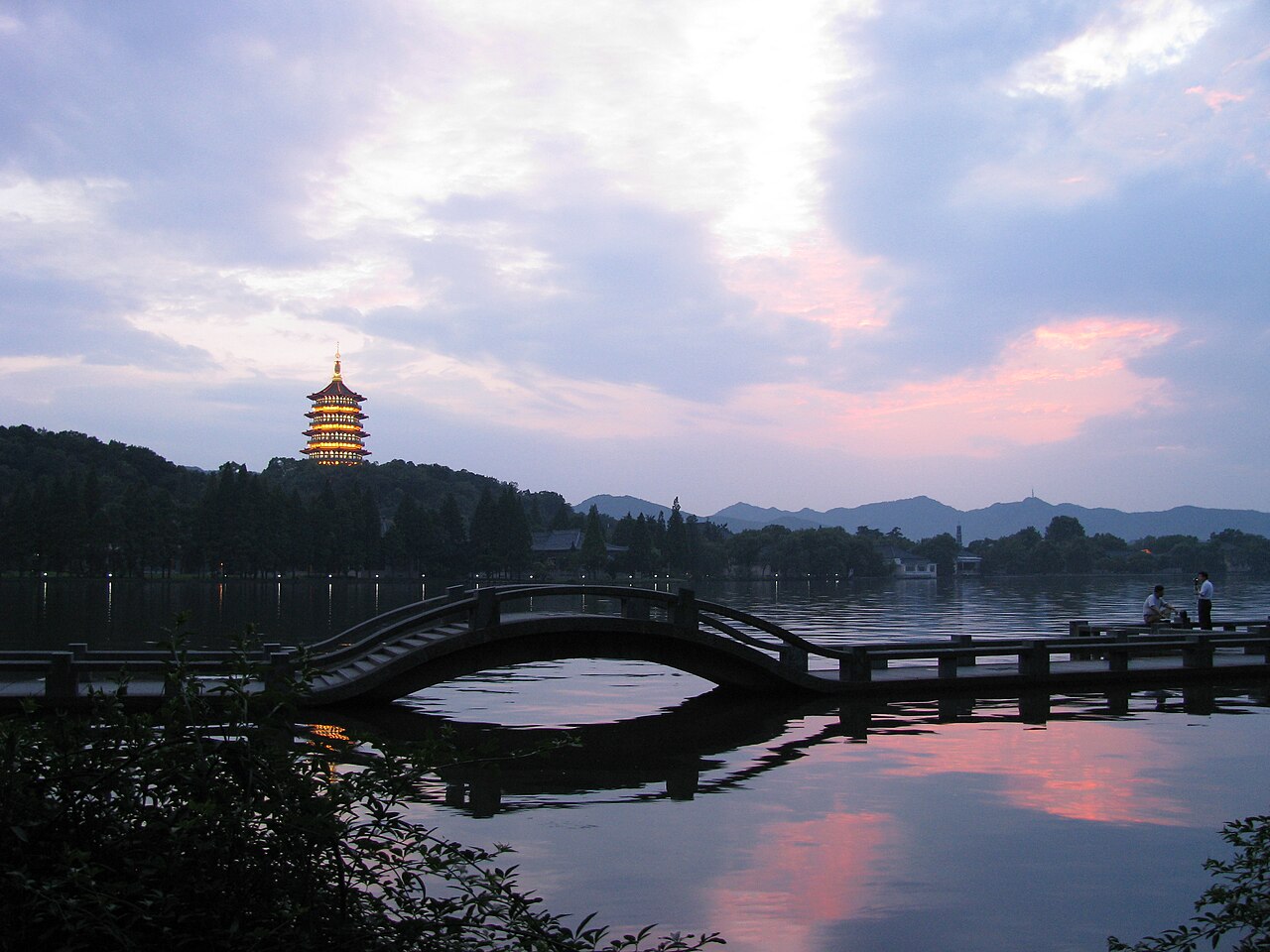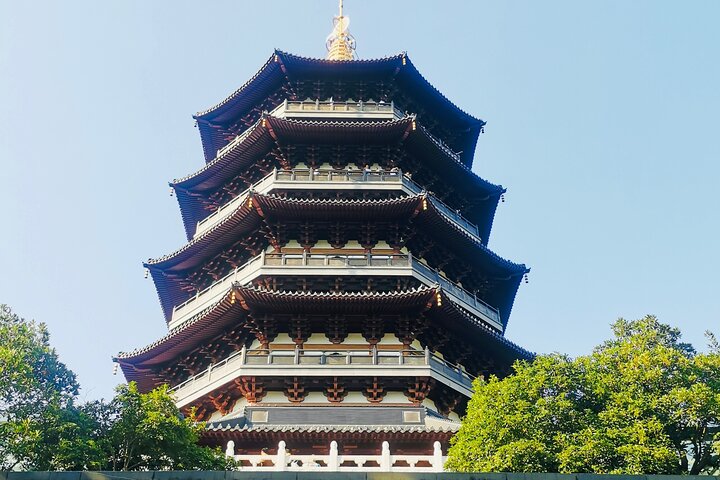
The Six Harmonies Pagoda, or Liuhe Pagoda, crowns Yuelun Hill on the north bank of the Qiantang River, south of West Lake. At almost sixty metres high, with thirteen storeys visible from outside and seven inside, it is one of the tallest and most recognisable historic pagodas in Hangzhou. It was first built in the tenth century, and tradition says it was built to calm the river’s powerful tidal surge, which makes it one of the places that have been regarded as the best vantage for watching the Qiantang bore since the Southern Song period. The tower you see today is a Southern Song structure with later wooden eaves, so it has an old-fashioned, layered silhouette that looks especially dramatic against the evening sky. Visitors can climb inside for a modest extra fee, and the views over the river and the bridges are rewarding. The grounds are green and quiet, with smaller pagoda models and gardens.
How to visit
The pagoda is south of the lake and a short taxi or ride-hailing trip from the main hotels, and buses also run there. Entry to the grounds is paid, with an additional fee to climb the tower, and opening hours run from early morning to late afternoon. The tour on combines the pagoda with Lingyin Temple, which makes sense because the two sit on the same side of the city and a guide handles the transfer.
What to expect
The climb is a steep, narrow stair, and the upper levels open onto small balconies for views over the river. The grounds include a small garden and a hall of miniature pagodas. In the bore season, the pagoda is a popular viewing spot, though the biggest tides arrive in early autumn, around the Mid-Autumn festival, rather than in November.
Making the most of it
Go in the late afternoon for softer light, but check the closing time, since it closes earlier than many sights. Wear comfortable shoes for the climb, avoid it if stairs are difficult, and watch your head on the narrow turns. A clear day gives wide views over the Qiantang River and the bridges.
Combine it sensibly
Pair it with Lingyin Temple and the Longjing tea hills for a hill-and-pagoda day, or pair it with Leifeng Pagoda for two views of the lake and the river.
What to expect
The experience
A ticketed visit to the grounds and tower, with a steep climb to small balconies over the river.
Best time
Late afternoon for soft light, checking the closing time first; early autumn for peak tides.
How long
One to two hours including the climb and the grounds.
Tips
Check closing time, wear comfortable shoes for the narrow stair, and skip the climb if stairs are hard for you.
Quick picks
- Best for
- History and architecture fans who want river views away from the lake.
- Families
- Older children enjoy the climb, but the narrow stair is not suited to strollers.
- Couples
- Visit in the late afternoon and watch the light change over the river.
- Pair with
- Lingyin Temple and the Longjing tea hills on the same day.
- Time needed
- Up to two hours.
Good questions
How tall is the Six Harmonies Pagoda?+
It is almost sixty metres high, with thirteen storeys visible from outside and seven inside.
Can I climb the pagoda?+
Yes, for a small extra fee, but the stair is steep and narrow. The upper balconies give wide views over the Qiantang River.
Why was it built?+
Tradition says it was built to calm the river’s powerful tidal surge. It has long been regarded as one of the best places to watch the Qiantang bore.
When is the tidal bore at its biggest?+
The biggest tides come in early autumn, around the Mid-Autumn festival. In November the river is calmer.
How do I get there?+
It is a short taxi or ride-hailing trip south of West Lake. A guided tour that includes the pagoda handles the transfer.