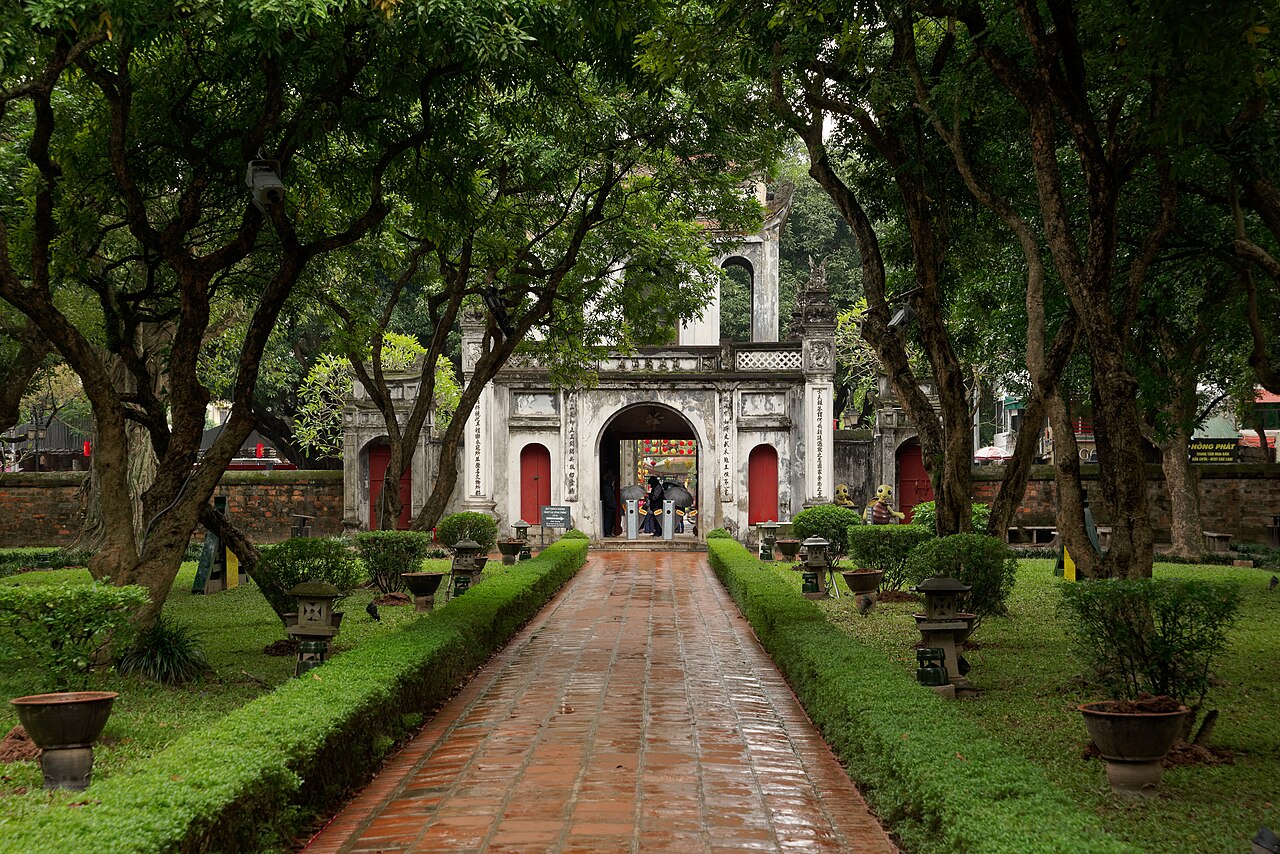
Duong Lam is one of the best-preserved traditional villages in the Red River delta, and a day here feels like stepping into northern Vietnam as it was before the cities swelled. The village sits in Son Tay, to the west of Hanoi, and is made of a cluster of old hamlets joined by narrow lanes lined with walls of laterite, the rust-coloured stone that gives the whole place its warm tone. Old gates open onto courtyards and houses with carved timber frames, some of them several centuries old, and a communal house, a pagoda and ancestral temples stand among them. Duong Lam is also known as the birthplace of two kings, which explains its status as a place of local pride, and it has become popular for visitors who want to see a real working village rather than a museum. A guided day trip from Hanoi organises the transport and the route, sets the history in context and usually includes lunch cooked by a local family. The pace is slow, the setting is photogenic and the rural lanes, ponds and rice fields make it one of the easiest escapes from the city.
How it works
The trip is a guided day tour from Hanoi, usually with pickup in the Old Quarter and a drive of about an hour and a half each way. Check the pickup point, the activities and the group size when you get tickets, as these vary by operator. The route may involve walking, a short bicycle ride or a vehicle between hamlets, depending on the programme you choose.
What to expect
The guide leads you through the village lanes to a few well-kept houses, whose owners welcome visitors into their courtyards to see timber beams, altars and old furniture. You pass the communal house and the pagoda, and learn how the village functions today, with farming, small crafts and family ties as the backbone of daily life.
Lunch is often a home-style meal with local dishes, and the afternoon may include a tea stop or a short stroll to a pond or a market. The village is lived in rather than staged, so keep your voice low and ask before photographing people or entering a courtyard.
Making the most of it
Wear comfortable shoes with grip, since the laterite lanes can be uneven and slippery after rain, and bring sun protection or a light waterproof depending on the season. Carry small notes in dong for souvenirs and drinks. The trip suits travellers who prefer a quiet, cultural day to a scenic cruise, and it pairs well with a silk-weaving stop at Van Phuc or a ceramics visit at Bat Trang on another day.
The best seasons are autumn and spring, when the air is clear and the fields are green or golden. In summer the heat and humidity are heavy, so start early. If you are travelling with a mix of ages, a vehicle between hamlets makes the day easier on little legs.
Planning notes
Ask the operator whether the programme includes the Mia Pagoda or other temples nearby, and whether lunch can be adapted for vegetarians. Bring a small gift or buy a snack from a local stall if a family invites you into their courtyard, as a polite gesture. The village is quietest on weekdays, and weekends can bring more local visitors. Keep valuables close, as in any busy rural market.
What to expect
The experience
A guided day trip from Hanoi to a traditional village with laterite lanes, old houses, a communal house and a home-style lunch.
Best time
Autumn and spring, when the air is clear and the fields are green or golden. Start early in summer.
How long
A full day, with roughly an hour and a half of driving each way.
Tips
Wear shoes with grip for the laterite lanes and ask before photographing people or entering courtyards.
Quick picks
- Best for
- Travellers who want a quiet cultural day in a real village close to Hanoi.
- Families
- The lanes and ponds suit curious children, though the day is long and the heat can tire small ones.
- Couples
- Peaceful, photogenic and unhurried, with a shared meal in a family home.
- Pair with
- A silk-weaving visit at Van Phuc or the Bat Trang ceramic village on another day.
- Time needed
- A full day.
Good questions
Where is Duong Lam village?+
It is in Son Tay, west of Hanoi, roughly an hour and a half by road.
What makes Duong Lam special?+
It keeps many old houses, gates and lanes built with laterite, along with a communal house and temples, and is still a living village.
Is lunch included on the day trip?+
Many programmes include a home-style lunch, but check the details when you get tickets.
Is Duong Lam suitable for children?+
Yes, if they enjoy walking and exploring. The day is long, so bring snacks and water.
What should I wear in the village?+
Comfortable shoes with grip, modest clothing for temples and sun or rain protection depending on the season.