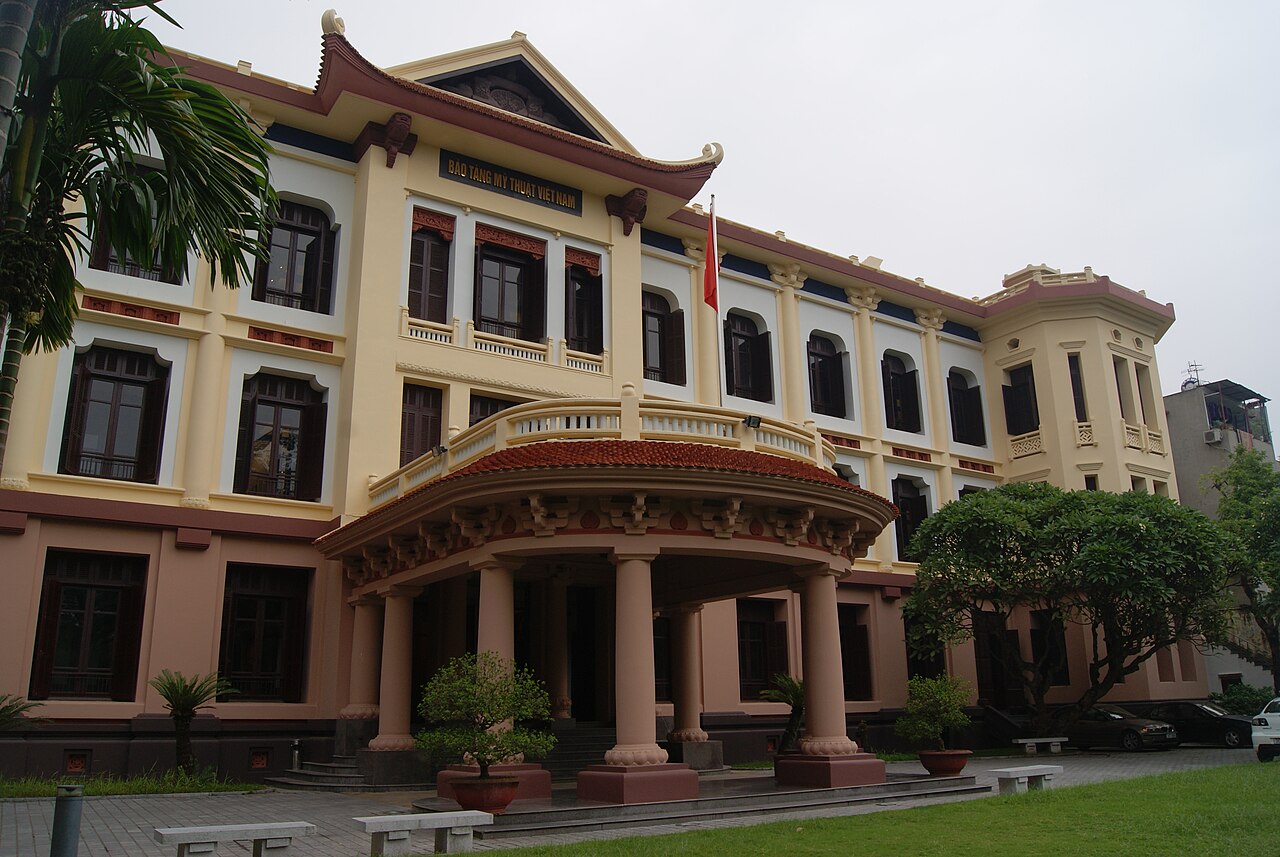
The Vietnam Fine Arts Museum fills a handsome colonial-era building on Nguyen Thai Hoc Street, a few minutes’ walk from the Temple of Literature and the Mausoleum area. Many visitors rush past it on the way to the better-known sights, but it is the best place in the city to see how Vietnamese artists have worked across the centuries. The collection runs from carved stone and wooden sculpture of the early dynasties, through gilded Buddhist statues and village folk prints, to the lacquer and silk paintings that developed in the twentieth century when local artists blended Vietnamese materials with European technique. Wartime painting and poster art give the later rooms real force, and the contemporary galleries show how the national story is still being retold. The ticket we link includes an audio guide on your own phone, which adds a good deal: labels in a museum like this can be sparse, and having the context for a lacquer panel or a folk print in your ear turns a pleasant stroll into a proper introduction to Vietnamese art. It is a calm, shaded place to spend a hot or rainy hour, and it pairs naturally with the history sights close by.
How it works
You buy a ticket for entry to the museum together with an audio guide that you play on your own phone, so bring earphones and make sure your device is charged. Opening days and hours are set by the museum and can change, so check them when you get tickets,. Bags may need to be left at a desk, and photography rules differ between galleries.
What to expect
The museum is spread across several buildings and floors around a courtyard. Start with the earliest sculpture and the Buddhist statues, which include striking multi-armed figures in carved and lacquered wood, then move through the folk art and the lacquer paintings, which are the highlight for most people. Look for the way artists use layers of lacquer, eggshell and gold leaf to build a glowing surface that photographs cannot capture.
The twentieth-century rooms show how painters trained in Hanoi in the colonial period adopted silk and lacquer as national mediums, and the later galleries cover the years of war and reconstruction. Allow time to sit in the courtyard between floors.
Making the most of it
Go on a weekday morning or in the early afternoon, when the rooms are quiet. Comfortable shoes help, because the floors are stone and the galleries are large. If you only have an hour, follow the audio guide’s main route rather than trying to see every room. Dress modestly, as in other cultural sites, and keep your voice low in the rooms with religious statues.
Planning notes
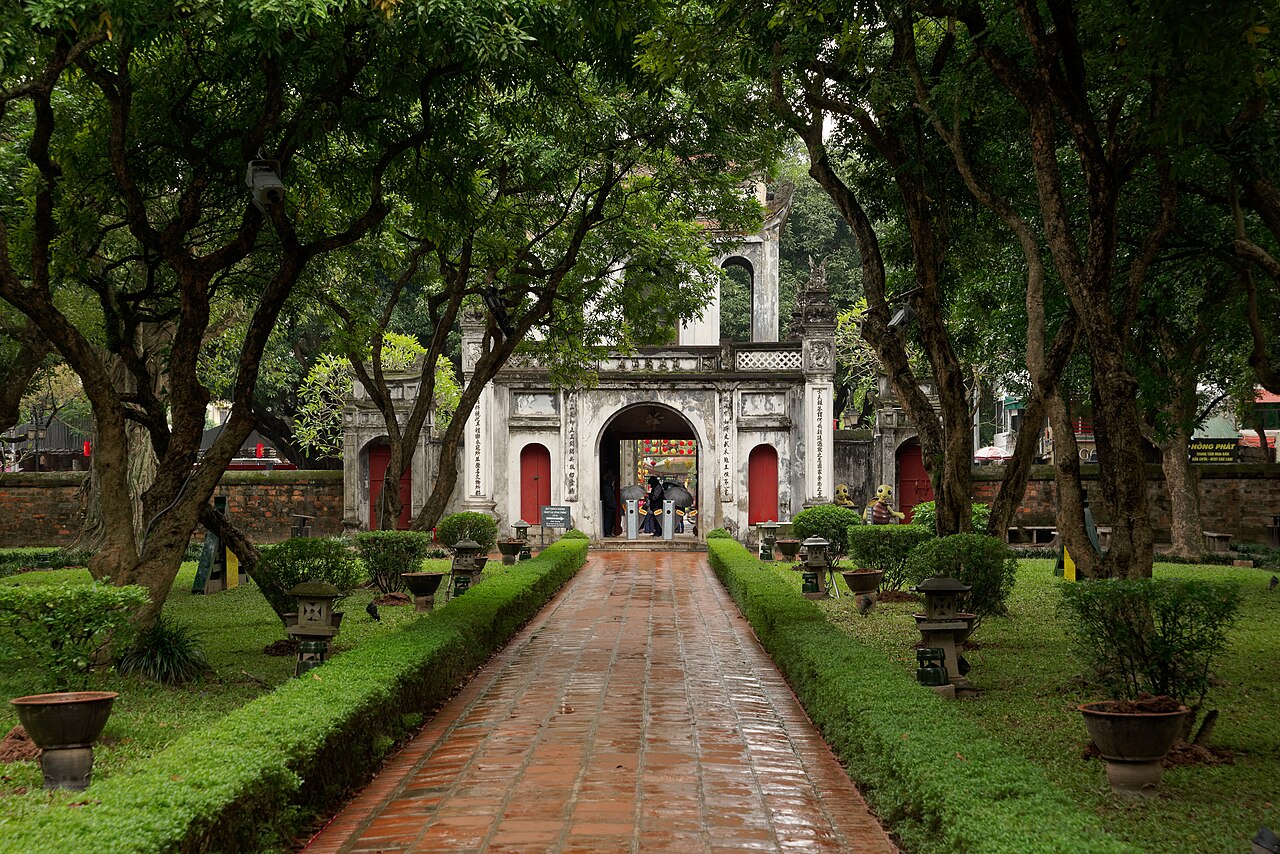
Combine the museum with the Temple of Literature, which is a short walk away, and finish with an egg coffee nearby. It is a good wet-weather option and suits visitors who like quiet galleries more than monuments. Children who enjoy drawing may like the folk prints and the colourful silk paintings, though the museum is more rewarding for older children and adults.
Good to know
The museum is a working cultural institution, so occasional gallery rearrangements are normal and a room you read about may be closed or reorganised. Staff are used to visitors asking for directions, and a short chat often points you to the best pieces. If you enjoy the visit, the museum’s small shop and the craft streets of the Old Quarter are good places to look for lacquer ware and prints to take home.
What to expect
The experience
Self-guided visit to the museum’s galleries with an audio guide on your own phone.
Best time
Weekday mornings or early afternoons, when the galleries are quiet. A good choice for hot or rainy days.
How long
One to two hours, depending on how closely you follow the audio guide.
Tips
Bring earphones and a charged phone, and wear comfortable shoes for the stone floors.
Quick picks
- Best for
- Visitors who want to understand Vietnamese art and enjoy quiet, shaded galleries.
- Families
- Best for older children; younger ones may tire quickly, though the colourful silk and folk prints help.
- Couples
- A calm, atmospheric stop in a handsome colonial building.
- Pair with
- The Temple of Literature, which is a short walk away, and the Mausoleum complex.
- Time needed
- One to two hours.
Good questions
Where is the Vietnam Fine Arts Museum?+
It stands on Nguyen Thai Hoc Street in Ba Dinh district, a short walk from the Temple of Literature.
What is included with the ticket?+
Entry to the museum and an audio guide that you play on your own phone, so bring earphones.
What is the best art to see?+
The lacquer and silk paintings of the twentieth century are the highlight, along with the early sculpture and Buddhist statues.
How long do I need?+
One to two hours is enough for most people; art lovers can easily spend longer.
Is photography allowed?+
Rules vary between galleries, so look for signs and ask the staff before you take photos.