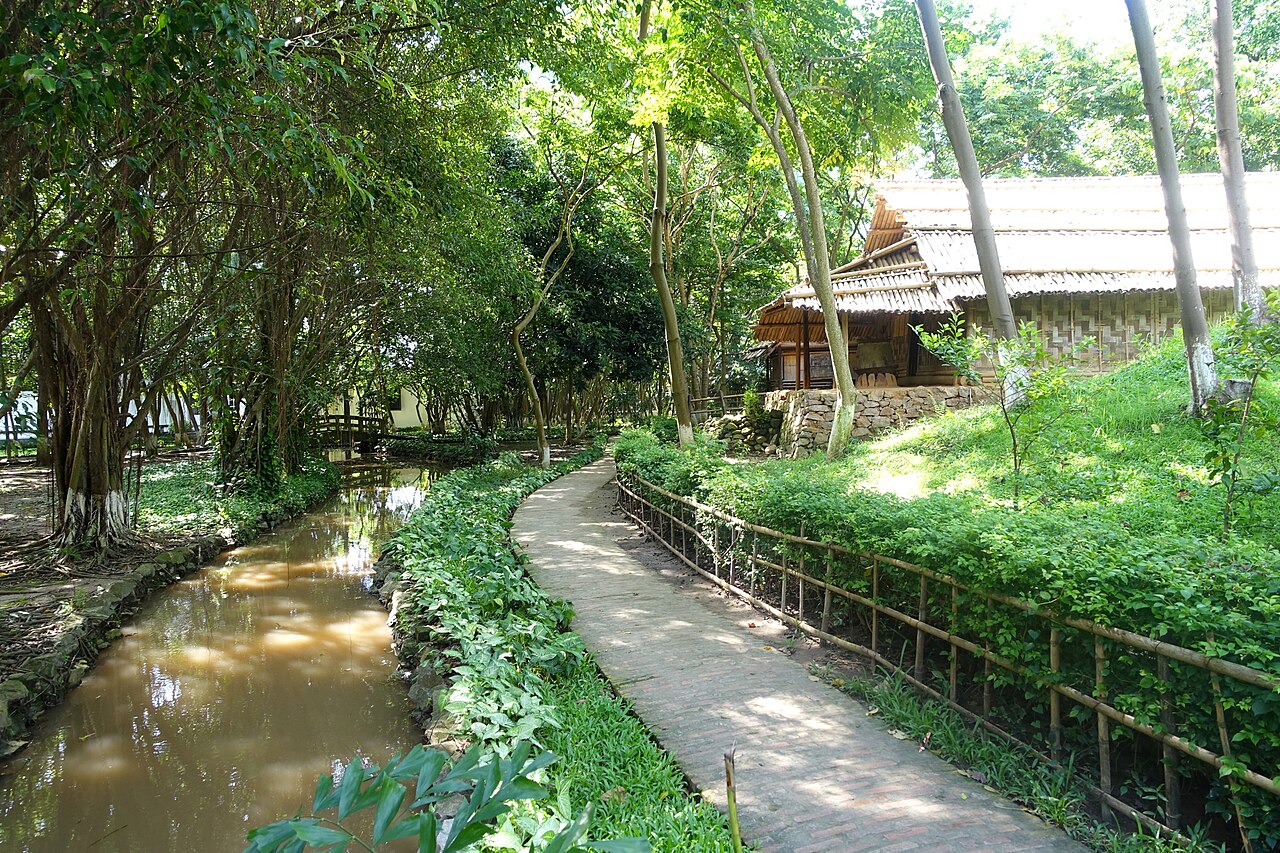
If the Temple of Literature shows you the Vietnam of scholars and emperors, the Vietnam Museum of Ethnology shows you everyone else. The museum sits west of the centre, away from the Old Quarter crowds, and its permanent exhibitions cover the peoples of Vietnam and, in a smaller section, the peoples of the world. Vietnam recognises 54 ethnic groups, and the Kinh majority is only one of them. Here the Hmong, Tay, Yao, Cham, Ede and many others are shown through costumes, textiles, farming and fishing tools, musical instruments, altars and household objects, with photographs and film to give each piece context. The displays are calm and easy to follow. Outside is the Architectural Garden, the part children and photographers remember: traditional houses from several groups have been rebuilt at full size, including a Bahnar communal house, an Ede longhouse, a Giarai tomb house, and homes of the Tay, Yao, Hmong and Hanhi, among others. You can walk into several of them. It is also a good wet-weather plan, since the main galleries are indoors. The museum hosts temporary exhibitions and educational programmes, so check its website for what is on during your dates.
How it works
The museum is on Nguyen Van Huyen Street in the Nghia Do area, and it is open from 8:30 to 17:30. It is closed on Mondays and during the Lunar New Year holidays. Admission is a modest fee for adults, with lower prices for children and students, and you buy at the entrance. There is no timed entry. A taxi or ride-hailing car from the Old Quarter is the easy way to get here, and the ride is a short one outside rush hour.
What to expect
Begin in the main building, where the exhibition on the peoples of Vietnam is arranged by theme, with textiles, rituals and daily work. Give it an hour, more if you like textiles. Then walk out into the Architectural Garden for the houses, which are the most memorable part of the visit. Some are raised on stilts, some are built on the ground, and some are tombs with carved figures. The shop sells crafts made by ethnic communities, which makes a better souvenir than most Old Quarter stalls.
Making the most of it
Go in the morning, before the heat, and wear shoes you can walk in, because the garden is large and shaded paths are patchy. Pair the visit with a trip to the Mai Chau valley or the Sapa trek if you want to meet some of these communities in person; the museum will give you the background that guides rarely have time for. Allow two to three hours in all, and check the museum’s site for any change in hours before you go.
What to expect
The experience
A self-guided visit through galleries on Vietnam’s ethnic groups, then a walk through full-size traditional houses in the garden.
Best time
Morning, when the garden is cooler. Avoid Mondays, when the museum is closed.
How long
Two to three hours including the garden.
Tips
Take a taxi from the Old Quarter, wear walking shoes and allow time for the outdoor houses.
Quick picks
- Best for
- Travellers who want context for the north’s hill-tribe trips, and anyone who likes museums with a human scale.
- Families
- Very good: children enjoy climbing into the houses, and there is room to run in the garden.
- Couples
- A quiet, unhurried half day away from the crowds.
- Pair with
- The Temple of Literature, or a Mai Chau or Sapa trip afterwards.
- Time needed
- Half a morning.
Good questions
When is the Vietnam Museum of Ethnology open?+
It is open from 8:30 to 17:30 and closed on Mondays and during the Lunar New Year holidays.
Where is the museum?+
On Nguyen Van Huyen Street in the Nghia Do area, west of the Old Quarter. A taxi or ride-hailing car is the easiest way to reach it.
How long does a visit take?+
Plan on two to three hours for the galleries and the outdoor Architectural Garden.
What is in the garden?+
Full-size traditional houses from several ethnic groups, such as a Bahnar communal house, an Ede longhouse, a Giarai tomb house and Tay, Yao and Hmong homes.
Is it good in the rain?+
Yes. The main galleries are indoors, so you can do them first and save the garden for a dry spell.