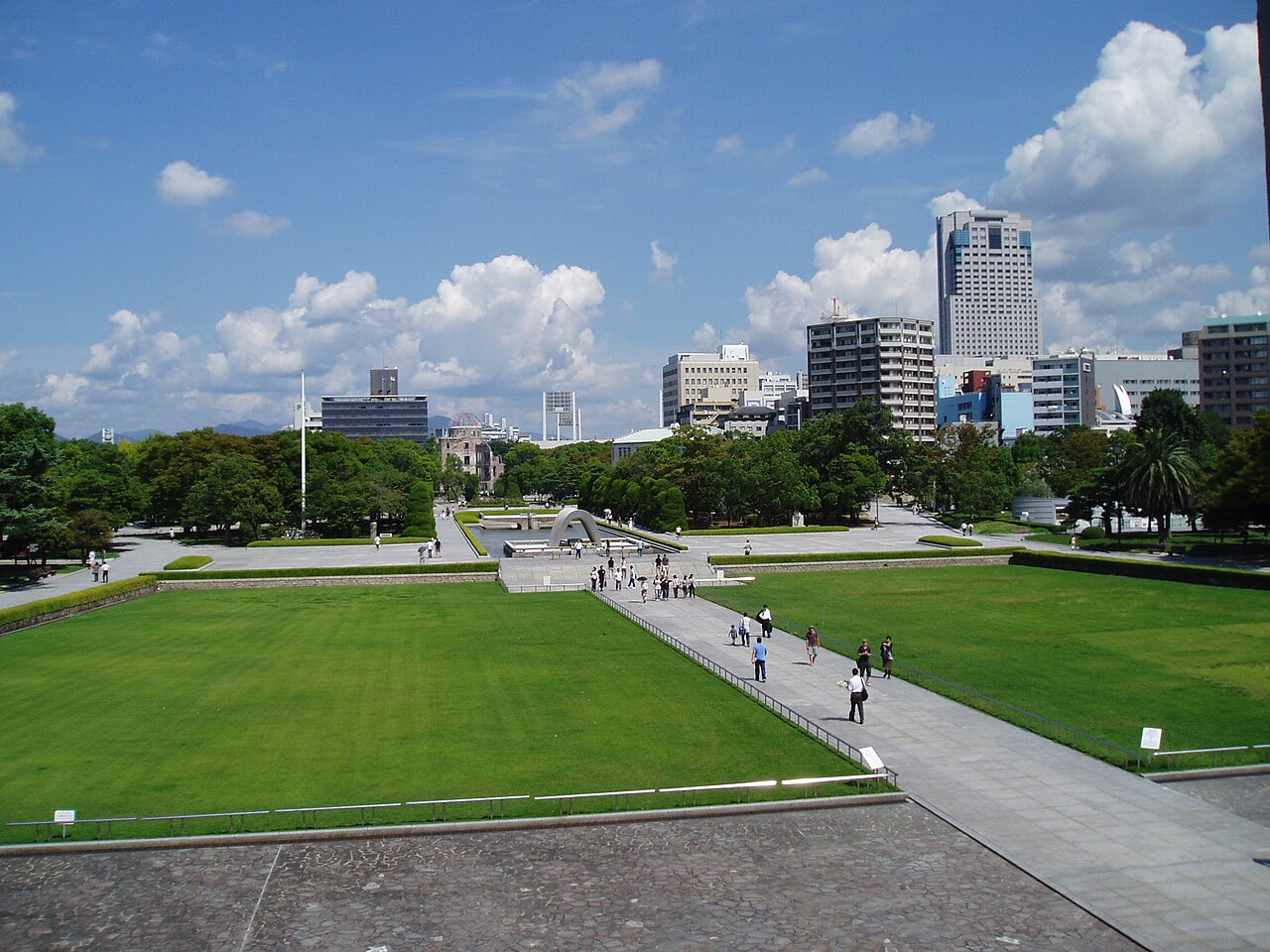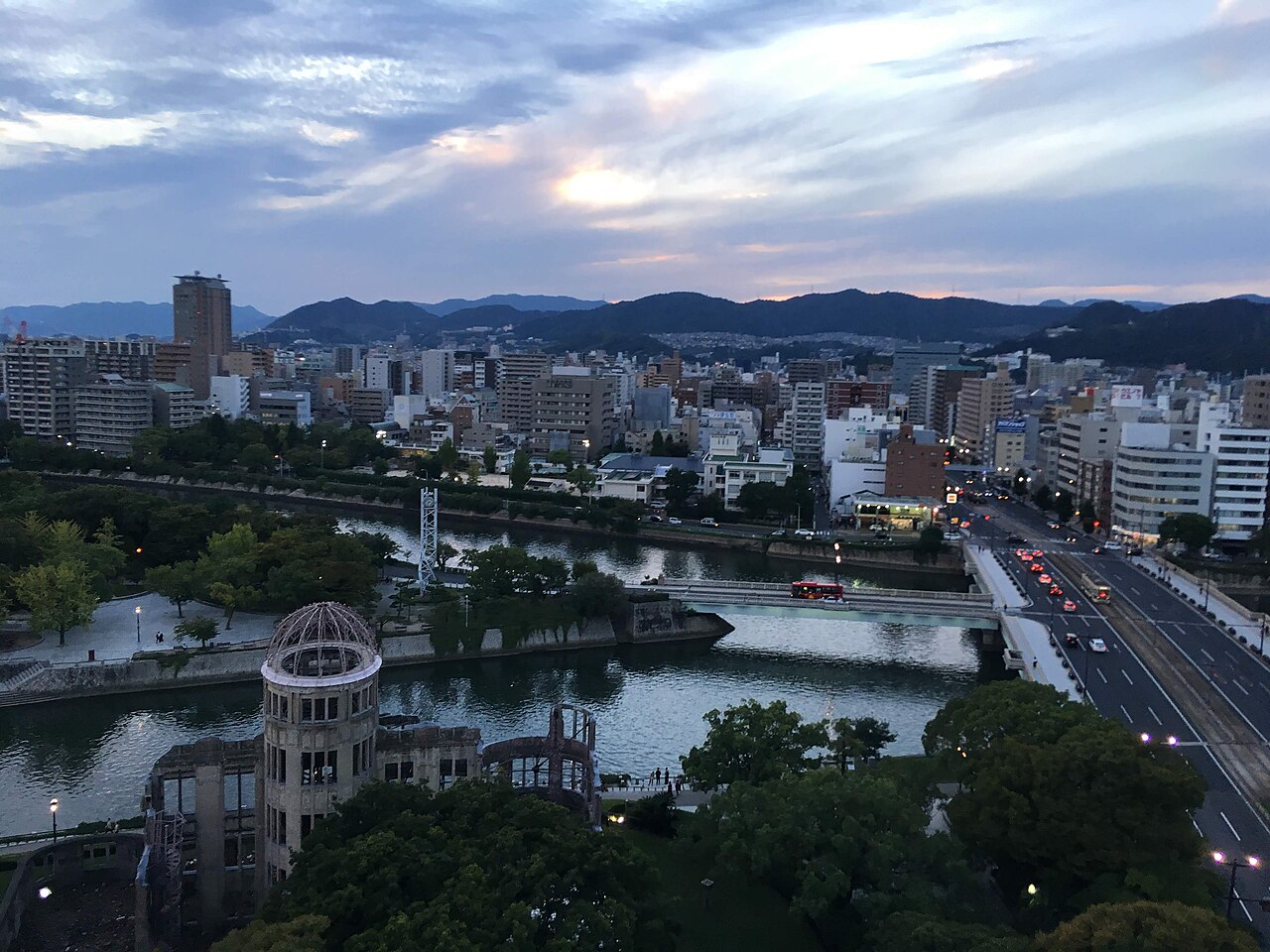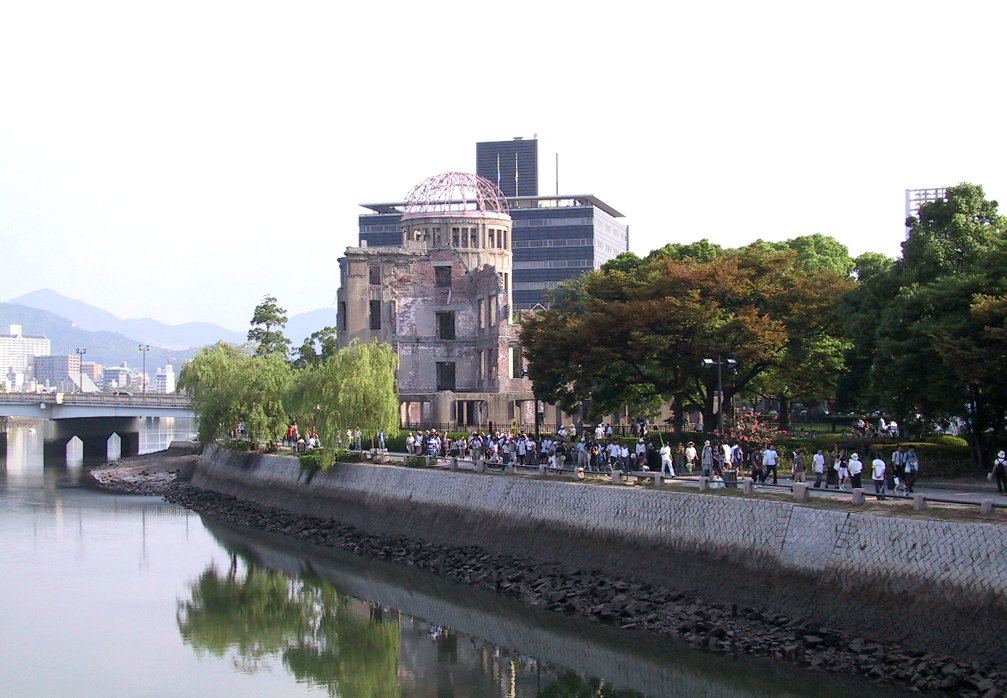
The Atomic Bomb Dome is the single building in Hiroshima that tells the whole story at a glance. Completed in 1915 as the Hiroshima Prefectural Industrial Promotion Hall, designed by the Czech architect Jan Letzel, it stood only a short distance from the point above which the bomb exploded on 6 August 1945. The blast pushed straight down, which is why parts of its walls and its steel dome frame remained standing while almost everything around it was flattened. After the war, residents debated whether to demolish the ruin or keep it, and it was eventually preserved as a permanent memorial. It was inscribed on the UNESCO World Heritage list in 1996 as a symbol of the destruction of nuclear weapons and the hope for lasting peace. Visitors cannot go inside, but you can walk around the fenced site and see it from several angles, with the Motoyasu River in front and the Peace Memorial Park just beyond. It is moving at any hour, and the lit dome at night is especially quiet and powerful.
The best way to see the Dome is on foot from the Aioi Bridge side, where you can approach it along the riverbank and then cross over to the park. A few viewing points are worth knowing: the east bank gives the classic full view, the riverside steps give you a lower, wider angle with the water, and rooftops nearby give a bird's eye perspective. The Orizuru Tower beside the Dome has a rooftop deck that looks straight down on it, and many visitors treat the two as a pair.
The Dome has been carefully maintained rather than restored. Engineers have stabilized it several times so that it stays as it was found, and signs explain which parts are original. Read the information boards before taking photographs, and keep in mind that this is a memorial, not just a monument. People pause here to pray, lay flowers and reflect, so keep conversations low and avoid climbing on the barriers.
Practicalities are simple. The site is free, open around the clock and easy to reach by tram to the Genbaku-Dome-mae stop. Because it is on the same walk as the Peace Memorial Park, most visitors see it during the same morning or afternoon. It is lovely in the soft light of early morning, and the evening illumination brings a different mood. In hot summer weather the open riverbank has little shade, so bring water and a hat.
What to expect
The experience
A free, self-guided viewing from the riverbank and fenced viewing areas; the structure is not open inside.
Best time
Early morning for quiet and soft light, or after dark for the illuminated view.
How long
Thirty to sixty minutes, longer if you read all the information boards.
Tips
Approach from the riverbank, read the boards, keep voices low and combine the visit with the Peace Memorial Park and the Orizuru Tower rooftop.
Quick picks
- Best for
- Anyone visiting Hiroshima; it is the defining image of the city.
- Families
- Easy and free, with a short walk; explain the history first so children understand why it is preserved.
- Couples
- A quiet evening walk along the river when the Dome is lit.
- Pair with
- The Peace Memorial Park and Museum next door and the Orizuru Tower rooftop deck.
- Time needed
- An hour is plenty for the Dome itself.
Good questions
Can you go inside the Atomic Bomb Dome?+
No, the ruin is fenced off for safety and preservation. You can walk around it and view it from several points along the riverbank.
Is there an admission fee?+
No, it is free and the site is accessible at any hour. Nearby attractions such as the museum charge a small fee.
How do I get there?+
Take a tram to the Genbaku-Dome-mae stop, which is right beside it, or walk from the Peace Memorial Park across the Motoyasu River. It is also an easy walk from the downtown shopping streets.
When is the Dome illuminated?+
It is lit after dark, and the view from the riverbank is calm and striking. Check evening conditions locally, as arrangements can change.
Why was it not demolished?+
Residents and survivors campaigned to preserve it as a reminder, and it was formally protected and later inscribed by UNESCO in 1996. It is maintained in its ruined state on purpose.