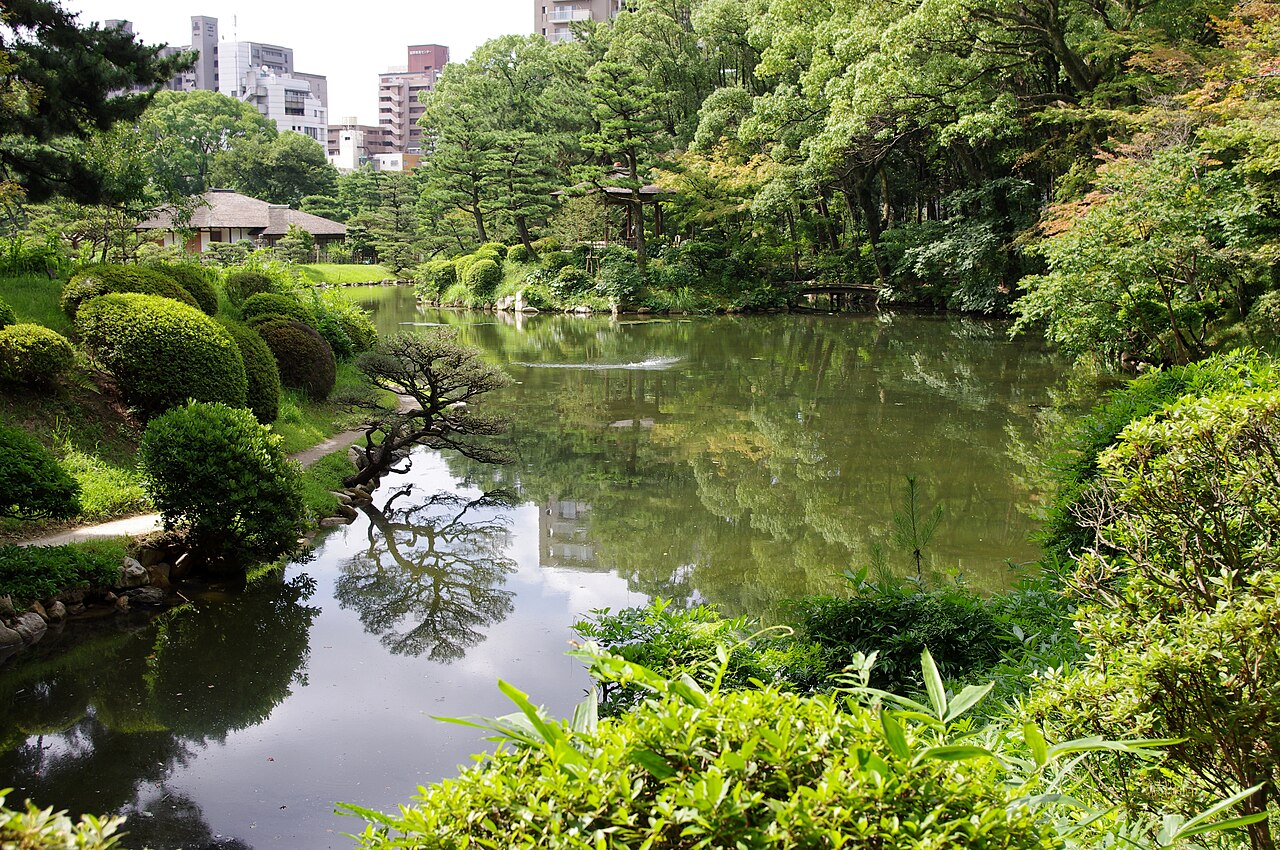
Shukkeien is Hiroshima's classic Japanese garden, created in 1620 for the Asano clan, just after the castle was built. Its name is often translated as shrunken-scenery garden, because the design compresses famous landscapes, valleys, forests and mountains, into a walkable circuit around a central pond. The arched Kokokyo Bridge, small islands, stone lanterns and several tea houses along the water give it a calm, photogenic atmosphere. The garden was heavily damaged in 1945 and was later restored, and trees that survived the bombing still stand here. A path loops around the pond so you can see each scene unfold in turn, and the tea houses let you sit and take in the view. The seasons change the mood: plum and cherry blossoms in spring, irises and cool shade in summer, red maples in autumn and quiet winter light. In early November, you are close to the start of the color season, which makes this an especially good moment to visit.
Entry is inexpensive and the garden is open daily with seasonal hours, closing earlier in the cooler months, and it is closed around the end of December. Admission stops before closing time, so arrive at least an hour ahead. Most visitors spend an hour or so, though garden lovers can easily stay longer, especially if they stop for a bowl of matcha at one of the tea houses.
If you want more than a stroll, the ticketed experience listed here is a Viator tour built around a tea ceremony in kimono, with a visit to Shukkeien included and an optional extension to Hiroshima Castle. The package includes the garden admission, a rental kimono and the experience itself. It is a fun choice for couples and for travelers who want a hands-on cultural activity, and it ends where it began, so plan the rest of your day around the meeting point.
The garden is a short walk from the downtown area and an easy pairing with the castle grounds and the Peace Memorial Park. Wear comfortable shoes for gravel paths and expect small steps and bridges, so strollers and wheelchairs may find some sections tricky. In rain the garden is quieter and the moss and stone look beautiful, but bring an umbrella and be careful on wet stones. Photography is a joy here, particularly at the reflective pond in the early morning.
What to expect
The experience
A self-guided loop around the pond with bridges, tea houses and miniature landscapes, with an optional guided tea ceremony in kimono.
Best time
Morning for soft light and quiet; mid-to-late November for maple color.
How long
One to two hours, plus tea house time.
Tips
Arrive before the last admission, wear flat shoes, pause at a tea house and keep an eye out for the survivor trees.
Quick picks
- Best for
- Garden lovers and anyone who wants a gentle, beautiful break from the heavier Hiroshima sights.
- Families
- Easy loop; children enjoy the koi and the bridges, but keep them off the stones.
- Couples
- A kimono tea ceremony and a stroll around the pond make a memorable pair.
- Pair with
- Hiroshima Castle grounds and the Peace Memorial Park.
- Time needed
- Allow ninety minutes for a relaxed visit.
Good questions
Why is it called Shukkeien?+
The name is often translated as shrunken-scenery garden, because it recreates famous landscapes in miniature. The pond and islands make the design easy to read as you walk.
How long do I need?+
About an hour is enough for the circuit, and longer if you stop for tea. Garden enthusiasts often stay up to two hours.
What does the Viator experience include?+
The tea ceremony tour includes a rental kimono, the experience fee and Shukkeien admission, and one option adds Hiroshima Castle. The booking page says the experience is nonrefundable and cannot be changed, so check your dates.
When are the autumn colors?+
The maples typically color from mid to late November, and early November can be a little early. Look at current reports before choosing your day.
Is the garden accessible?+
Paths are gravel with bridges and some steps, so parts are difficult for wheelchairs and strollers. Check the official website for accessibility details.