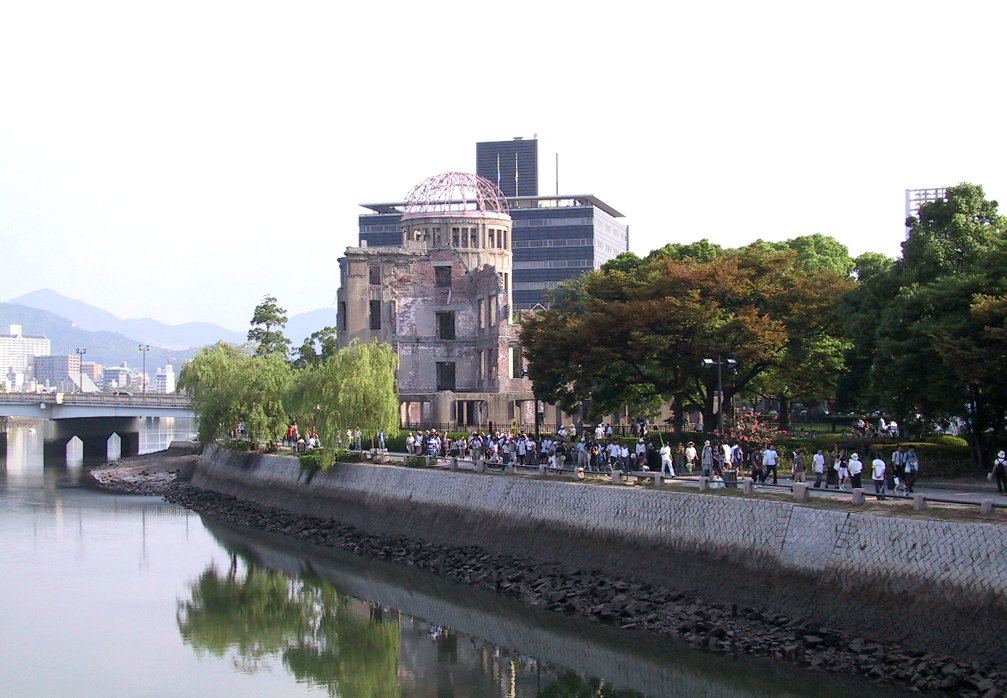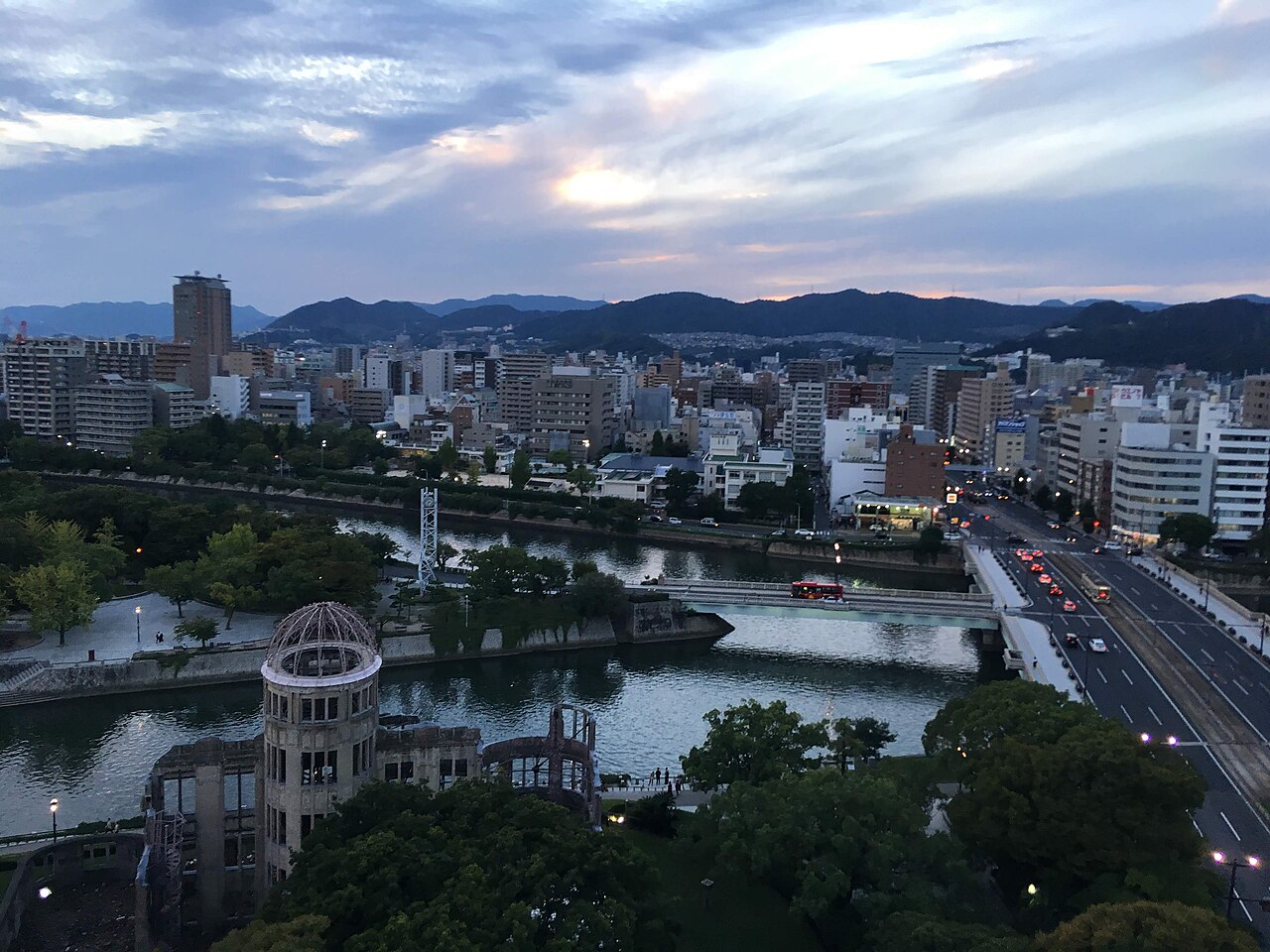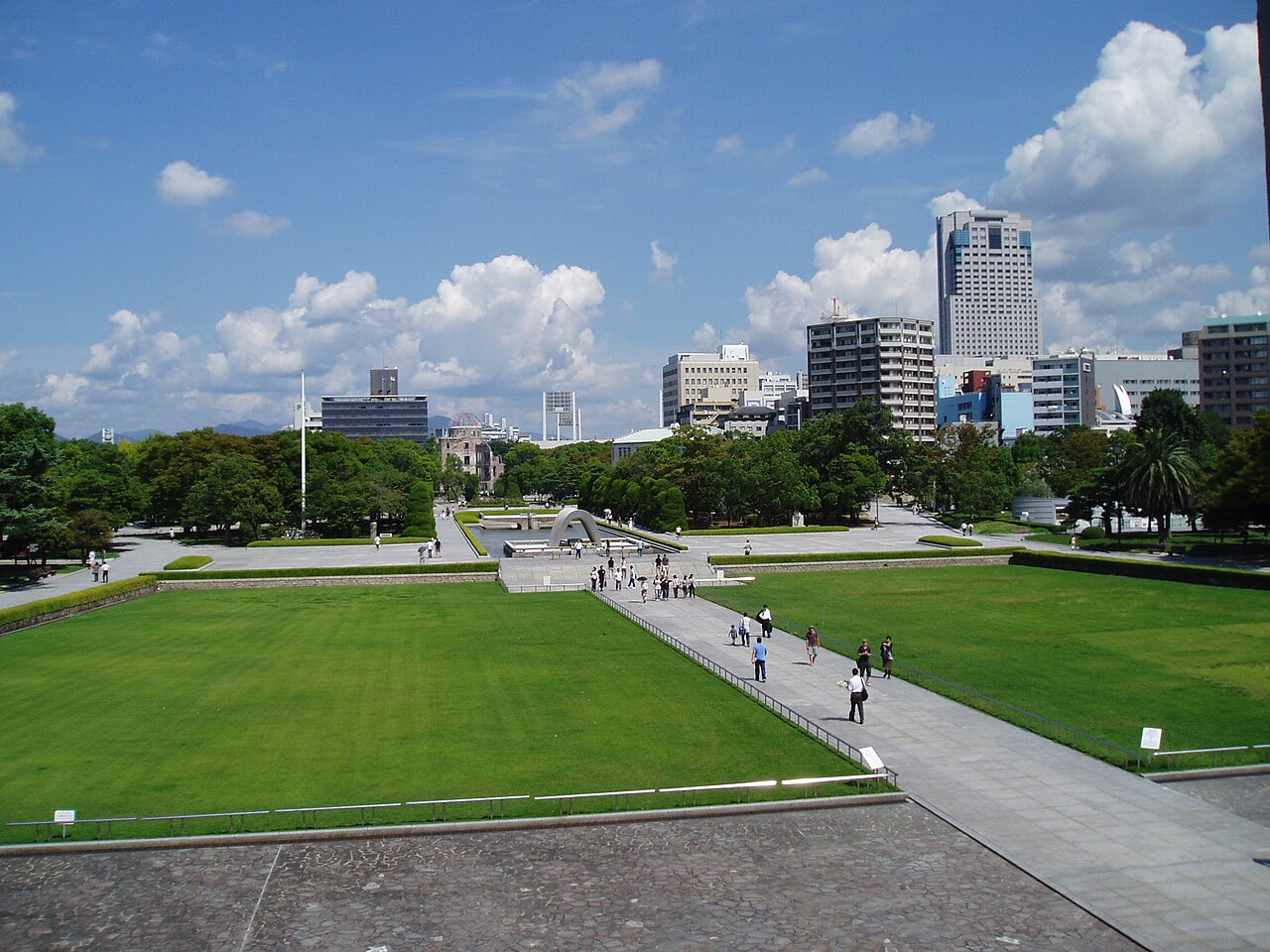
The Peace Memorial Park sits on a spit of land where the Motoyasu and Honkawa rivers meet, in the district that was the busiest commercial and residential quarter of the city before the atomic bomb fell in 1945. Today it is a wide, calm space of lawns, tree-lined paths and monuments. The Cenotaph for the A-Bomb Victims frames the Peace Flame and, beyond it, the Atomic Bomb Dome across the river. The Children's Peace Monument, inspired by the story of Sadako Sasaki, is draped in strings of colorful paper cranes sent from around the world. Anchoring the park is the Peace Memorial Museum, whose permanent exhibition follows the events of the day through damaged clothing, a child's lunch box, melted roof tiles, photographs and testimony, alongside the wider story of the nuclear age and the movement to abolish nuclear weapons. It is not an easy visit and it is not meant to be, but nearly everyone leaves saying it was the most important hour of their trip. Allow more time than you expect, wear comfortable shoes and walk the park at your own pace afterward. Many visitors add a guided walk to hear the history in the places where it happened.
The museum has two main buildings. The East Building opens the story with the history of Hiroshima, the bombing and its immediate aftermath, while the main building focuses on personal belongings and the long-term effects of radiation. Audio guides are available in several languages and are worth using, since many exhibits are short on text. Large bags are not allowed in the galleries, and lockers are provided inside, so travel light. Photography without flash is generally permitted, but check the signs and stay respectful in the rooms where people are grieving or reflecting.
The park rewards slow walking. Look for the Flame of Peace, which is meant to burn until every nuclear weapon on earth has been destroyed, the Atomic Bomb Memorial Mound that holds the ashes of unidentified victims, the Rest House, one of the few buildings in the blast zone that survived and stands in its original place, and the National Peace Memorial Hall for the Atomic Bomb Victims, which holds names and photographs of the dead. A guided walking tour is a strong choice if you want context from a local guide, because many of the park's most moving details, such as survivor trees and plaques, are easy to walk past alone.
Plan the day around the museum. Opening hours extend into the evening for much of the year, and reservations are required for some early-morning and evening entry slots, so check the museum website before you go. It is closed on 30 and 31 December. Early morning and late afternoon are the quietest times, and on 6 August the park hosts the official Peace Memorial Ceremony and a lantern floating on the river that fills the area, so expect heavy crowds if you travel then.
What to expect
The experience
A self-guided walk through the park, a visit to the Peace Memorial Museum with an optional audio guide, and a popular guided walking tour that links the memorials and the Atomic Bomb Dome.
Best time
Early morning or late afternoon for fewer crowds; avoid 6 August unless you plan to attend the ceremony.
How long
Around three to four hours for the park and museum together, longer with a guided tour.
Tips
Book any early or evening museum slot online, carry no large bags, use the audio guide and give yourself a quiet break afterward before the next sight.
Quick picks
- Best for
- Every first visitor, and anyone who wants to understand why Hiroshima matters beyond its postcards.
- Families
- Suitable for older children with a conversation beforehand; the museum has graphic exhibits, so preview what younger children will see.
- Couples
- A reflective morning together, followed by coffee along the river and a stroll across the park at dusk.
- Pair with
- The Atomic Bomb Dome across the river, Orizuru Tower for the rooftop view and an okonomiyaki lunch afterward.
- Time needed
- Half a day, with the museum alone taking about two hours.
Good questions
How long should I allow for the Peace Memorial Museum?+
Most people spend about one and a half to two hours in the museum, more if they use the audio guide fully. Add another hour or so for the park and its monuments.
Is the museum suitable for children?+
Older children usually cope well with preparation, but some displays are graphic and distressing. Parents of younger children may want to preview the exhibits or choose the park and memorials instead.
Is the Peace Memorial Park free to visit?+
Yes, the park and its monuments are free and open at all hours. The museum charges a small admission fee.
Do I need to book the museum in advance?+
Normal daytime entry does not need a booking, but online reservations are required for certain early-morning and evening slots. Check the museum website for current hours, since they change by season.
Is a guided tour worth it?+
Yes if you want stories and context, because a local guide explains the survivor trees, hidden plaques and the history behind each monument. Many guides also cover the Atomic Bomb Dome on the same walk.