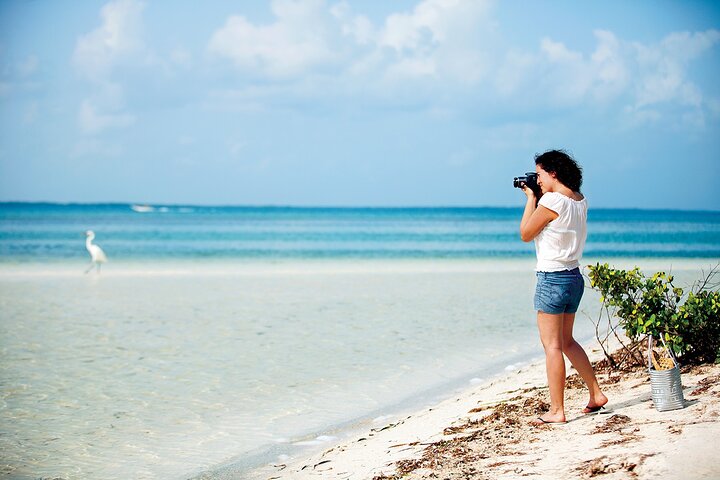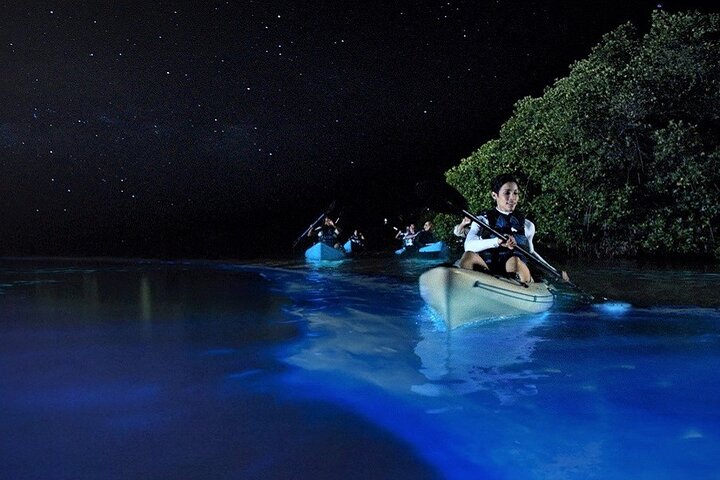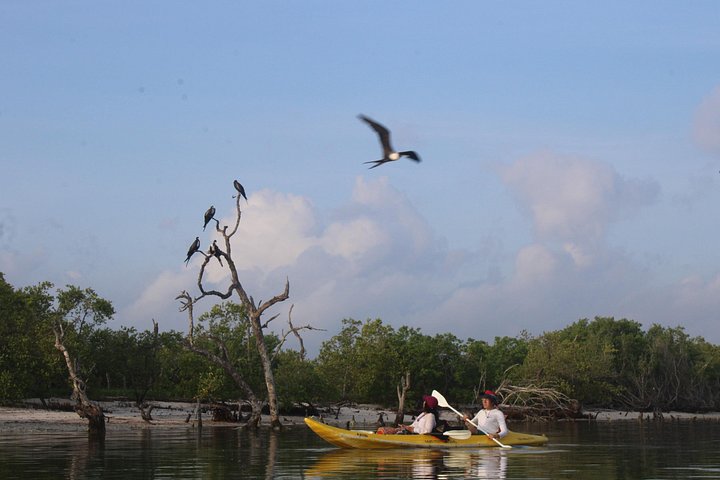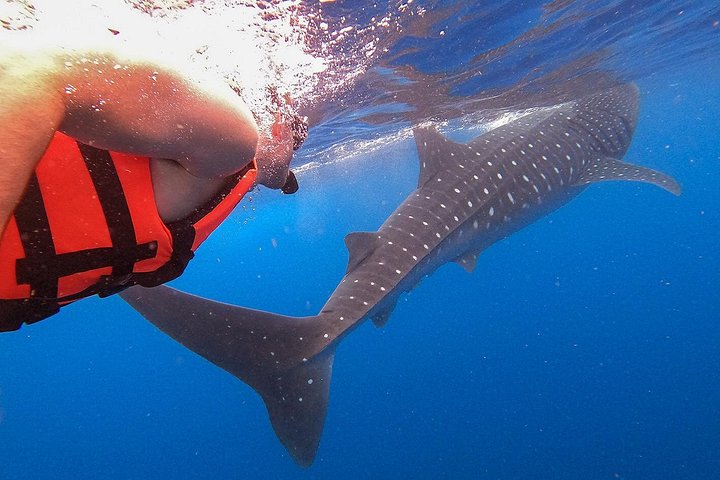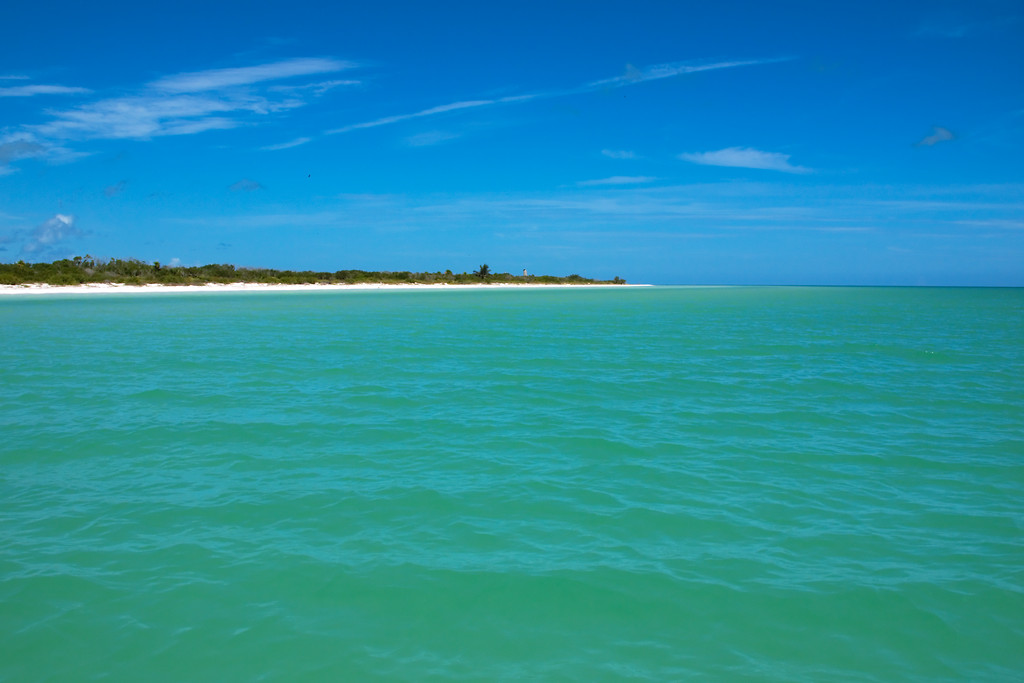
Few sights say Holbox like a line of pink flamingos wading through pale turquoise water. The Mexican Caribbean tourism board says flamingos can be seen on the island from April to October, and they are most often spotted in the shallows of the lagoon and near the sandbars of the northern coast. They come to feed on small shrimp and algae in the warm, shallow water, and the colour of their feathers comes from what they eat. This entry is about the pursuit rather than a ticketed tour: it is free, it needs patience and it rewards quiet. You can look for flamingos on foot, by bicycle or from a boat, and a guide with local knowledge improves the odds. No one can promise a sighting, because the birds move with tides, wind and food, so treat each outing as a gentle wildlife walk with a possible highlight.
Why go
Flamingos are among the most photogenic birds in the world, and seeing them in the wild, with the sandbars and sky behind, is a highlight of the trip. They are also a sign of a healthy lagoon, which is why the protected area matters so much. Because sightings are never guaranteed, the experience has a sense of discovery that crowded attractions lack.
How to do it
The most common approach is a walk or bike ride along the northern shore toward Punta Mosquito, scanning the shallows as you go. Flamingos tend to feed in the water at low tide, so check the tide with your hotel or a local guide. A boat trip across the lagoon can reach feeding areas that are hard to see from the beach, and guides often know where the birds were seen recently.
Bring binoculars or a camera with a zoom lens, as the birds keep their distance and will fly if approached. Move slowly, stay low and keep well back.
When to go
The tourism board gives April to October as the season. Within that period, early morning and late afternoon offer softer light and calmer birds. The middle of the day is hot, and the birds may be farther out. Weather, wind and tides change where the flamingos feed, so be flexible and prepared to try more than once. If you do not see them, you are likely to see pelicans, herons and other wading birds, and the walk is beautiful in itself.
Practical points
Respect the birds and the protected area. Keep at least a long distance from the flock, never chase, clap or shout, and do not use drones. Avoid flash photography and stay on the sand rather than walking through nesting or feeding areas. Wear a hat, sunglasses and reef-safe sunscreen, and carry water, since there is little shade. Insect repellent is wise near the mangroves. Wear shoes you do not mind getting wet if you wade, and tell someone your plan if you walk far from the village.
Ask local guides and hotel staff where the birds were last seen, and share your own sightings with other travellers. The best attitude is relaxed curiosity, because a missed flamingo still leaves you with sandbars, sky and the quiet of the lagoon. Keep a notebook or phone note of what you saw, and try again at a different hour or tide on another day.
What to expect
The experience
A free, self-guided or guided wildlife outing along the northern shore or by boat to look for flamingos.
Best time
April to October, in the early morning or late afternoon, ideally around low tide.
How long
Allow one to three hours, and be ready to try more than once.
Tips
Bring binoculars, stay far back, never use drones and accept that sightings are never guaranteed.
Quick picks
- Best for
- Birdwatchers, photographers and wildlife lovers.
- Families
- Good for patient children, with hats and water for the sun.
- Couples
- A quiet golden-hour walk with a chance of pink birds.
- Pair with
- Punta Mosquito, Isla Pajaros and a sunset on the beach.
- Time needed
- One to three hours.
Good questions
When can I see flamingos on Holbox?+
The Mexican Caribbean tourism board says from April to October. Their position changes with tides, wind and food.
Where is the best place to look?+
The shallows along the northern coast near Punta Mosquito and the lagoon are the usual places, and a boat or guide can reach more.
Are sightings guaranteed?+
No. Flamingos are wild and move around, so treat a sighting as a bonus.
How close can I get?+
Keep a long distance, as the birds will fly if disturbed. Binoculars or a zoom lens work better than walking closer.
Is it free?+
Looking from the shore costs nothing. A boat trip or guide is a paid extra.