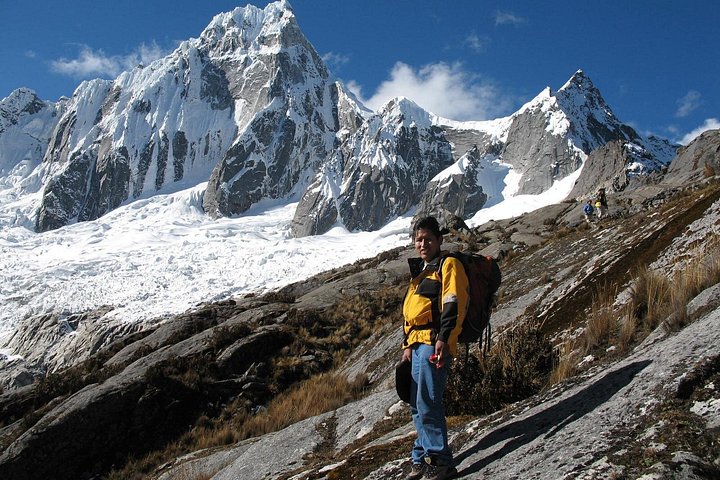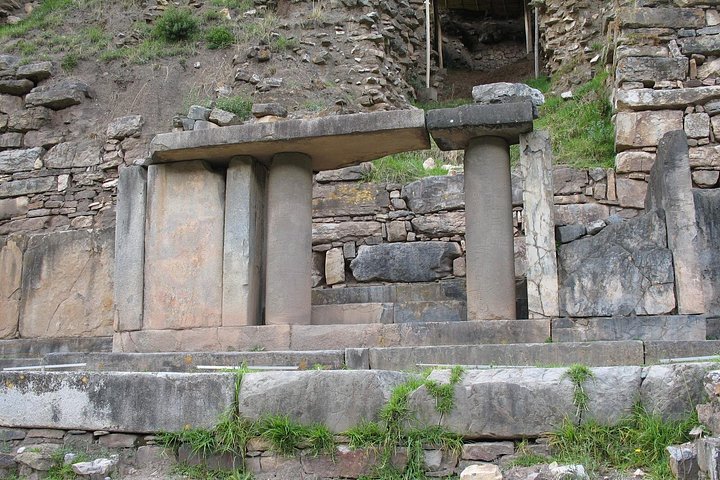
Chavin de Huantar is the great archaeological site of the Ancash region and one of the most important ceremonial centres of ancient Peru. Built and used from roughly 1200 BCE to 500 BCE by the Chavin culture, it sits at around 3,150 metres in a valley east of the Cordillera Blanca, and it was recognised by UNESCO as a World Heritage Site in 1985. The complex includes sunken circular plazas, stepped platforms and a network of stone-lined galleries running beneath the temple, with ventilation shafts, drains and narrow passages that may have been designed to amplify sound and disorient visitors. At its heart stands the Lanzon, a tall granite monolith carved into a fanged deity, set at the junction of two galleries and aimed up toward a shaft of light. Carved stone heads, once embedded in the walls, show humans transforming into jaguars and birds, perhaps under the influence of local hallucinogenic plants such as the San Pedro cactus. The art style spread widely across the Andes and influenced later cultures. The site is reached on a day trip from Huaraz through the Cahuish Tunnel, which crosses the Cordillera Blanca at around 4,500 metres, and the scenery on the way is almost a reason to go in itself.
Most visitors spend two to three hours at the site. A guide is useful because the stone architecture can look like a maze without explanation. Inside the galleries you walk through narrow stone corridors, sometimes stooping, past carved lintels and drains that carried water through the building. The Lanzon gallery is the climax, and the guide usually explains how the figure, nearly five metres tall, was placed in the centre of the underground cross-shaped passage.
Outside, the Circular Plaza, the Old Temple and the New Temple frame a landscape of terraces, and you can see the Mascaron stones, which are weathered carved heads that give a sense of the original decoration.
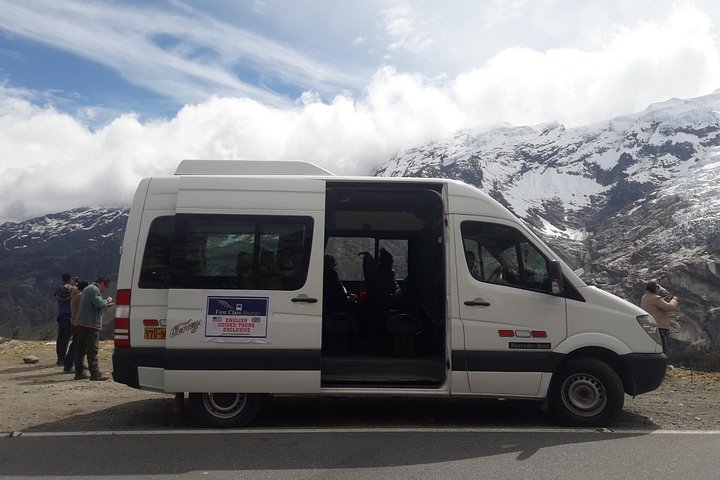
The site museum in the nearby town, which houses the Tello Obelisk and many ceramics, is the best place to see the finest pieces.The day trip from Huaraz is long but varied. The road crosses the Cordillera Blanca through a tunnel built in the late twentieth century, passes Lake Querococha, and descends into green valleys on the eastern side.
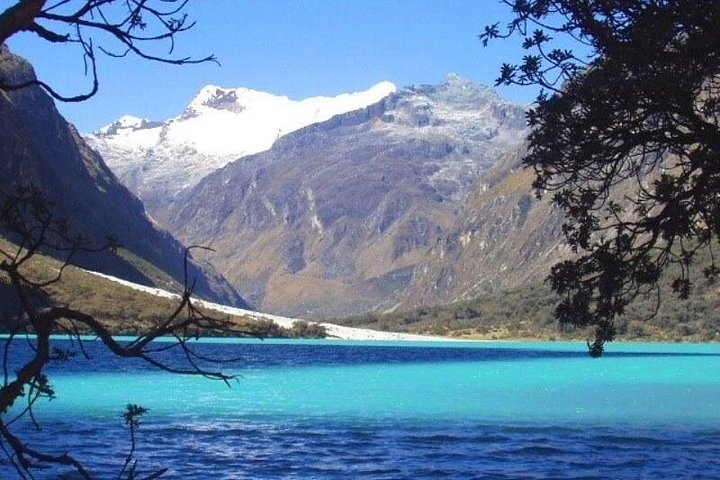
Many tours include a stop at Querococha, where the mountain reflection can be spectacular on a calm morning. Chavin town itself is a good place for lunch, and you may have time to wander the plaza and market.
Tours generally return to Huaraz in the late afternoon, giving you a sense of two very different sides of the range. Allow for road conditions: the route is paved but can close briefly during heavy rain or landslides in the wet season.The ruins reward preparation. Read a little about the Chavin culture, bring a torch if you want to look closely at the galleries, and wear shoes with good grip, since the stone steps and floors can be slippery. Sun protection and a rain jacket are both useful at this altitude.
Photography is allowed in most areas, but rules inside the galleries can change, so follow the staff instructions. The site is usually closed to visitors on one weekday for maintenance, so confirm before travelling. It also makes a good complement to a mountain-focused trip, because it shows the human history behind the landscape.
A cultural day at Chavin balances hikes such as Laguna 69, and it is also easy on the body, which helps if you are still adjusting to altitude. Go with a guide who explains the art and the astronomy as well as the dates.
What to expect
The experience
A full-day trip from Huaraz through the Cahuish Tunnel to the temple complex, with a guided tour of the plazas, galleries and Lanzon monolith, and often a stop at Lake Querococha.
Best time
Year-round. The dry season (May to September) avoids landslide delays; mornings are cooler and quieter.
How long
Nine to ten hours with two to three hours on site.
Tips
Hire a guide for the galleries, wear grippy shoes, bring a torch and layers. Check the weekly closing day.
Quick picks
- Best for
- History and archaeology lovers, and anyone who wants a break from hiking.
- Families
- Older children enjoy the tunnels, though the drive is long.
- Couples
- A scenic road trip followed by a mysterious ruin makes for a memorable day.
- Pair with
- Querococha Lake on the same road.
- Time needed
- One full day.
Good questions
How old is Chavin de Huantar?+
The site dates to roughly 1200 BCE to 500 BCE, making it more than 2,500 years old and much older than the Inca.
What is the Lanzon?+
It is a carved granite monolith of a fanged deity standing in an underground gallery at the heart of the temple.
How long is the drive from Huaraz?+
Around two and a half to three hours each way, through the Cahuish Tunnel at about 4,500 metres.
Can I go inside the galleries?+
Yes, with a guide, in most conditions. Access can be limited for conservation or safety, so ask when you book.
Is there a museum?+
Yes. The national museum in Chavin town displays many of the finest carvings and ceramics from the site, including the Tello Obelisk.