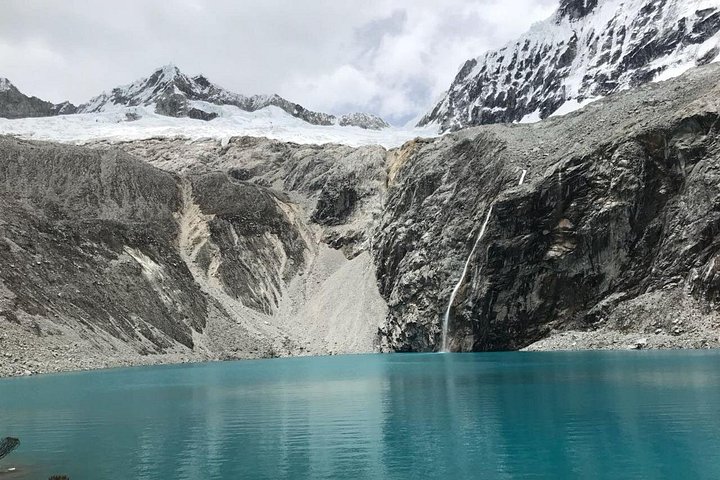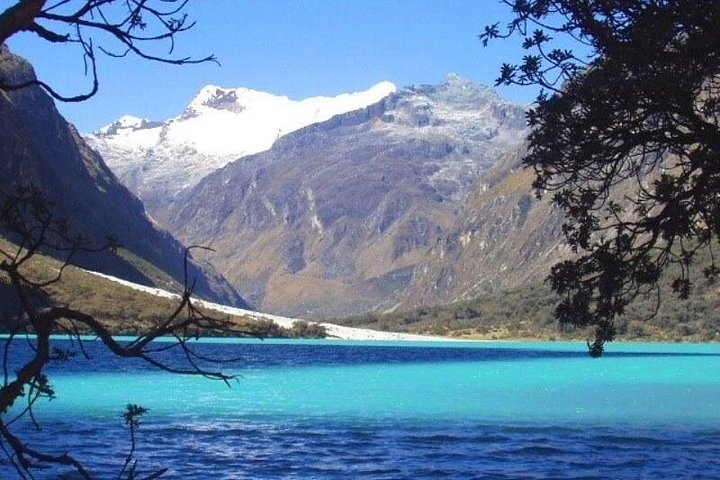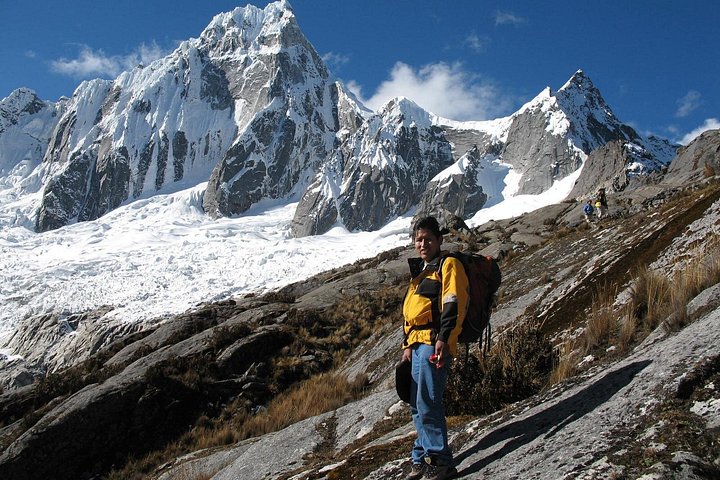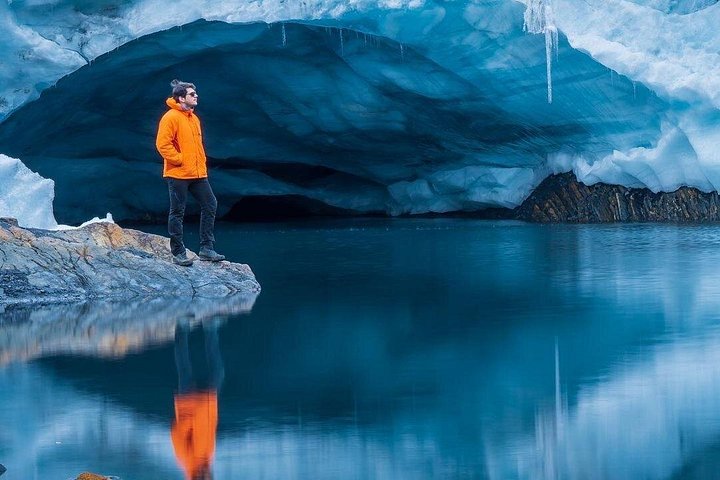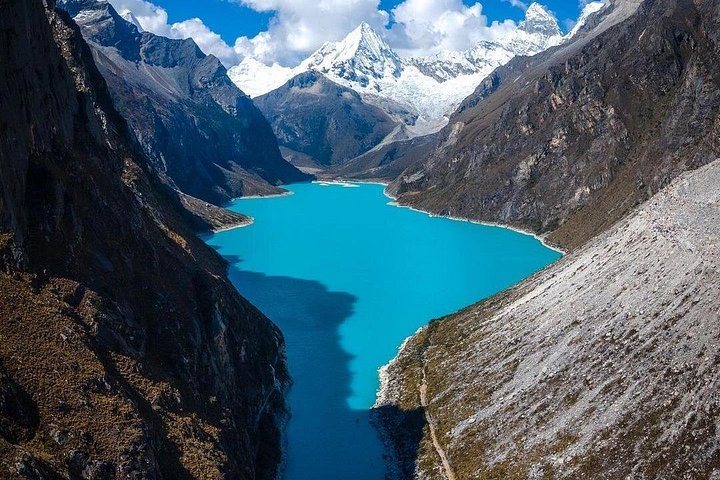
Huascaran National Park protects most of the Cordillera Blanca, the highest tropical mountain range on Earth, and it is the reason travellers come to Huaraz in the first place. Created in 1975 and recognised as a UNESCO World Heritage Site and Biosphere Reserve, the park covers roughly 340,000 hectares and includes more than 600 glaciers, hundreds of lakes and over twenty peaks above 6,000 metres. Its centrepiece is Huascaran Sur, which rises to 6,768 metres and is the highest mountain in Peru, with the quieter Huascaran Norte beside it. Almost every popular excursion from the city lies within the park boundaries: Laguna 69, Llanganuco, Paron, Churup, Pastoruri and the Santa Cruz trek all pass through it. The landscape ranges from queñua woodland and wet meadows to barren moraines and ice fields, and the wildlife includes vicuñas, Andean foxes, viscachas, spectacled bears in the lower forests and a rich bird life with condors, hummingbirds and ground tyrants. A multi-day shared tour through the park is the best way to sample several highlights without planning each transfer yourself.
Entry is regulated. Visitors normally pay a park fee, which supports conservation and community projects, and many of the main trailheads have checkpoints where tickets are checked. Fees are usually divided into short-stay and longer-stay options, so check which applies to your itinerary. Some tours include the fee, while others require you to pay at the gate in cash. Rules cover waste, camping, fires and wildlife, and following them is part of enjoying the park responsibly. If you are trekking independently, register with the park office in Huaraz and carry your ticket on the trail.
Planning a visit depends on your time and interests. A multi-day shared tour is a good choice for first-timers because it links acclimatisation hikes to bigger objectives: for example, a day at Pastoruri and Puya Raimondi, then Llanganuco and Paron, and finally a trek such as Laguna 69. This sequence lets your body adjust gradually and shows the park's range of scenery. Independent travellers can mix and match with day tours, taxis and local buses, though transport in remote areas is limited.
For keen walkers, the park offers routes from a few hours to a couple of weeks, from the Churup and Laguna 69 trails to the Santa Cruz and Alpamayo circuits.The park is also a working landscape. Local communities farm, graze animals and guide trekkers, and the glaciers supply water to the valley below.
Climate change is shrinking the ice at a visible pace, which gives visits an extra layer of meaning, and many guides talk about adaptation and the challenges of water management. Visit with respect: carry out your rubbish, stay on trails, hire local guides and muleteers where possible, and buy from community shops.
The dry season from May to September offers the most reliable weather; the wet season from roughly November to March brings cloud, mud and fewer visitors. Whatever the time of year, pack for sudden changes, allow rest days and treat altitude seriously. A thoughtful, well-paced visit is one of the great mountain experiences in South America. Leave room in the schedule for weather days, because flexibility is what turns a good trip into a great one, and talk to local guides about conditions each morning before committing to a plan.
What to expect
The experience
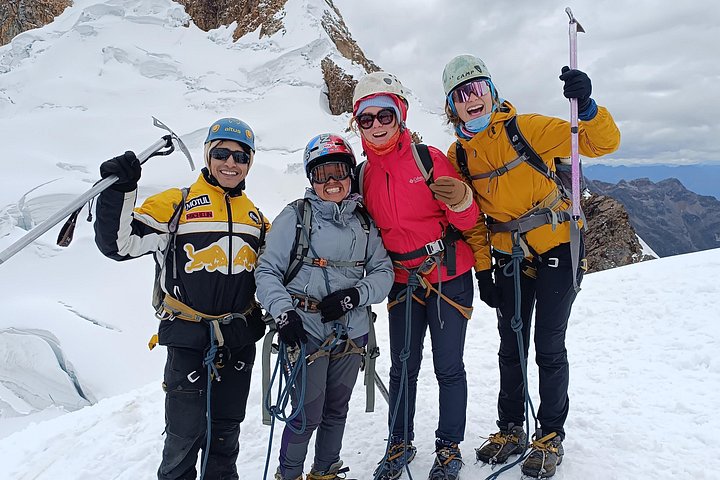
A shared multi-day guided programme linking the park's headline sights, such as Paron, Pastoruri, Laguna 69 and an introductory climb, with transport from Huaraz.
Best time
Dry season (May to September) for the best weather. The rainy months are quieter but cloudier.
How long
Four days in the shared programme, or longer if you add treks.
Tips
Pay or confirm park fees, acclimatise gradually, carry layers and follow the rules on waste and trails.
Quick picks
- Best for
- First-time visitors who want a structured introduction to the mountains.
- Families
- Teenagers and active families will manage the easier days; the long drives suit older children.
- Couples
- A shared sequence of lakes, glaciers and peaks is a strong anchor for a trip.
- Pair with
- Laguna 69, Llanganuco and Pastoruri.
- Time needed
- Four days or more.
Good questions
How big is Huascaran National Park?+
It covers roughly 340,000 hectares, protecting most of the Cordillera Blanca and its glaciers and lakes.
What is the highest mountain in the park?+
Huascaran Sur, at 6,768 metres, is the highest peak in Peru and the tallest in the tropics.
Do I need to pay a park fee?+
Yes. Some tours include it, while others require payment at the gate. Carry cash and keep the ticket.
When should I visit?+
The dry season from May to September is best, though the park is open all year.
Can I visit without a tour?+
Yes, but remote transport is limited. Many independent visitors use taxis, local guides or combine day tours.