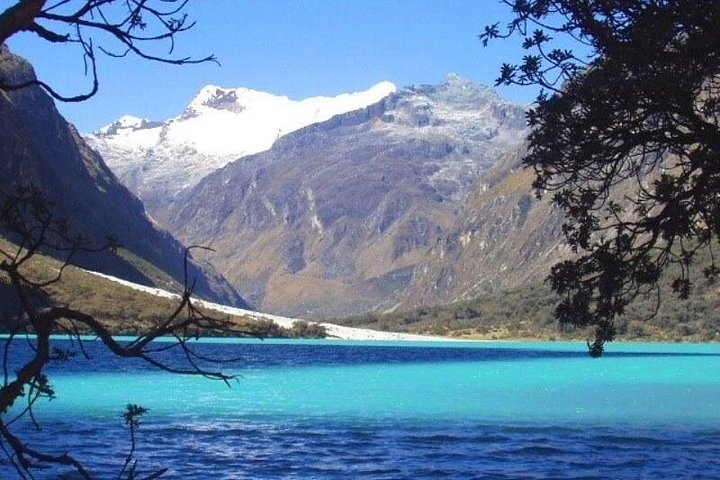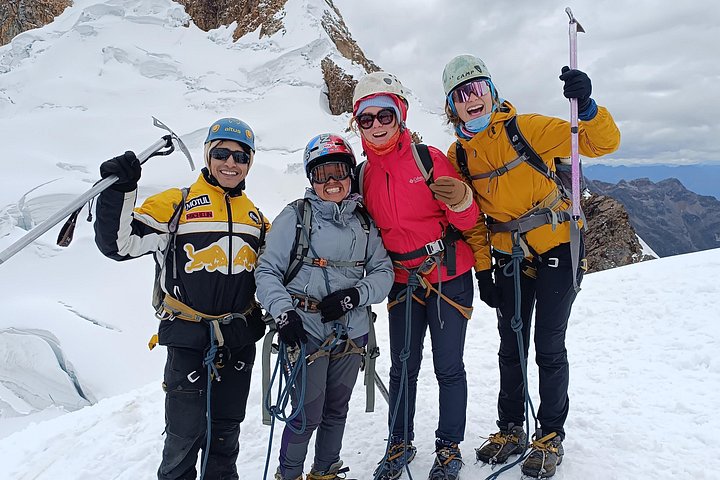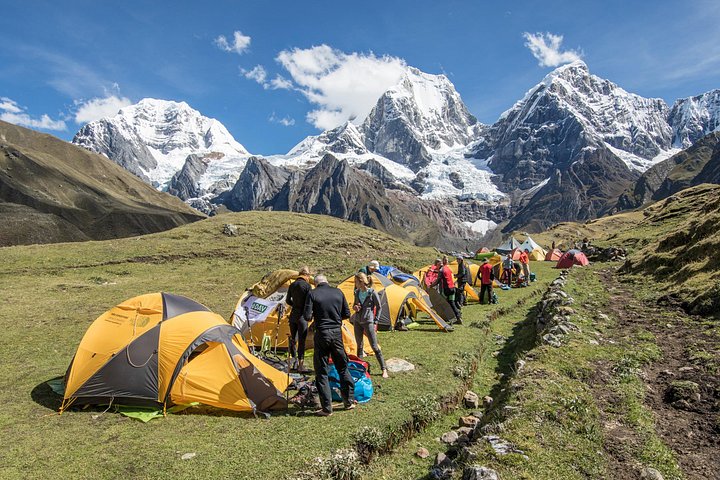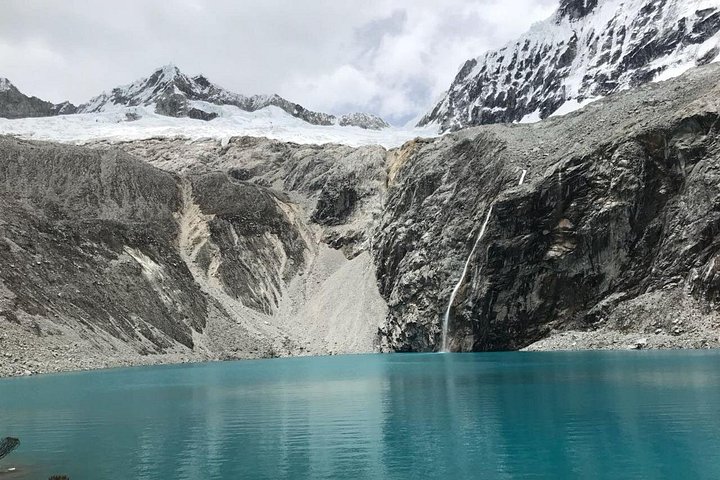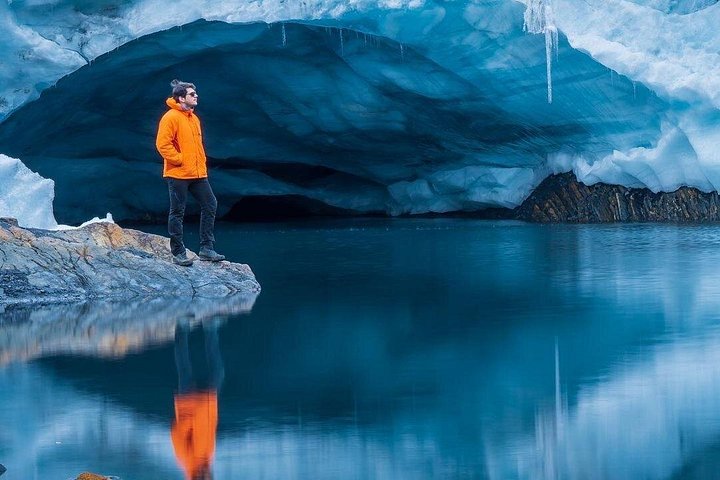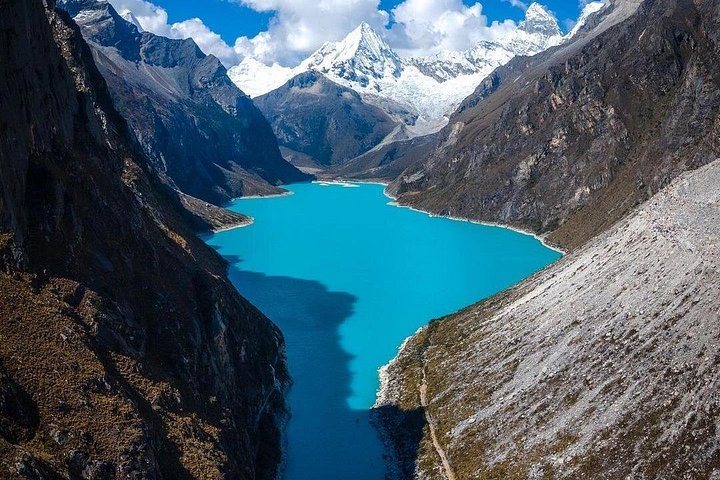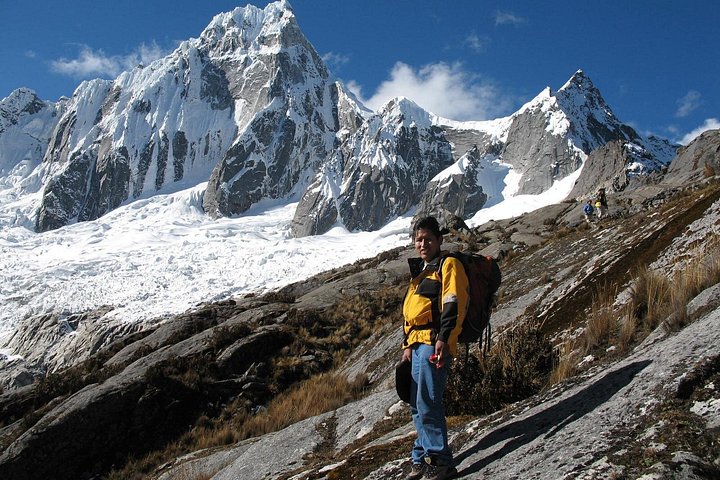
The Santa Cruz trek is the most famous multi-day hike in the Cordillera Blanca and one of the great trekking routes in South America. It crosses the range from the Llanganuco side to the Santa Cruz valley, covering about 45 kilometres over four days, and passes through a changing sequence of landscapes: rushing rivers, high pastures with grazing cattle, glacial lakes and a final descent into a green valley. The high point is Punta Union, a pass at roughly 4,750 metres from which you see a panorama of ice peaks and the vivid turquoise of Taullicocha below. Along the route you can glimpse Alpamayo, the elegant pyramid of snow and ice that has been voted among the world's most beautiful mountains, as well as Taulliraju, Artesonraju and Quitaraju. The trek is usually done with a guide, cook and muleteers who carry the camping gear, so trekkers carry only a day pack. Camps are in the open, with tents set up beside rivers or beneath mountain walls. Because it is rated as moderate, it suits fit hikers with some experience, provided they allow time to acclimatise in Huaraz before starting.
A typical itinerary begins with a drive from Huaraz to the trailhead near Vaqueria, a journey of several hours that can include a stop in Yungay and a drive through the Llanganuco valley. Day one is a gentle walk to the first camp at Llamacorral, along a river and through meadows, a good way to ease into the altitude.
Day two climbs to Punta Union, a steep but well-graded route that brings you above 4,700 metres and demands slow, steady breathing. On the pass you stop for photographs, then descend to the camp at Taullipampa, one of the most spectacular sites on the trek, with Taulliraju rising above the tents.
Day three follows the valley down toward the village of Cashapampa, and the last day or half-day brings you to the road for the return transfer.Preparation shapes the experience. Spend at least three nights in Huaraz and do a few easier hikes first. Bring a sleeping bag rated for freezing temperatures, even if the operator supplies tents and mats, along with warm layers, waterproofs, gloves, a hat, sun protection, trekking poles and broken-in boots.
Check what the tour includes
Park fees, meals, tents, porters and equipment all vary. The dry season from May to September gives stable weather and cold nights. The wet season from roughly November to March brings mud and rain and is usually avoided. Travellers can also extend the trek with side trips to Alpamayo Base Camp, or choose a longer variation if time allows.Group choice matters. Many operators offer shared departures, which keep costs down and add company, while private departures allow you to set the pace.
Ask about group size, the guide's experience, safety equipment, how muleteers are treated and where the money goes. Responsible operators pay fair wages, carry waste out and follow park rules. If four days is too much, shorter alternatives such as Laguna 69 or the Llanganuco Lakes give a taste of the same scenery.
For anyone with the fitness and the time, though, Santa Cruz is the signature Huaraz experience: a few days of walking, sleeping under the mountains and waking up to snow peaks, with enough infrastructure to feel safe and enough wilderness to feel remote.
What to expect
The experience
A four-day guided camping trek of about 45 kilometres, crossing the Punta Union pass at roughly 4,750 metres, with mules and a cook carrying the gear.
Best time
Dry season, May to September, for stable weather and clear mountain views.
How long
Four days and three nights, plus transfers from Huaraz.
Tips
Acclimatise for three nights first. Bring a warm sleeping bag, poles, layers and broken-in boots. Confirm what the price includes.
Quick picks
- Best for
- Fit hikers who want a multi-day Andean trek with support.
- Families
- Better suited to teenagers and adults; the altitude and camping are demanding for young children.
- Couples
- Sunrise camps beneath snow peaks create an unforgettable shared experience.
- Pair with
- Llanganuco Lakes, which lie along the approach.
- Time needed
- Four days, plus acclimatisation time.
Good questions
How hard is the Santa Cruz trek?+
It is rated moderate. The distances are manageable, but the altitude and the pass at about 4,750 metres make it challenging without acclimatisation.
Do I need to carry my camping gear?+
Usually not. Most tours use mules or porters and a cook, so you carry a day pack.
When is the best season?+
May to September, during the dry season, gives the most reliable weather and the best views.
Can I see Alpamayo?+
Yes. The mountain appears from the route, and a side trip to its base camp can be added on longer itineraries.
What should I check before booking?+
Group size, guide experience, what equipment and park fees are included, and how the operator treats its porters.