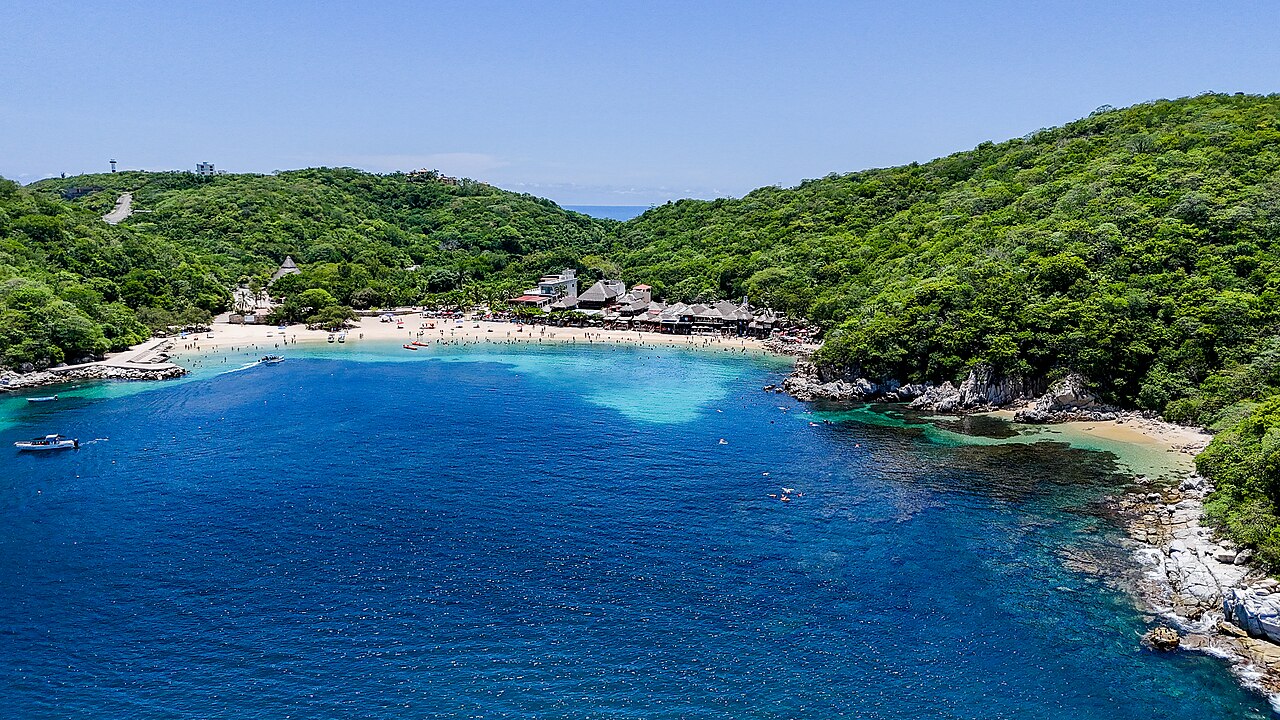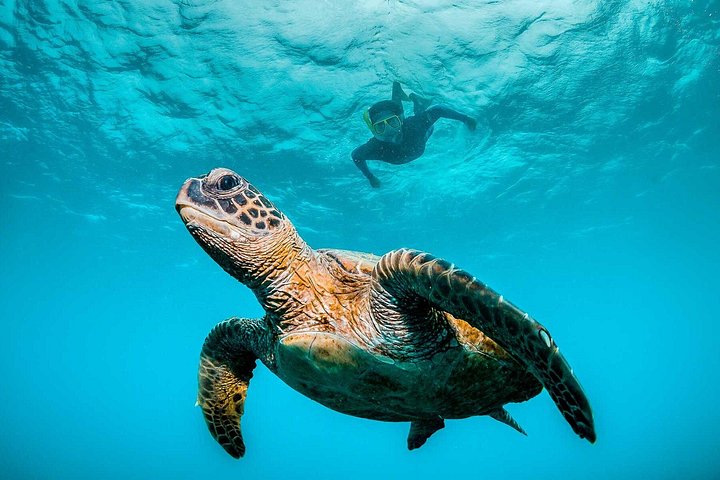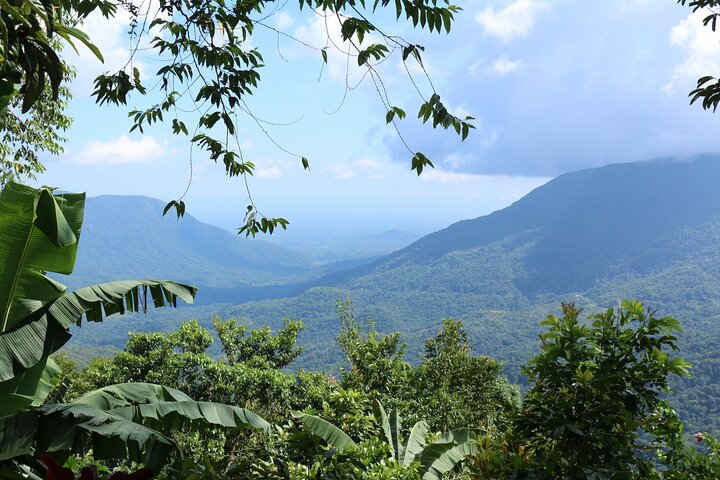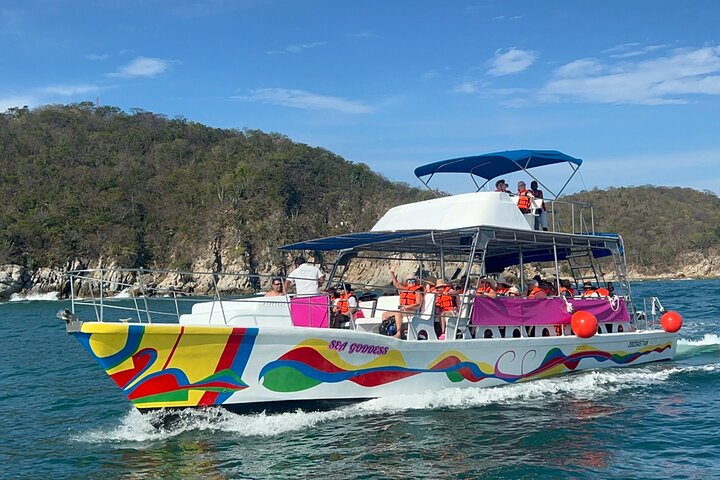
Huatulco National Park is the reason the bays look the way they do. The state tourism board describes a protected area of more than 11,000 hectares in the municipality of Santa María Huatulco, home to a wide range of land and marine plants and animals, and it covers much of the coast between the resort areas. Its hills sit at the foot of the Sierra Madre del Sur, where the mountains meet the sea, and its habitats include dry tropical forest, mangroves and coral communities. The national protected-areas commission lists trails named Zanate, Cruz del Monte and Sabanal, and notes that visitors can enter daily from early morning until evening. Birdwatchers look for species such as the citreoline trogon, while the shoreline offers snorkelling and quiet beaches that are only reachable by boat or on foot. The park is the common thread of most Huatulco day trips, so even if you never walk a trail you will pass through it on a bays cruise. It rewards slow travel: go early, carry water and enjoy the contrast between the dry forest and the green water.
Why it matters
Huatulco was planned as a resort coast, and the park is what keeps much of the shoreline wild. Instead of a continuous strip of hotels, you get headlands covered in forest, beaches with no buildings and a mangrove edge that shelters birds and fish. The commission notes that the climate is hot and semi-humid, around 28 degrees Celsius, and that the landscape is at its greenest from June to November, after the rains. In the drier months the forest is browner, which makes wildlife easier to spot.
Planning your visit
The park office is in La Crucecita, and the commission page gives daily opening hours and a per-person daily fee, with exemptions for children under 12, seniors and people with disabilities and a discount for students and teachers with a valid card. Confirm the current fee and hours with the office before you go, because they can change. Many visitors never need to pay separately, since boat tours and some day trips cover entry or collect it for you, but ask when you book.
Getting the most from it
Bring a hat, plenty of water and sturdy shoes, because trails are hot and uneven. Go early for birds and for cooler walking, and keep to marked paths to protect the vegetation. Pack out all rubbish and use reef-safe sunscreen, since the coral is fragile. If you want a guide who knows the species, a guided snorkel or a naturalist walk adds a lot, and pairing the park with a bays boat day gives you both the sea view and the forest edge.
What to expect
The experience
A protected area of dry forest, mangrove and coral coast that you explore on marked trails, from beaches or by boat.
Best time
Early morning for cooler walking and birds, or the green months of June to November after the rains.
How long
Two to four hours for a trail and a beach, longer if you combine it with a boat day.
Tips
Bring water, a hat and sturdy shoes, confirm the daily fee and hours with the park office and keep to marked paths.
Quick picks
- Best for
- Nature lovers who want trails, birds and quiet beaches.
- Families
- Good for older children who can walk in the heat, with plenty of water and shade breaks.
- Couples
- A quiet morning walk followed by a swim at an empty beach.
- Pair with
- The bays boat tour and the guided snorkel.
- Time needed
- A morning.
Good questions
How big is Huatulco National Park?+
The state tourism board describes more than 11,000 hectares in the municipality of Santa María Huatulco. It spans land and sea, so much of it is best seen by boat.
Which trails can I walk?+
The national protected-areas commission names three trails, Zanate, Cruz del Monte and Sabanal. Ask at the park office in La Crucecita about current access and conditions.
Is there an entrance fee?+
Yes, a modest per-person daily fee applies, with exemptions for children under 12, seniors and people with disabilities and a discount for students and teachers. Boat tours often handle the fee for you, so ask when you book.
When is the park at its greenest?+
The commission says the park is greenest from June to November. That is also the rainy season, so pack a light rain layer.
What wildlife can I see?+
Birdwatchers look for species such as the citreoline trogon, and the coast has coral communities and mangroves. A guided walk or snorkel improves your chances considerably.