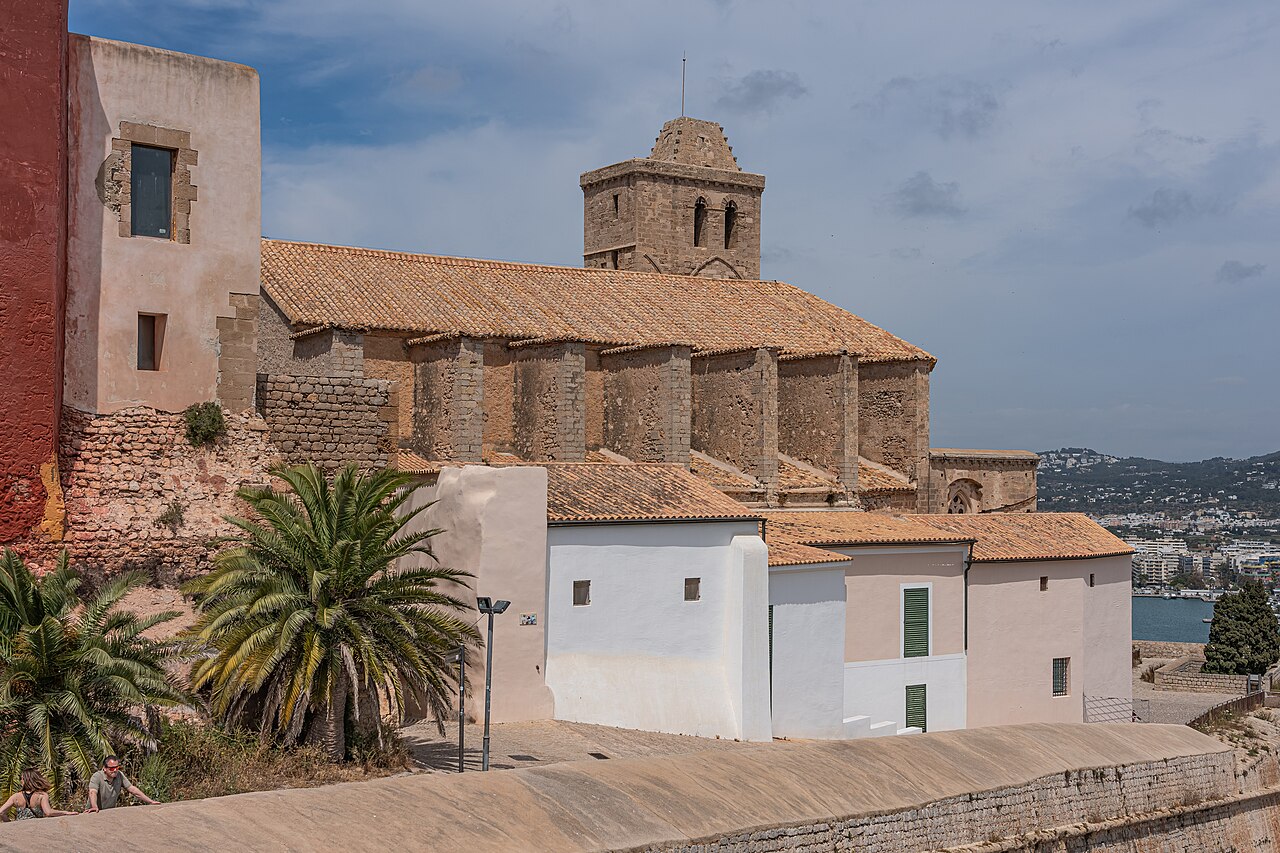
Dalt Vila means "high town", and it is the reason Ibiza Town looks the way it does. The old quarter climbs a steep hill above the port inside a ring of massive Renaissance walls, begun in 1555 under the Italian military engineer Giovanni Battista Calvi and continued by Jacobo Paleazzi Fratín from 1575. They were part of a plan by Charles I and Philip II to modernise Mediterranean coastal defences against pirate raids, and seven angled bastions still guard the town. The main gate, the Portal de ses Taules, carries a stone dated 1585 and opens beside the old market square. Inside, whitewashed lanes, small plazas and stone stairways wind uphill to the cathedral of Santa María de las Nieves at the summit, with the former Dominican convent that now serves as the town hall below it. UNESCO inscribed the site in 1999, together with other Ibiza treasures. In November the hill belongs to residents again: shutters are open at the bakeries and galleries that stay all year, the walls are easy to walk, and the views over the harbour and across to Formentera are clearest in autumn air.
How to walk it
Enter by the Portal de ses Taules and keep climbing. The route is steep and the paving is old, polished stone, so wear shoes with grip and expect a twenty to thirty minute climb at an easy pace before you reach the cathedral square. The bastions are worth the detour, and the wall walks give long views of the harbour, the marina and the lighthouse-studded coast.
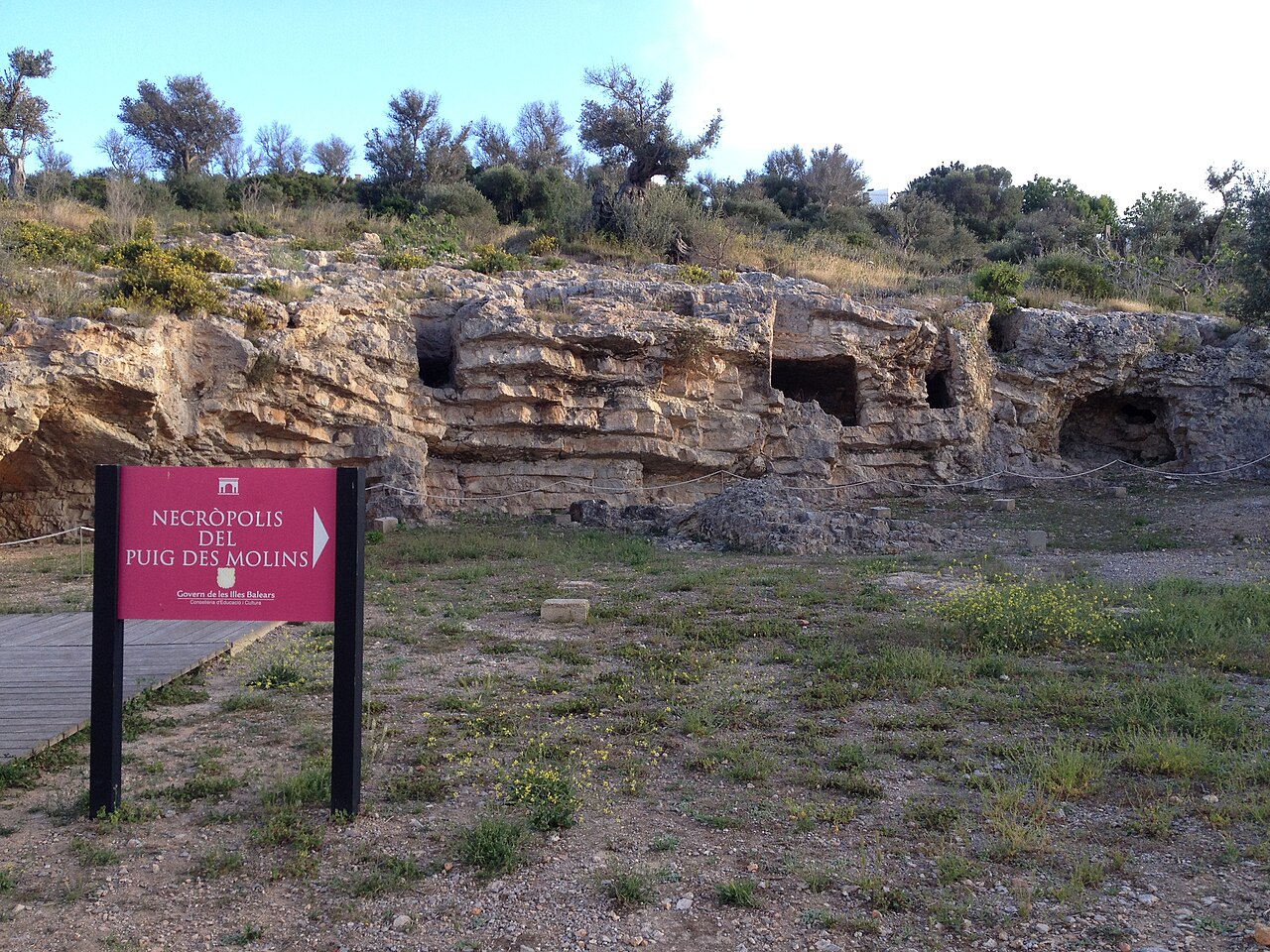
The Roman-style statues flanking the entrance are copies, with the originals kept in a museum, which is a nice reason to visit the archaeology collections on the hill and at Puig des Molins as well.
What is open in winter
The walls, lanes and viewpoints are always open, and they are free. The cathedral and the small museums keep their own hours, which shorten in the off-season and can close on Sundays and holidays, so check the opening times before you set out and treat any time you read online as a guide. Many restaurants inside the walls close from late autumn until spring, but a handful stay open, and the lower town around the port and Vara de Rey has plenty of choice for lunch and dinner.
Making it a plan
Arrive mid-morning, climb slowly, take lunch inside the walls if somewhere is open, and finish at the highest viewpoint near the cathedral as the afternoon light turns gold. Sunset in early November comes close to six in the evening, so you can combine the walls with a drink on the harbour afterwards. If you have mobility concerns, the lower stretch around the gate and the market square is gentle, but the upper town is only for those happy with stairs and slopes.
What to expect
The experience
A self-guided uphill walk through the gate, lanes and bastions of the walled town to the cathedral at the top, with stops for viewpoints and, if you like, a museum.
Best time
Mid-morning to early afternoon for open doors and soft light, ending at the top viewpoint before the late afternoon sun drops.
How long
Two to three hours at an easy pace, longer with a museum visit and lunch.
Tips
Wear shoes with grip for the polished stone, check cathedral and museum hours before you go, and bring a layer for the wind on the upper walls.
Quick picks
- Best for
- First-timers and history lovers who want the one walk that explains why Ibiza Town looks the way it does.
- Families
- Fine for children who like walls and stairs, but not for buggies, and keep a hand on little ones near the unfenced edges of the bastions.
- Couples
- Climb late in the afternoon, then watch the harbour lights come on from the walls before dinner below.
- Pair with
- The Puig des Molins museum on the hillside opposite, then lunch around Vara de Rey or the harbour.
- Time needed
- Allow half a day if you add a museum and a long lunch.
Good questions
Is Dalt Vila free to visit?+
Yes, walking the gate, lanes and walls costs nothing. The cathedral and museums keep their own opening times and may charge a small entrance fee.
Is it open in November?+
The old town is a living neighbourhood and is open all year. Some restaurants and shops inside the walls close for the winter, so expect fewer choices than in summer.
How steep is the climb?+
It is a steady uphill walk on old stone paving with some stairs. Most people reach the cathedral in twenty to thirty minutes at an easy pace, and there are benches along the way.
Why is it a World Heritage Site?+
The walled town and its 16th-century fortifications are among the finest examples of Renaissance military architecture in the Mediterranean. UNESCO listed the site in 1999.
Where is the best view?+
From the bastions near the cathedral at the top, you can see the harbour, the marina and on a clear day the island of Formentera across the water.