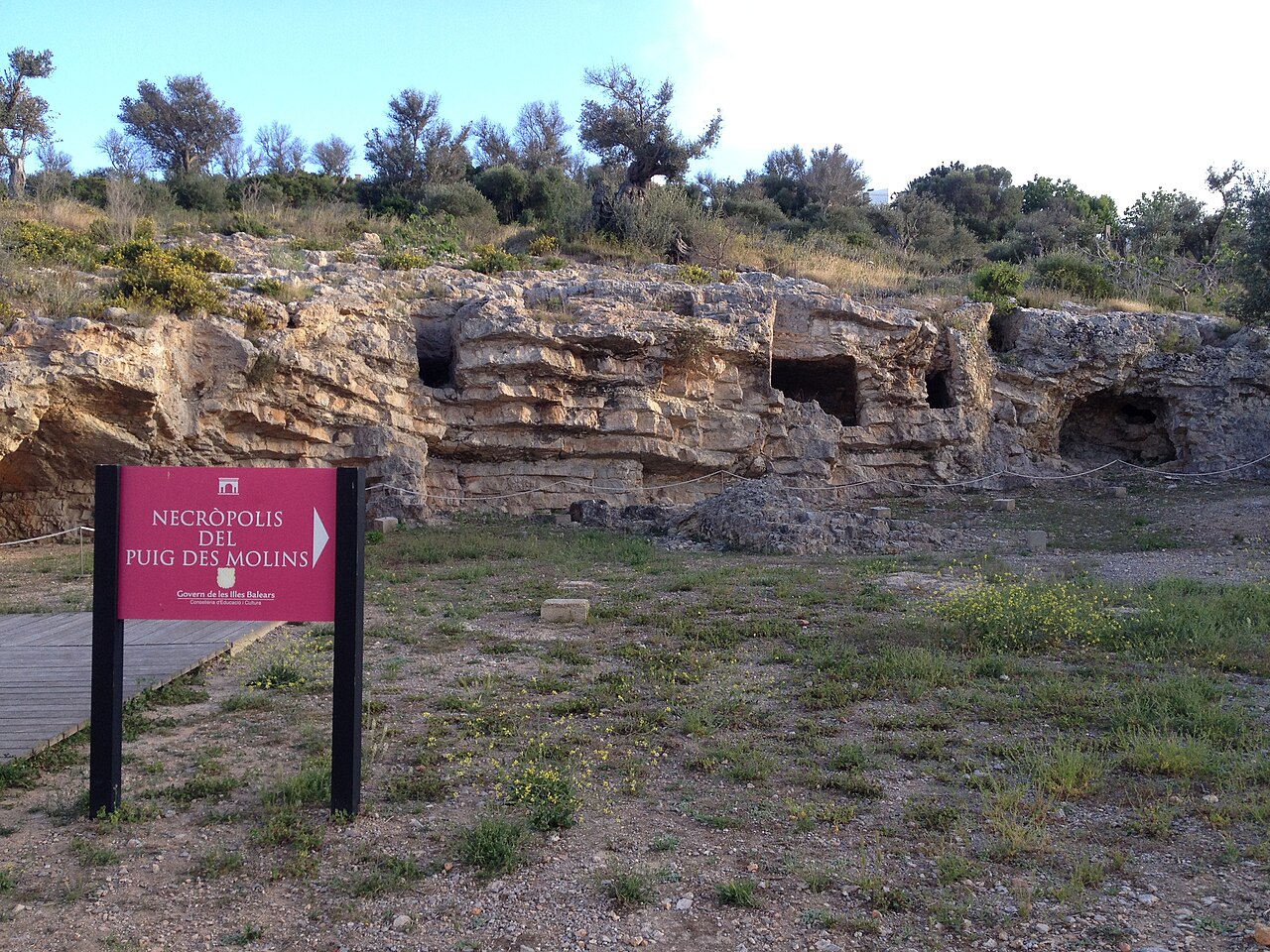
Long before the nightclubs, Ibiza was an important Phoenician and Punic port, and Puig des Molins, the hill of the windmills, was where its people buried their dead. The necropolis lies just outside the walls of Dalt Vila and is one of the largest and best preserved burial grounds of the ancient western Mediterranean, with rock-cut underground chambers spread across the slope. The Monographic Museum on the site presents the discoveries from those tombs, and its permanent rooms are built around a theme that its own guide calls a trip to death in ancient Ibiza: how islanders understood death, their fears and hopes for an afterlife, and the funeral customs that shaped what they were buried with. Expect pottery, glass, small terracotta figures, amulets and jewellery. The collection is part of the Archaeological Museum of Ibiza and Formentera network, and the necropolis is covered by the UNESCO listing that also protects Dalt Vila. In November it is a calm, uncrowded visit, ideal for a grey afternoon when the beaches are not calling.
Why it matters
The objects here explain who the islanders were before Rome. Ibiza was founded by Phoenician settlers from the central Mediterranean in the seventh century BC, and its culture blended Phoenician, Carthaginian and later Roman influences. The necropolis was used for centuries and holds thousands of burials, and the goods placed in them reveal trade links with Egypt, Greece, Carthage and the Italian peninsula. A visit turns the island from a holiday backdrop into a place with deep history.
Planning the visit
The museum publishes its own hours, which were morning-based on weekends and weekdays with an extra evening opening on Fridays, and it is closed on Mondays and holidays. Hours and admission can change in the off-season, so check the museum website before you go, including whether any free-entry days apply. Allow about an hour for the museum and a short walk around the grounds, and wear comfortable shoes because the surrounding hillside has steps and uneven ground.
Pairing it with the day
The museum is a short walk downhill from the old town, so it fits neatly with a morning on the walls of Dalt Vila. Lunch around the harbour or Vara de Rey is close by. If you like what you see, the broader archaeological museum in the old town covers more of the island's story, though check its opening status before you set out. Children usually enjoy the small figures and animal-shaped pieces, and the visit is short enough not to tire them.
What to expect
The experience
A self-guided visit through the museum's permanent rooms, then a short walk around the necropolis hillside with its rock-cut burial chambers.
Best time
Morning, when the museum is open on every day it opens, and the light on the hillside is gentle.
How long
About an hour for the museum and grounds, a little longer if you read every label.
Tips
Check the museum site for current hours and admission, expect it closed on Mondays, and wear shoes for uneven ground outside.
Quick picks
- Best for
- Anyone curious about Ibiza before the nightlife, and anyone who needs a good wet-weather plan.
- Families
- Short and visual, with small figures and jewellery that hold children's attention for an hour.
- Couples
- A quiet cultural half-hour before lunch in the old town.
- Pair with
- A morning on the walls of Dalt Vila and lunch around the harbour.
- Time needed
- One hour, or an hour and a half with the grounds.
Good questions
What is Puig des Molins?+
It is the ancient Phoenician and Punic burial ground of Ibiza, set on a hillside next to the old town, with a museum showing what was found in its tombs. The name means hill of the windmills.
Is the museum open in winter?+
It is a year-round museum, but hours can shift in the off-season. Check the museum website for current times before you go, and expect it to be closed on Mondays.
How long do I need?+
About an hour is enough for the permanent rooms and a stroll around the grounds. Add time if you want to read the longer descriptions.
Is it suitable for children?+
Yes, if they enjoy objects and stories. The small terracotta figures, jewellery and pottery are easy to look at and the visit is short.
Is it part of the UNESCO listing?+
Yes, the necropolis is covered by the World Heritage designation that protects Ibiza's old town and its Phoenician heritage.