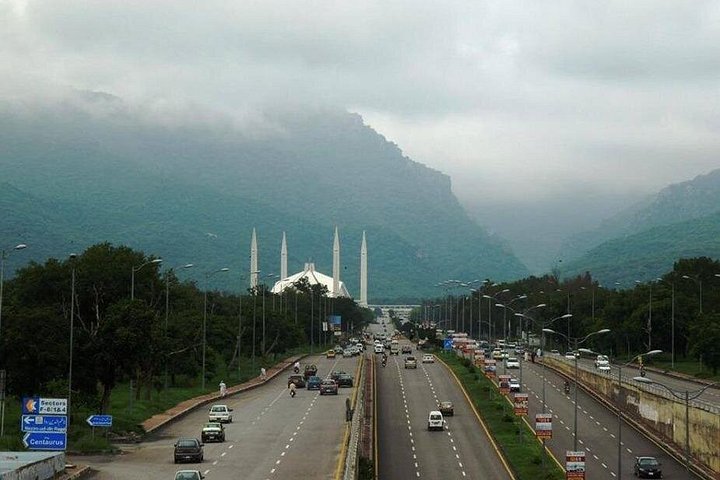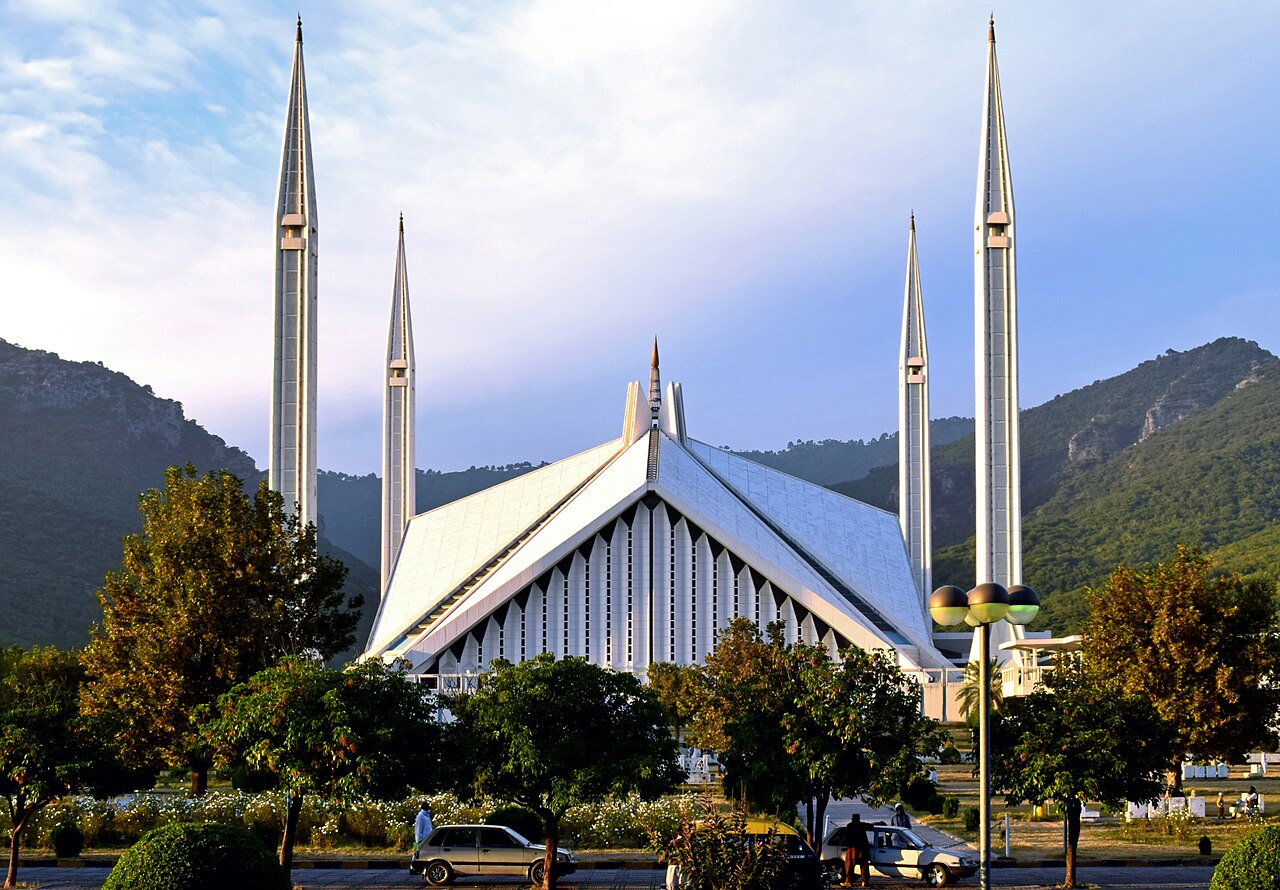
Faisal Mosque is the building most people picture when they think of Islamabad, and it earns the place. Designed by the Turkish architect Vedat Dalokay and completed in the 1980s with funding from Saudi Arabia, it broke with centuries of domed mosque design: instead of a dome there is a vast, angular prayer hall shaped like a Bedouin tent, flanked by four slender minarets that rise well above the city. Set at the foot of the Margalla Hills at the northern end of the grid of sectors, it looks small from the highway and enormous the moment you walk up the long approach. The main hall and the surrounding courtyards can hold a very large congregation, which makes it one of the biggest mosques in the world by capacity. Visitors are welcome in the courtyards and, outside prayer times, in the prayer hall itself, where the interior is a calm, geometric space of marble, a huge chandelier and calligraphy, with the tent roof sweeping down to the walls. The setting is half the appeal. Behind the mosque the hills fill the skyline, and at golden hour the white stone turns pink and gold while the call to prayer drifts across the lawns. It is free to enter, so it fits into any itinerary, and it works as the first stop of a half-day city tour or as a quiet last stop after Daman-e-Koh. Come with respect rather than only for the photograph, because this is a working place of worship with thousands of regular worshippers.
Practical details shape the visit. Dress modestly: long trousers or skirts, covered shoulders, and a headscarf for women, which can often be borrowed or bought nearby. You remove your shoes at the entrance and carry them or leave them at the shoe counter. Security screening at the gates is routine, so travel light and expect bag checks.
Photography is generally fine in the courtyards, though be discreet inside the hall and never photograph worshippers close up. The mosque closes to visitors during the five daily prayers, with Friday midday prayers the busiest period of the week, so check the timing on the day and plan around it rather than arriving as the congregation gathers.
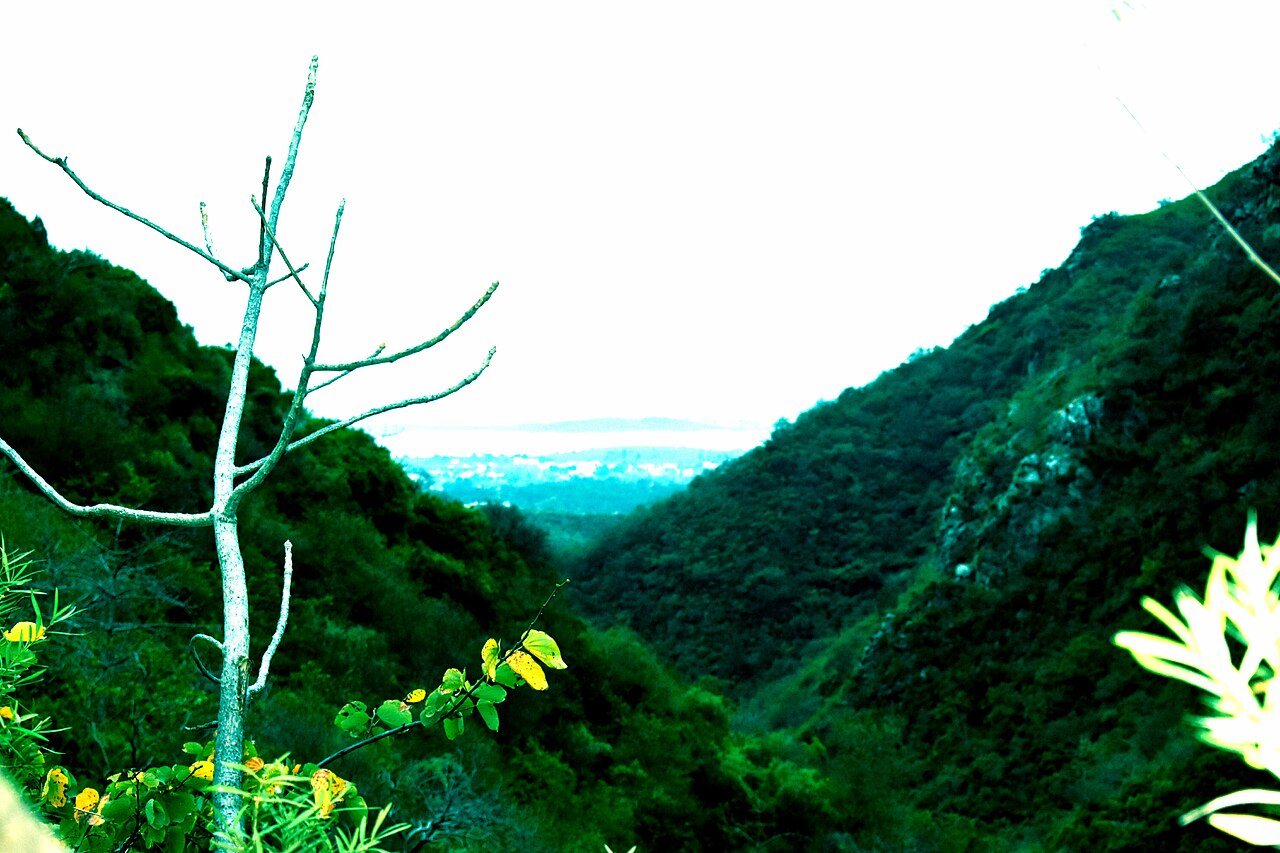
The best moments are early morning, when the grounds are quiet and the air off the hills is cool, and late afternoon into sunset, when light and crowds are at their best. Families gather on the lawns on evenings and weekends, which makes the place feel lived in rather than staged. Trail 6 into the Margalla Hills starts behind the mosque, so a short walk up the valley adds a very different view back toward the minarets.
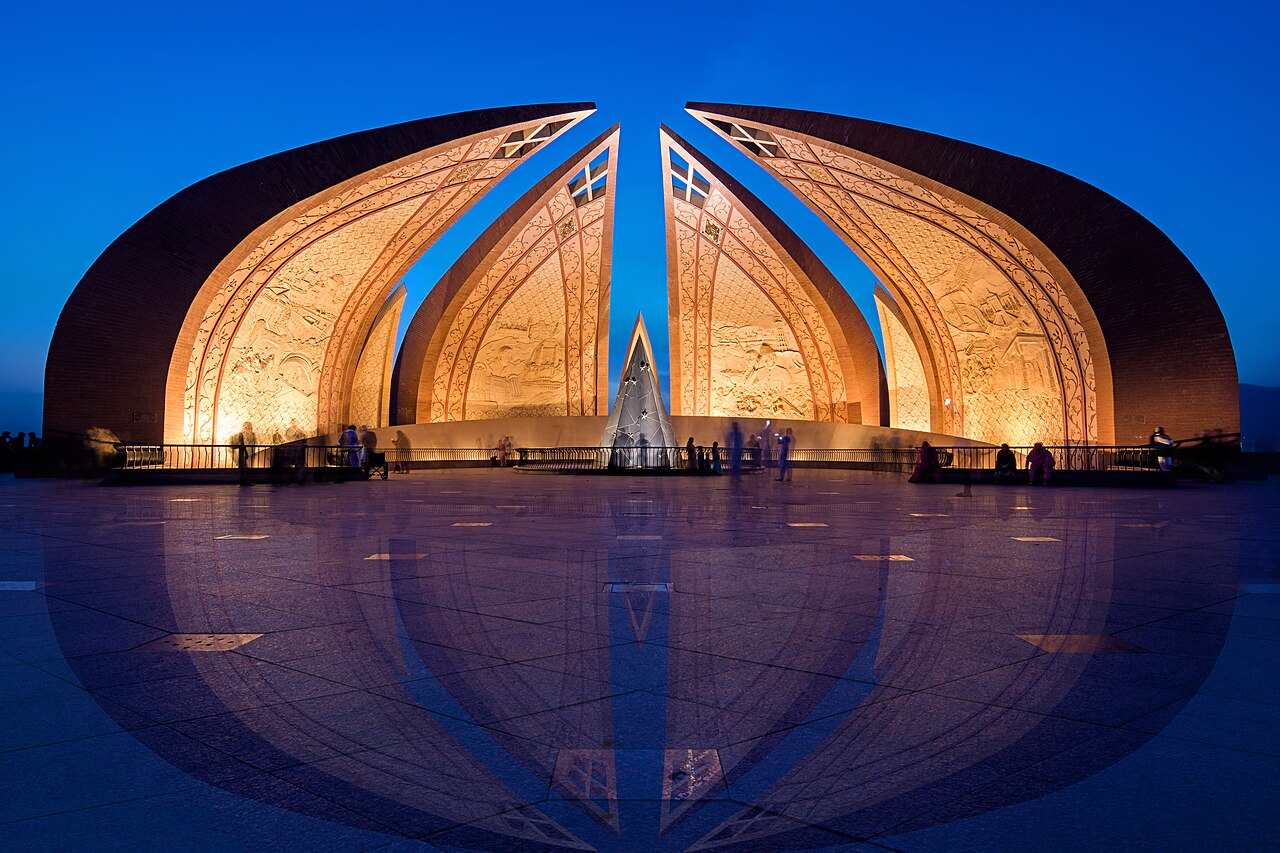
The mosque is also the natural opening stop for a guided Islamabad city tour, and combining it with the Pakistan Monument and Lok Virsa makes a full, easy day. A short note on the wider region: check your government's current travel advice before you travel and follow local guidance on the day.
A few extra points make the visit smoother. The mosque sits on a large landscaped site with parking, a market of stalls selling prayer beads, caps and snacks, and clean facilities, so you do not need to bring much. The interior is plain by design, which is part of its power: the focus is on scale, light and the shape of the roof rather than ornament.
If you are interested in architecture, look for how the angular walls fold toward the center and how the four minarets, which resemble sharpened pencils rather than traditional towers, anchor the corners.
Many guides will point out that the design was controversial when it appeared, because it departed so sharply from tradition, and that debate is part of why it still draws attention today. Guided city tours usually include it, but a self-guided stop is easy by taxi.
What to expect
The experience
A self-guided visit to the courtyards and, outside prayer times, the main prayer hall, with the Margalla Hills as the backdrop.
Best time
Early morning for quiet or the hour before sunset for the best light; avoid prayer times and Friday midday.
How long
One to two hours including the approach and photographs.
Tips
Dress modestly, bring a scarf if you are a woman, expect bag screening, and plan around prayer times when visitors cannot enter the hall.
Quick picks
- Best for
- Anyone visiting Islamabad for the first time, because it is the city's signature image and costs nothing.
- Families
- Easy for families: wide courtyards and lawns for children, with the usual modest dress for everyone.
- Couples
- Sunset light on the white stone, then a walk on the lawns as the lights come on.
- Pair with
- Pakistan Monument, Lok Virsa and the Margalla Hills trails for a full day.
- Time needed
- Allow about an hour and a half, more if you wait for sunset.
Good questions
Is Faisal Mosque free to visit?+
Entry is free. Because it is a working mosque you must follow the dress code, remove your shoes and avoid the five daily prayer times, which can change by season.
Can non-Muslims go inside?+
Visitors of all faiths are generally welcome in the courtyards and, outside prayer times, in the main hall, as long as they dress modestly and behave respectfully.
What should I wear?+
Cover shoulders and legs, and women should cover their hair. A light scarf and loose long clothing are the simplest choice in hot weather.
When is the best time to go?+
Late afternoon for sunset light, or early morning for calm. Avoid Friday around midday, when large congregations fill the grounds.
How far is it from the city centre?+
It is on the northern edge of the sector grid, about a 20 to 30 minute drive from most hotels depending on traffic, and a short taxi ride from the Blue Area.