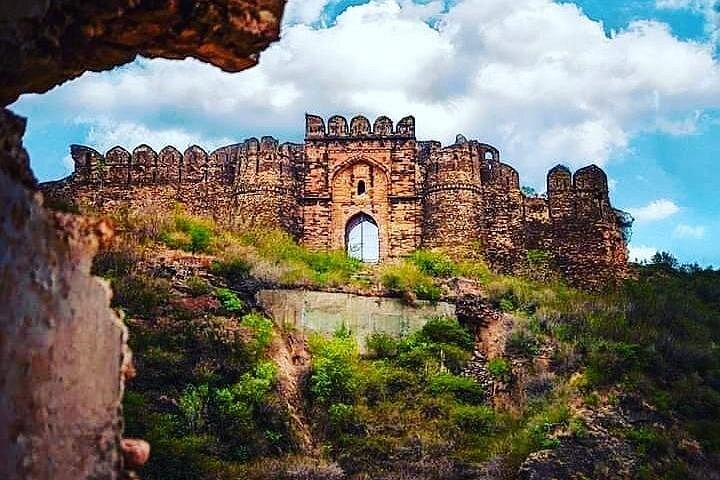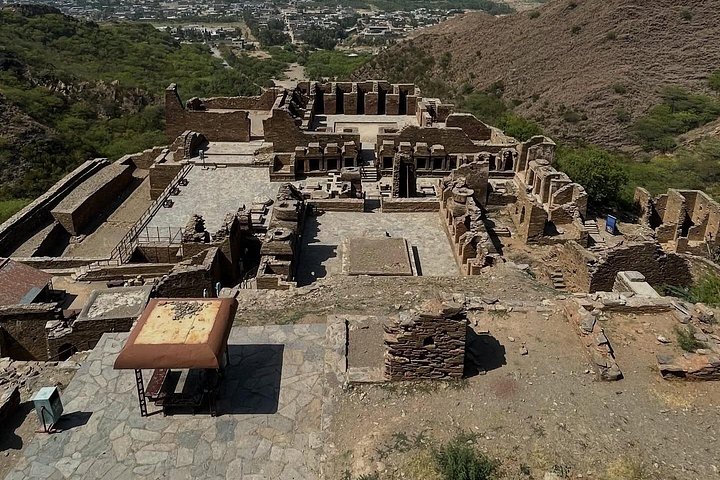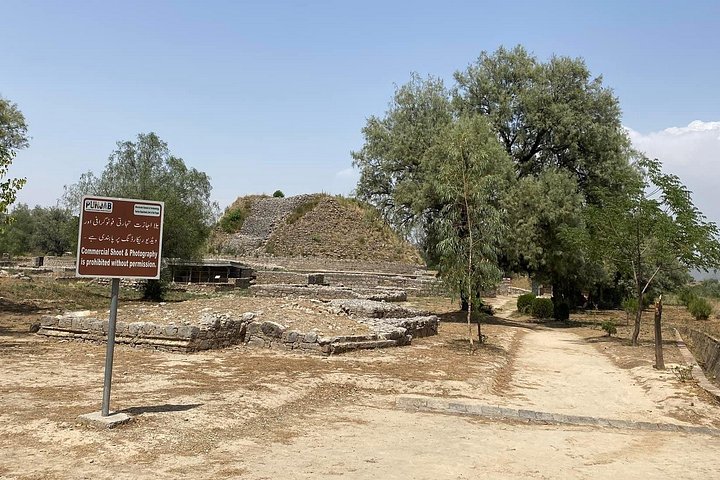
Taxila is the best archaeological day trip from Islamabad and one of the most important Buddhist heritage sites in South Asia. Located about an hour west of the capital, it was an ancient crossroads where Persian, Greek, Mauryan, Kushan and Buddhist cultures met, and its scattered sites were inscribed as a UNESCO World Heritage Site. The tour linked here is a guided day trip from Islamabad that typically visits several of its main sites. Bhir Mound, the earliest city layer, shows the outline of streets and houses; Sirkap is a later, grid-planned Greek-influenced city; Jaulian and Mohra Muradu are Buddhist monasteries with stupas, meditation cells and decorated platforms; and Dharmarajika is an ancient stupa complex associated with early Buddhism. A local museum displays Gandhara sculpture, coins, jewellery and household objects, including serene Buddha figures whose faces and drapery show Greek influence. Seeing them in context helps the ruins make sense. The landscape adds to the experience, with low hills, wheat fields and quiet villages around the sites, and the trip feels like a pleasant exploration rather than a crowded attraction. A guide is valuable here, because the sites can look like piles of stones without explanation. With a guide you learn how monastery life was organised, how stupas were built and how trade routes shaped the art you see.
For a smooth visit, start early to beat the heat, wear sturdy shoes and bring sun protection, because shade is limited. Entry fees are usually modest, and the tour may or may not include them, so ask when you book. Photography is generally permitted, but follow instructions at each site and do not climb on fragile walls. The day usually includes lunch in or near Taxila town. Return to Islamabad by late afternoon, which leaves the evening free.
Taxila combines well with a morning at Lok Virsa or the Pakistan Monument Museum, which give the wider cultural context. Visitors interested in Buddhist art can extend the trip with Takht-i-Bahi and Peshawar, and those short on time may prefer a combined Islamabad and Taxila day. History enthusiasts should allow the full day, since the individual sites are spread out and each rewards slow looking. Check your government's current travel advice and local guidance before you travel, and ask the operator about the plan for the day.
Some background makes the stones come alive. The Gandhara region, centered on the valleys around Peshawar and Taxila, was a meeting point of Hellenistic, Persian and Indian traditions, and its sculptors produced the first widely known images of the Buddha in human form, often with wavy hair and Greek-style robes. Monasteries like Jaulian once held communities of monks and students, with courtyards, assembly halls and rows of small stupas, some still bearing stucco reliefs.
Walking through the cells and courtyards gives a sense of daily life that a museum case cannot. The museum, though modest in size, houses coins, seals, silver and gold items and carved panels, and a guide can link each find to the site where it was discovered. For many visitors the surprise is how peaceful and uncrowded the sites are, particularly outside school holidays.
Bring a notebook if you enjoy detail, since each site has its own story. Cold drinks and fruit are sold near the entrances, and the museum is a welcome shaded stop in the middle of the day.
What to expect
The experience
A guided drive from Islamabad to the ruins and museum of Taxila, covering several monasteries, stupas and ancient city layers.
Best time
Cooler months and early starts; summer afternoons are very hot with little shade.
How long
A full day, including the drive of about an hour each way.
Tips
Wear sturdy shoes and sun protection, ask about entry fees and bring water.
Quick picks
- Best for
- History lovers and anyone curious about Buddhist Gandhara.
- Families
- Suitable for older children who enjoy ruins and exploring.
- Couples
- A quiet day of ruins and countryside, with lunch en route.
- Pair with
- Lok Virsa Museum before the trip, or Peshawar and Takht-i-Bahi after.
- Time needed
- One full day.
Good questions
Why is Taxila important?+
It was a major ancient city and Buddhist centre where Greek, Persian and South Asian influences met, and it is a UNESCO World Heritage Site.
How far is it from Islamabad?+
About an hour by road in normal traffic, making it an easy day trip.
Do I need a guide?+
A guide greatly improves the visit, because the sites are easier to understand with explanation.
What should I wear?+
Comfortable clothes, sturdy shoes, a hat and sun protection.
Can I combine it with other sights?+
Yes, it pairs well with a city tour or a longer Gandhara trip including Peshawar and Takht-i-Bahi.