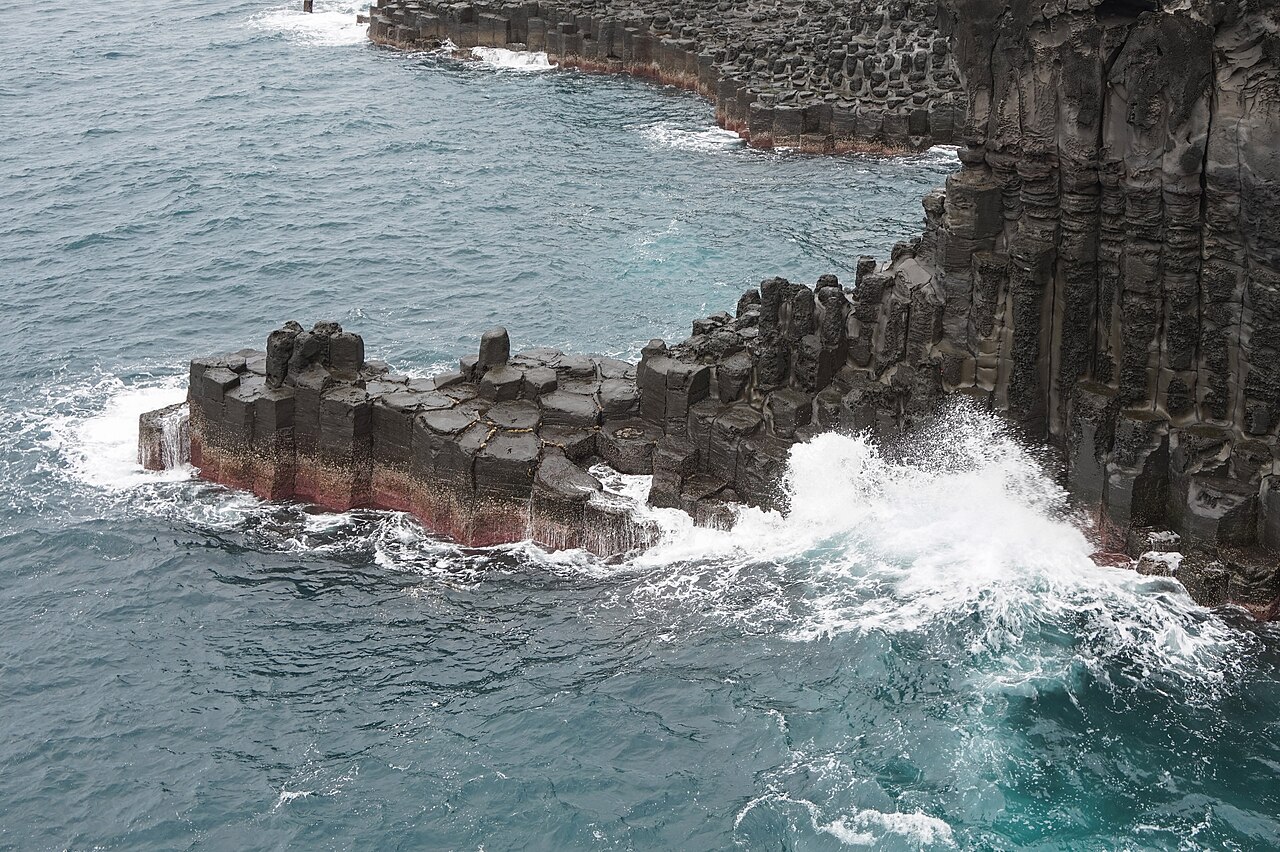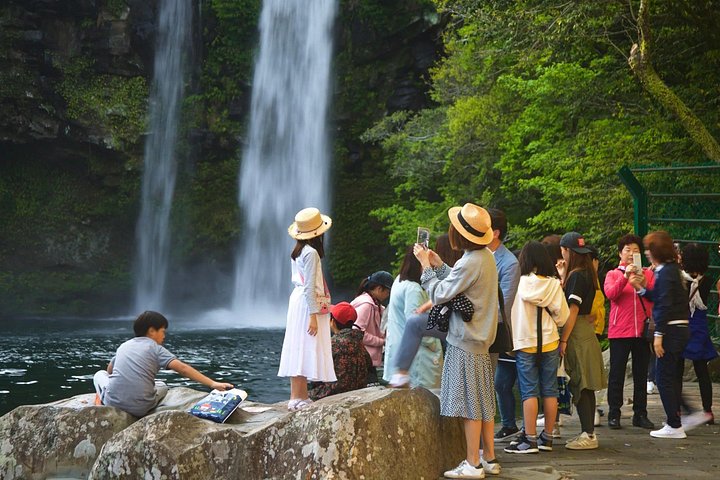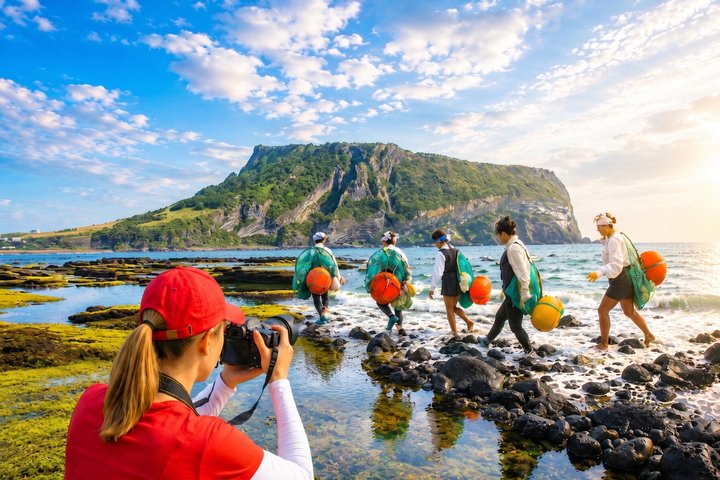
Seopjikoji is a cape that pushes out into the sea on Jeju's eastern coast, and it is one of the island's easiest and most photogenic free walks. The headland is a mix of open grassland, black volcanic rock and sea cliffs, with a path that loops along the edge so the water is always in view. From several points you look straight across at Seongsan Ilchulbong, the crater that anchors every east-coast itinerary, which makes this a favourite place to see the peak whole rather than climb it. Along the way you pass Hyeopja Yeondae, a coastal signal station from the Joseon period that is protected as a local monument, Seondolbawi, a tall sea stack tied to a legend about the Dragon King's youngest son, and Bulgeunoreum, where reddish volcanic cinders are exposed on the slope. Spring brings yellow canola flowers across the grass, and the light at the end of the day is superb.
The walk itself
The loop is gentle and mostly flat, with a surfaced path and short stretches of steps, so most visitors manage it comfortably in ordinary shoes. Allow around an hour if you stop for photographs and want to walk out to each viewpoint, and longer if you linger on the grass or at the beach below. The wind can be strong on the open cape, particularly in winter and on cloudy afternoons, so bring a windproof layer and hold on to hats. Keep children close near the cliff edge.
What you are looking at
The cape is made of volcanic material thrown out in the same family of eruptions that built the nearby crater, and you can see the layers and the colour change in the rock. The signal station, a small stone structure on the grass, once passed messages by fire and smoke along the coast.
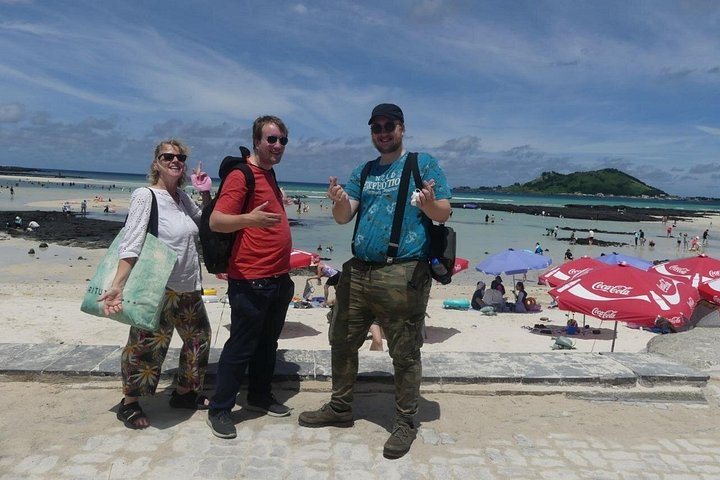
Sinyang Beach lies below the headland, a sandy bay that is quiet compared with the western beaches, and the spring canola fields make it one of the best flower stops on the island. Because the cape is open to the elements, the mood changes dramatically between a clear blue morning and a misty grey afternoon.
Planning it
Seopjikoji is open year-round and has no admission charge, though the nearby car parks charge a small fee. It fits neatly into an east-coast day, either before Seongsan Ilchulbong or as a slow late-afternoon stop after the ferry to Udo. If you are staying in Pyoseon or Seongsan it is an easy short drive. Without a car, a taxi or a tour is the easiest way to reach it, so agree a pick-up time before you set out.
What to expect
The experience
A self-guided loop walk on open grassland and cliff paths, with viewpoints, a signal station and a beach below.
Best time
Late afternoon for soft light on the crater across the water, or spring mornings when the canola flowers are in bloom.
How long
About an hour for the loop, up to two hours with the beach and photo stops.
Tips
Bring a windproof layer, wear shoes with grip, keep small children away from cliff edges and have some coins for the car park.
Quick picks
- Best for
- Easy coastal views and photographs, with Seongsan Ilchulbong as the backdrop.
- Families
- Good for families with children who can follow a path, as long as you stay away from the edges.
- Couples
- One of the best free sunset or golden-hour walks on the east coast.
- Pair with
- Seongsan Ilchulbong, Udo Island and the Jeju Haenyeo Museum.
- Time needed
- One to two hours.
Good questions
Is Seopjikoji free to visit?+
Yes, the headland is open to walk without an admission charge. The car parks nearby charge a small fee.
When is the best season for Seopjikoji?+
Spring is the favourite because canola flowers cover the grass, but the cape is attractive in every season. Winter is windy and quiet, and summer is green and warm.
How long does the walk take?+
Plan on about an hour for the loop at a relaxed pace, longer if you add the beach or stop often for photographs.
Can I see Seongsan Ilchulbong from here?+
Yes. The crater is clearly visible across the water from several points on the cape, which makes it a good place to photograph the peak from a distance.
Is it suitable for children and older visitors?+
The path is mostly flat and surfaced, so it suits most ages, though the wind and open cliff edges mean young children need close supervision.