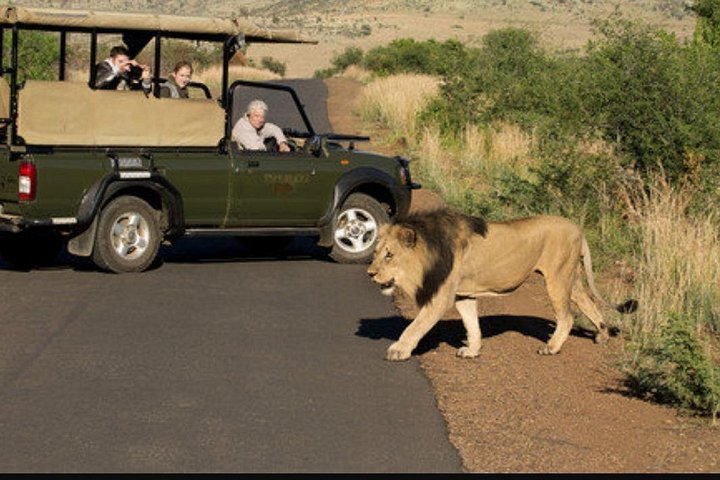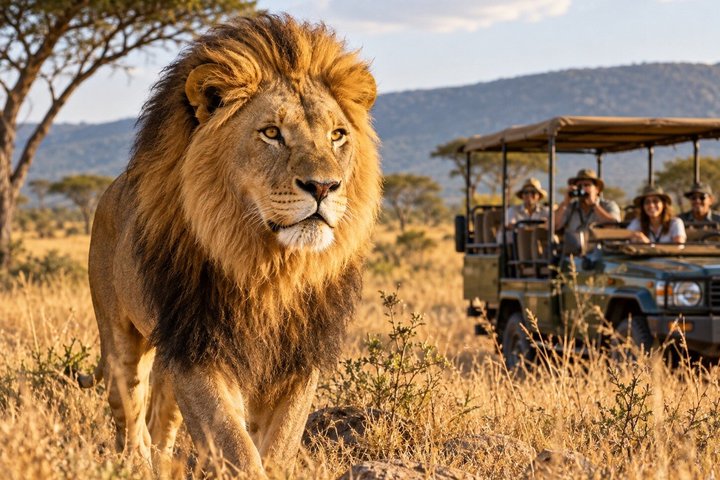
The Ann van Dyk Cheetah Centre, in the countryside north of Johannesburg near Hartbeespoort, is a conservation facility known for its work with cheetahs, the fastest land animal and a species under serious pressure across Africa. The centre was founded in the 1970s to breed cheetahs in captivity and to build a healthy population that could support wild numbers, and it has since expanded its work to include other threatened animals such as African wild dogs, brown hyenas and vultures. Visits are by guided tour in an open vehicle, so you see the animals in large enclosures, with a guide explaining each one's story, behaviour and role in the breeding programme. Cheetahs are the main attraction, including the rare king cheetah, a variant with a distinctive blotched coat, and on some tours you may see a demonstration of how fast a cheetah can run. Because the visit supports conservation rather than entertainment, it feels more purposeful than most close-up wildlife stops.
What to expect
Tours run at fixed times, usually with an advance booking requirement, and last around two hours. The guide drives through the grounds, stopping at enclosures so you can look and take photographs, and explains how the centre works, what threatens cheetahs in the wild and how captive-bred animals contribute to conservation. Expect to hear about habitat loss, conflict with farmers and the challenge of maintaining genetic diversity. There is no handling of the cats, and rules about staying in the vehicle are strict, which is part of what makes the centre credible.
Choosing your tour
A visit can be a short stand-alone half day, or part of a broader day that includes the Harties cableway, a market or a sanctuary stop. Ask the operator how long you will spend at the centre itself, because some multi-stop itineraries allow only a short visit. Early morning and late afternoon tours tend to offer cooler weather and more active animals, while midday can find the cats resting in the shade. Wear a hat and sunscreen, bring a camera with a decent zoom and carry a light jacket on cold mornings.
Who it suits
Wildlife lovers who care about ethical encounters, families with children old enough to follow a guided talk, photographers and travellers who want to understand conservation work rather than simply see animals. It is less suited to visitors who want to touch or walk with cats, since the centre does not offer that.
A day here pairs naturally with the Hartbeespoort area, and it complements a trip to Pilanesberg or Kruger, where you may see wild cheetahs and understand better how rare and fortunate such sightings are. Check opening days and tour times when you book, because they can change, and book ahead for weekends and school holidays.
One more thing to know before you go is that the cheetah is the fastest land animal but also one of the most vulnerable, because it relies on speed rather than strength and loses food and cubs to larger predators. That helps explain why captive breeding and careful management matter, and why a good guide will stress how many cheetahs live outside protected areas.
Ask questions during the tour, and consider the visit as a way to support work that benefits wild populations. Children often leave with a clearer sense of why conservation matters than a simple photo opportunity would give them.
What to expect
The experience
A guided open-vehicle tour of a cheetah conservation centre, with large enclosures for cheetahs, king cheetahs and other endangered species.
Best time
Early morning or late afternoon, when the weather is cooler and the animals more active.
How long
Around two hours on site, three to five hours including transport from Johannesburg or Pretoria.
Tips
Book ahead, wear a hat and sunscreen, bring a zoom lens and respect the no-handling rules.
Quick picks
- Best for
- Animal lovers who want an ethical, conservation-focused wildlife experience.
- Families
- Good for children old enough to follow a guided talk; there is no handling of animals.
- Couples
- A quieter, more thoughtful wildlife outing paired with the Hartbeespoort area.
- Pair with
- Harties Cableway, Hartbeespoort Dam and the Cradle of Humankind side of the city.
- Time needed
- Half a day.
Good questions
What is the centre known for?+
It is known for its work breeding and conserving cheetahs, and also cares for other threatened species such as African wild dogs and brown hyenas.
Can I touch or walk with the cheetahs?+
No. Visits are by guided vehicle and the animals are not handled, which is part of the centre's conservation approach.
Do I need to book?+
Yes. Tours run at set times and usually need an advance booking, especially at weekends and in school holidays.
What is a king cheetah?+
It is a rare variant of the cheetah with a distinctive blotched or striped coat, and it is one of the highlights of a visit.
How long does a visit take?+
The tour on site takes around two hours, and a full outing from Johannesburg takes three to five hours.