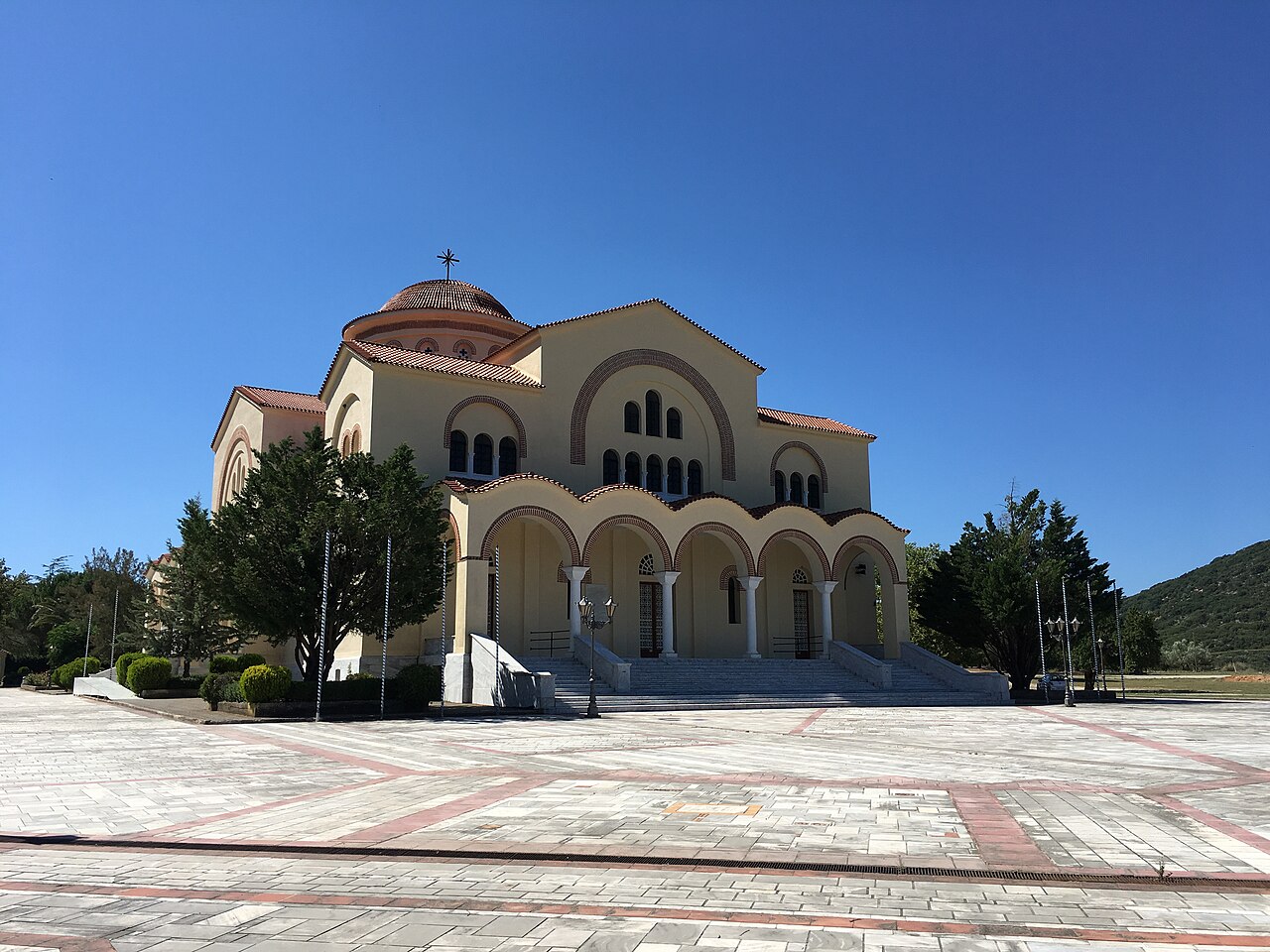
In the Omala valley, a short drive from Argostoli, the Monastery of Agios Gerasimos is the most important religious site on Kefalonia. Gerasimos, the island's patron saint, lived in the sixteenth century and founded a nunnery here; his relics are kept in the church and venerated by pilgrims, particularly on his feast days in August and October, when thousands arrive. The setting is calm: a walled compound of courtyards, a bell tower, a church with gilded icons, and gardens shaded by trees. A small cave nearby is traditionally linked to the saint's ascetic retreat. Visitors of all faiths are welcome if they dress and behave respectfully, and many come simply for the quiet and the sense of a place that has been in continuous use for centuries.
Dress modestly
Covered shoulders and knees are expected, and cloth wraps are sometimes available at the entrance. Photography may be restricted inside the church, so ask or follow the signs. Keep voices low, and avoid visiting during services unless you plan to take part. Opening hours vary through the year, so check locally.
The valley itself is lovely, with vineyards, olive groves, and views up to Mount Ainos. This is the heartland of Robola wine, so a stop at a local winery or taverna pairs well. The Castle of Saint George is also nearby, making a natural half-day circuit of history and countryside. The roads are quiet and attractive for drivers and cyclists.
Festival days are particularly vivid. Pilgrims arrive from across the island and beyond, and the compound fills with candles, music, and food. If you travel in August or October, expect crowds and traffic, but also a sense of living tradition. On ordinary days, the monastery is peaceful and almost empty in the early morning.
For those interested in the island's character, the monastery offers a view into Orthodox devotion and the way faith shapes daily life. It is free to enter, and a small donation or a candle is a respectful gesture. Plan an hour for the visit itself.
A visit pairs naturally with the wider story of the island's faith. Villages across Kefalonia hold small churches and shrines, and many of them host local festivals through the summer, with food, music, and dancing. If your dates coincide with one, attending is a memorable way to meet residents. Always ask before photographing people, and remember that the sites are active places of worship before they are attractions.
Remember that this is a working religious community, so give priority to those who are praying and avoid blocking doorways or aisles. Children are welcome but should be supervised and encouraged to speak softly. If you light a candle, follow the example of local visitors and place it in the sand tray provided.
Bring a bottle of water, since summer temperatures in the valley can be high, and plan some time to sit in the garden shade and let the stillness settle. Many travelers find this unhurried hour one of the most memorable of their trip, a counterpoint to beaches and boat trips.
Plan the timing with care, since the monastery is quiet at midday and in the early evening, and the surrounding villages are charming for a slow wander afterwards. A visit on a weekday morning, followed by lunch in a village taverna and an afternoon tasting at a nearby winery, is a rewarding way to see the interior, and gives a sense of the island away from the shore and the resorts.
What to expect
The experience
A quiet walk through the monastery courtyards, church, and gardens, with an optional cave visit.
Best time
Early morning or late afternoon; avoid feast days unless you want the festival.
How long
About an hour.
Tips
Dress modestly, keep voices low, and follow local signs on photography.
Quick picks
- Best for
- Culture lovers and quiet seekers.
- Families
- Fine for children who can be calm and respectful.
- Couples
- A reflective stop before a winery lunch.
- Pair with
- Castle of Saint George, Robola tasting, and Mount Ainos.
- Time needed
- An hour.
Good questions
Who was Saint Gerasimos?+
The island's patron saint, who lived in the sixteenth century and founded the nunnery.
When are the feast days?+
In August and October. The monastery is busiest then.
What should I wear?+
Covered shoulders and knees, and respectful behaviour.
Is there an entry fee?+
No, but a small donation or candle is customary.
Can I take photos?+
Often restricted inside the church, so follow signs.