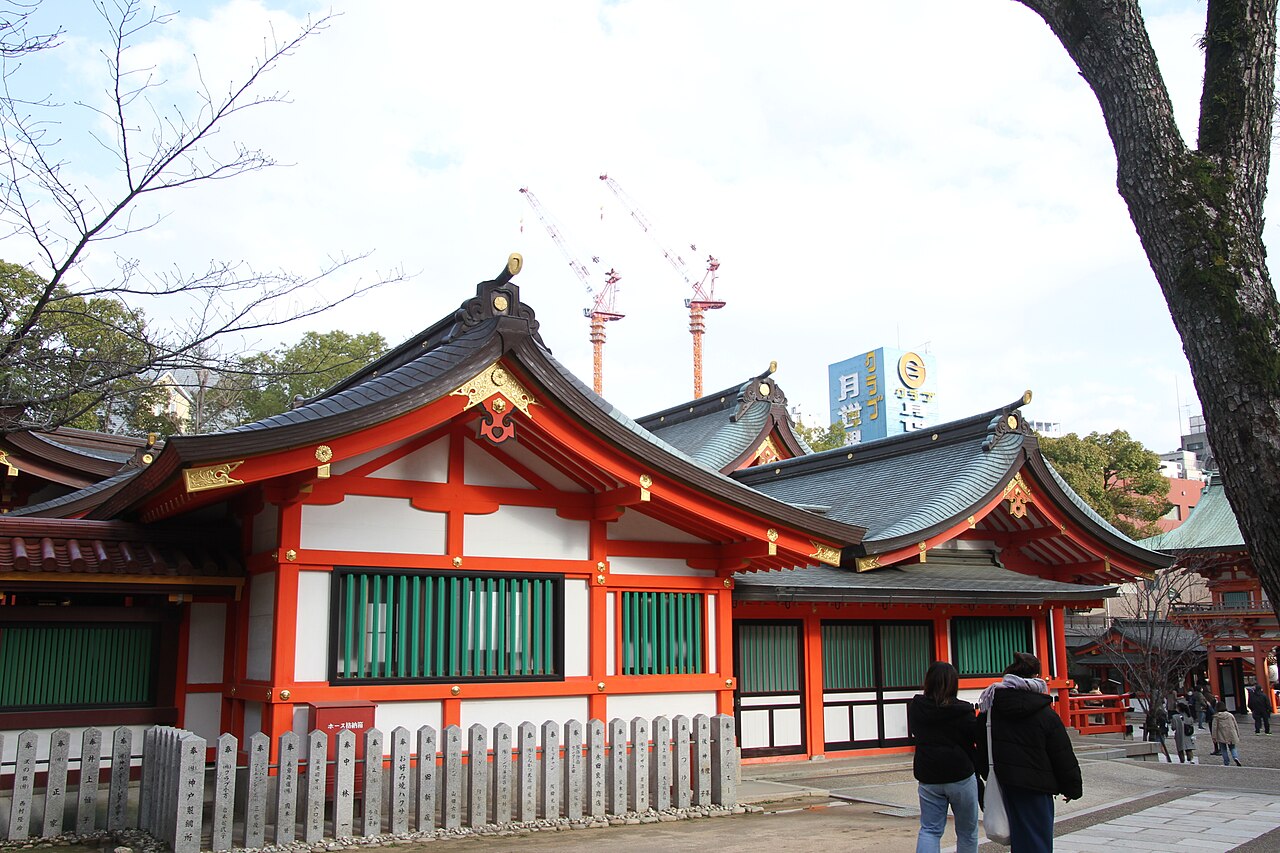
Ikuta Shrine stands in the middle of Kobe's busiest district, its vermilion buildings and wooded grounds a short walk from Sannomiya station and the shopping streets. The shrine is described as more than 1,800 years old, and the city's name is said to come from the families who served and protected its deities. For visitors it is both a pocket of calm and a living place of worship: people stop on their way to work to bow and pray, couples arrive for wedding photos and festivals bring crowds throughout the year. Entry to the grounds is free, and the visit takes less than an hour, so it fits easily into a morning before heading up to Kitano or down to the harbor. The shrine is known for good luck and matchmaking, and many visitors buy a small charm or write a wish on a wooden plaque. The contrast between the shrine's traditional buildings and the glass and neon of downtown is part of the appeal.
History and meaning give the visit depth. Ikuta is one of the old shrines of the Kansai region, and its forest, which sits unexpectedly in the middle of the city, is part of what makes it special. The main hall is built in a style typical of Shinto shrines, with a vermilion color that stands out against the greenery.
Visitors purify their hands at the water basin, bow at the gate, make an offering and pray with two bows, two claps and a final bow. If you are unfamiliar with the ritual, follow the locals or read the English signs.
How to visit
Enter through the main gate and walk the approach slowly. Photography is usually fine in the grounds but be respectful near people who are praying and during ceremonies. You may see wedding processions on weekends. The shrine sells charms and amulets in several designs and offers goshuin, the calligraphed stamp that many travelers collect in a special book. Opening hours for the shrine office and goshuin counter are limited, so go in the morning or early afternoon and check ahead if the stamp matters to you.
Pairing and timing
Ikuta Shrine is at the bottom of the slope that leads to Kitano, so a classic walking route goes from the shrine uphill to the foreigners' houses and the herb garden ropeway, ending with a view over the city. It is also near the Sannomiya shopping streets and the road to Nankinmachi, so you can add lunch in Chinatown. Early January, when the shrine is busy with first-visit crowds, and festival days are lively but crowded, while quiet weekday mornings are the best time for contemplation.
What to expect
The experience
A short self-guided visit to a vermilion shrine and its wooded grounds in the middle of Sannomiya, with optional charms and a goshuin stamp.
Best time
Weekday mornings for quiet; early January and festival days for atmosphere and crowds.
How long
Forty-five to sixty minutes.
Tips
Follow the bow, clap and pray custom, be respectful around ceremonies and go early if you want a goshuin stamp.
Quick picks
- Best for
- A quick cultural stop in the heart of downtown Kobe.
- Families
- Easy and free, with room to walk and a chance to explain shrine customs to children.
- Couples
- Quiet at the start of the day, with charms and a wooden wish plaque as a keepsake.
- Pair with
- Kitano foreigners' houses uphill, the Nunobiki ropeway or lunch in Nankinmachi.
- Time needed
- About an hour.
Good questions
Is Ikuta Shrine free to enter?+
Yes, entry to the grounds is free. Charms, amulets and goshuin stamps are sold at the shrine office for small fees.
How old is the shrine?+
It is described as more than 1,800 years old, which makes it one of the old shrines of the Kansai region. The name Kobe is said to come from the families who protected its deities.
How do I get there from Sannomiya station?+
It is a short walk north-west of Sannomiya station, roughly ten minutes through downtown streets. Signs and the vermilion gate make it easy to spot.
What is the proper way to pray?+
Bow at the gate, wash your hands at the basin, make an offering, then bow twice, clap twice, pray and bow once more. Watching locals is the easiest guide.
Can I get a goshuin stamp?+
Yes, the shrine office provides goshuin for a small fee, but counter hours are limited, so go in the morning or early afternoon.