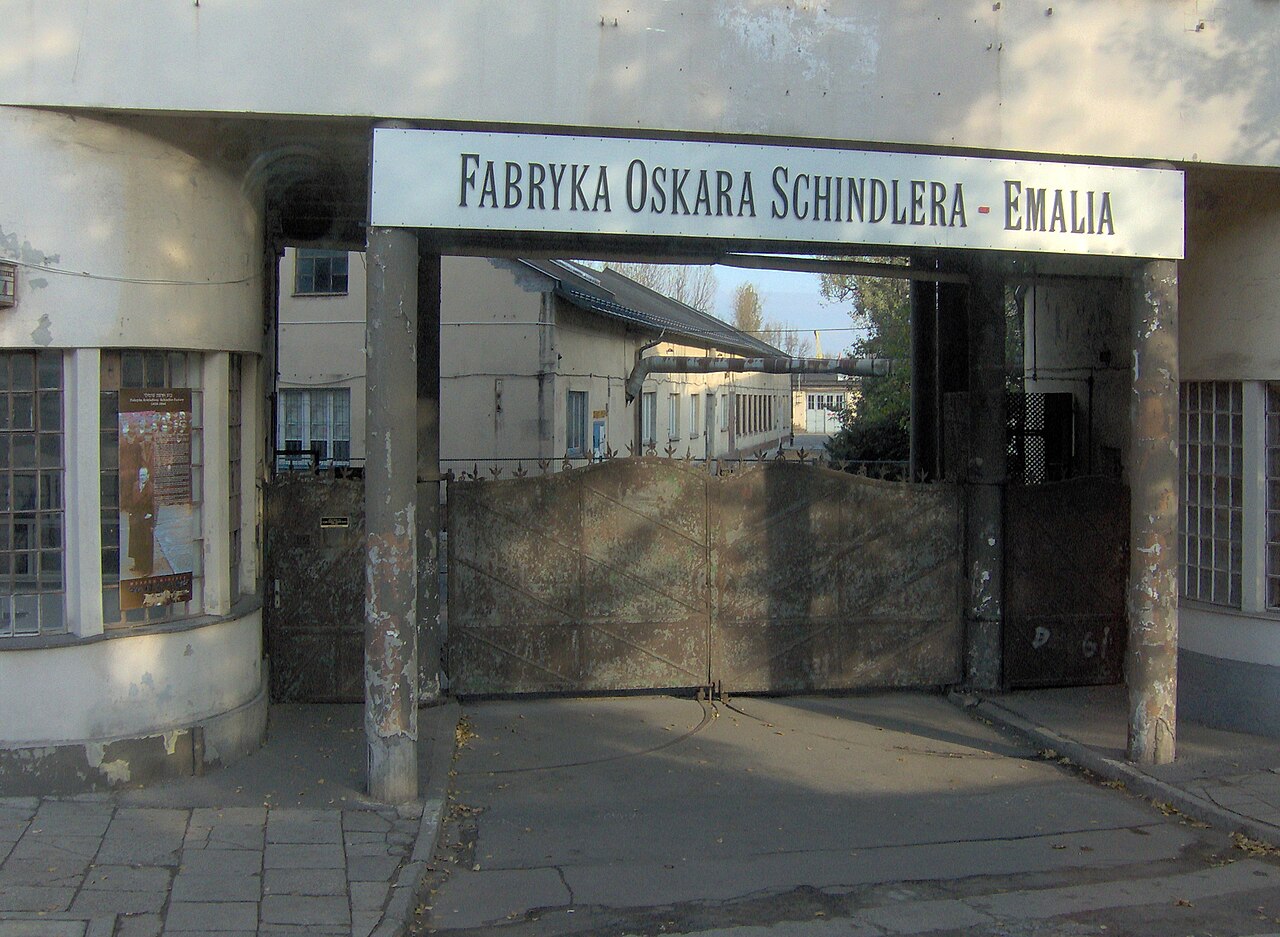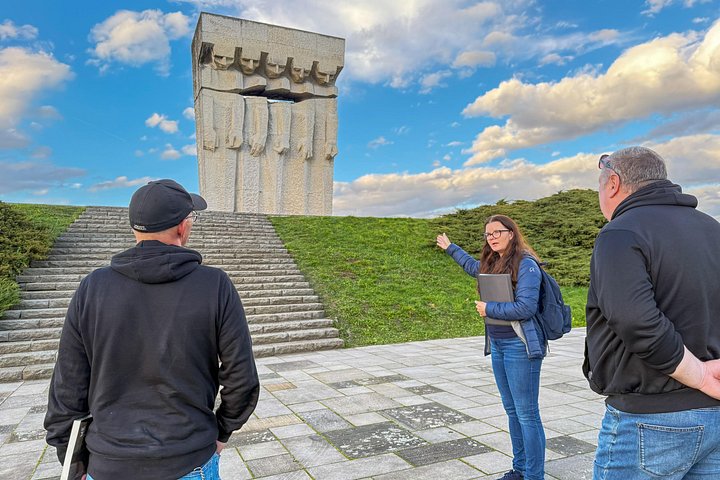
In March 1941 the German occupiers forced the Jewish population of Kraków into a walled ghetto in Podgórze, on the south bank of the Vistula. A guided walk through the district follows the story of that confinement and its end. The tour usually begins at Ghetto Heroes Square, where a memorial of large empty bronze chairs recalls the families who were deported through it, and continues past the Eagle Pharmacy, run by the Polish pharmacist Tadeusz Pankiewicz, who stayed inside the ghetto to help its residents and whose pharmacy is now a museum. Other stops include surviving fragments of the ghetto wall, the streets where residents lived and the sites connected to forced labour and deportation. The guide explains the sequence of events and the human stories behind the places, and the walk gives context for Schindler's Factory and the Płaszów camp.
This is a serious tour, and it is most meaningful for visitors who have already read a little about the city's wartime history or who plan to visit Schindler's Factory or the Płaszów memorial. The pace is deliberate, the groups are usually small, and the guide takes time to answer questions. Expect to walk for around two hours on mostly flat streets, with several stops at memorials and informational plaques.
Practical points
The walk is outdoors in all weather, so wear comfortable shoes and suitable clothing. Many sites are memorials, so keep voices low and photograph with sensitivity. The tour is not recommended for young children. If you want more detail on a specific site, the Eagle Pharmacy museum and Schindler's Factory are open to ticketed visits separately, and the Rynek Underground and the Kazimierz walk provide the earlier chapters of the city's Jewish history.
Who it suits
Travellers interested in twentieth-century history, those who want to understand the geography of the ghetto before visiting museums, and groups that prefer an outdoor, human-scale tour. A common plan is to combine this tour with Kazimierz in a single day, tracing the story from the prewar Jewish quarter to the ghetto, or to follow it with Schindler's Factory for the wartime story in detail. Leave time afterwards for a quiet coffee to absorb what you have heard.
Planning notes
Ghetto Heroes Square, formerly Zgody Square, was the assembly point for deportations, and the memorial installed in 2005 is made of seventy bronze chairs, some standing in the square and some on the pavement nearby. The Eagle Pharmacy was one of the few Polish-run businesses allowed inside the ghetto, and its owner, later honoured as Righteous Among the Nations, used it as a meeting place and source of help for residents. Fragments of the wall, shaped like Jewish gravestones, survive on Lipowa Street and Limanowskiego Street.
The district has changed greatly, and much of it is now lively residential and cafe space, which makes the history feel closer. Allow time between the walk and any museum visit to absorb what you have seen. Some groups prefer to begin in Kazimierz, to understand the prewar community, and walk across the river to Podgórze, following the route of the forced move. Ask the guide about the best order to see the sites on your day.
What to expect
The experience
A guided walking tour through the former ghetto district in Podgórze, with stops at memorials and historic sites.
Best time
Morning or afternoon, ideally before visiting Schindler's Factory.
How long
About two hours on foot.
Tips
Wear comfortable shoes, keep voices low at memorials and consider pairing with a museum visit.
Quick picks
- Best for
- Visitors who want to understand the wartime geography of the city.
- Families
- Better for older teens and adults; the subject is heavy.
- Couples
- A reflective walk best followed by a quiet coffee.
- Pair with
- Schindler's Factory and the Płaszów memorial.
- Time needed
- Two hours.
Good questions
Where does the tour start?+
Usually at or near Ghetto Heroes Square in Podgórze. Confirm the meeting point when you book.
What is the Eagle Pharmacy?+
A pharmacy in the former ghetto run by Tadeusz Pankiewicz, now a museum about life in the ghetto.
Is it suitable for children?+
Not recommended for young children because of the subject matter.
Do I need tickets for the sites?+
The walk itself is outdoors. Museums such as the Eagle Pharmacy need separate tickets.
How does it relate to Schindler's Factory?+
The factory is in the same district, and the walk gives helpful context before or after your visit.