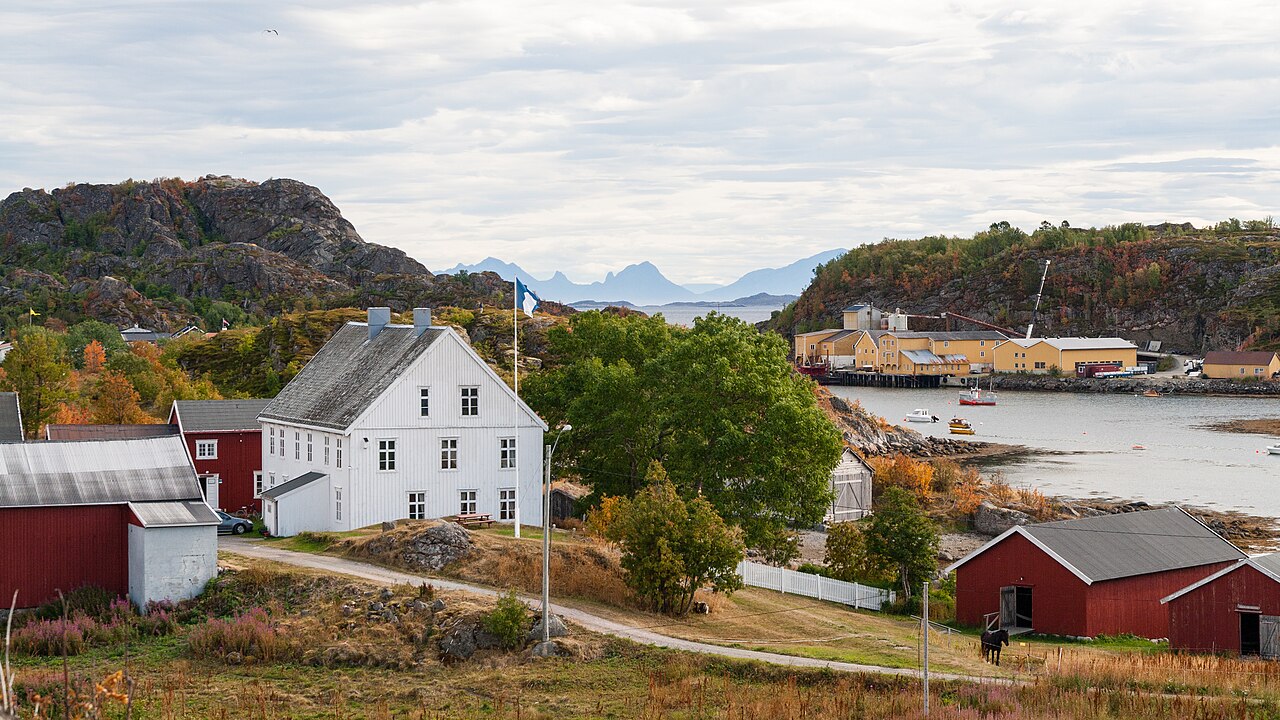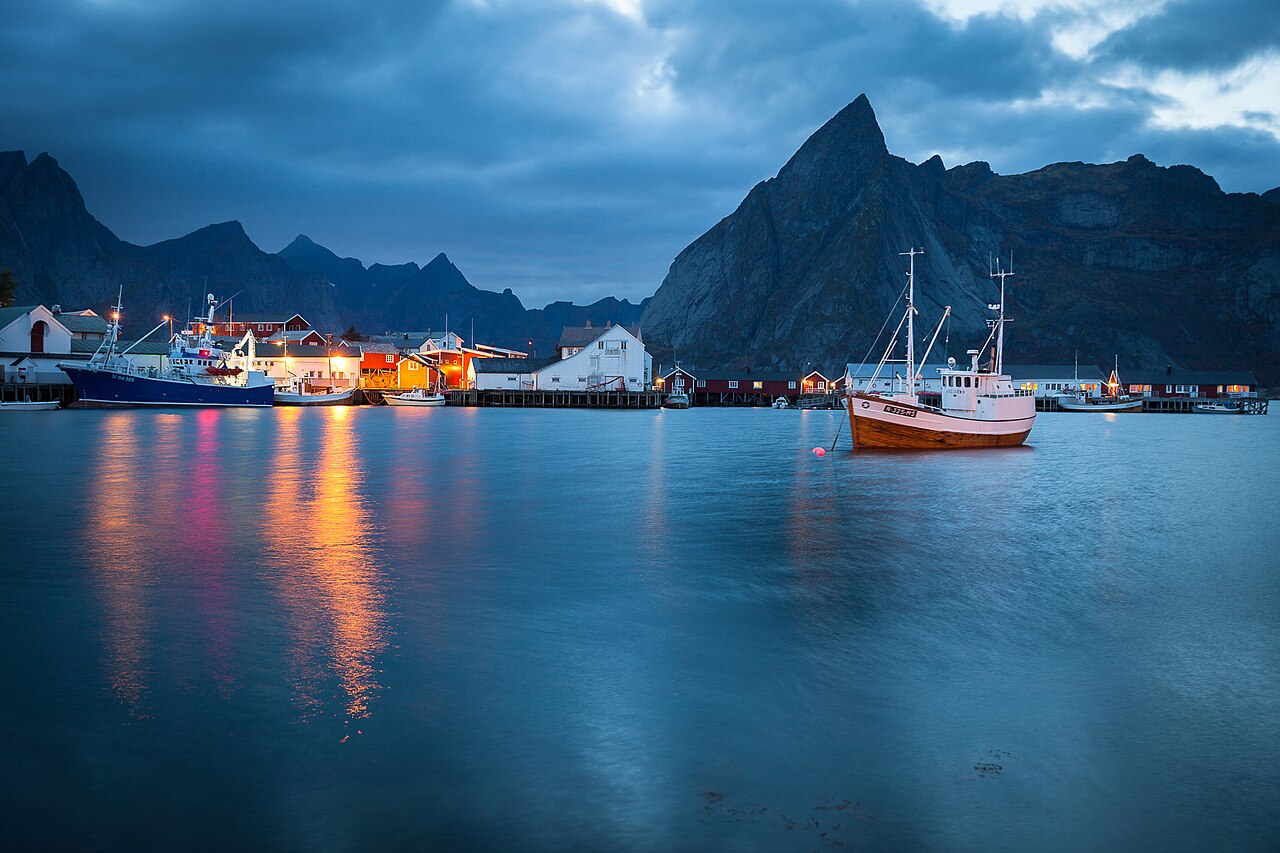
Å is the last village on the E10, and the Norwegian Fishing Village Museum occupies a large part of it. The preserved buildings include a boathouse, a cod liver oil factory, a tenant farmer's cottage, a smithy, a post office, a fisherman's cabin and a bakery, and together they tell the story of daily life in the Lofoten fishing season and through the rest of the year. The museum covers travelling fishermen, local families and the owner who led the community from around 1840 to 1960. It is one of the best-preserved fishing villages in northern Norway, so you are walking through a real settlement, not a reconstruction. In summer there are demonstrations of traditional crafts such as blacksmithing, cod liver oil steaming, paint making and textile work, and the bakery bakes bread and cinnamon rolls in a stone oven dating from 1878.
Why it is worth the drive
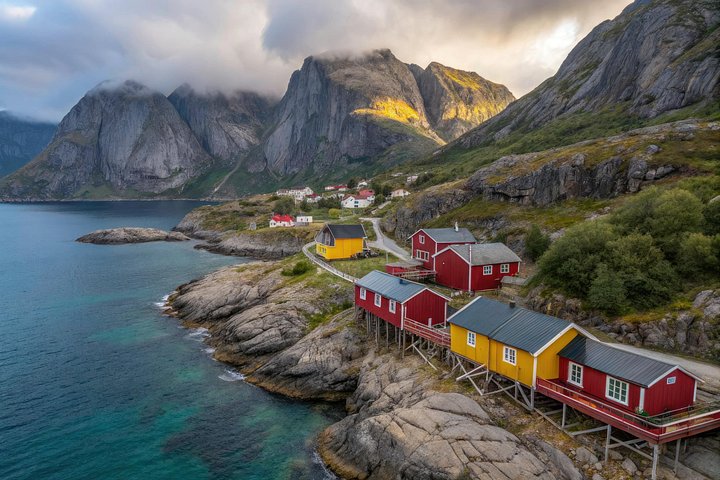
Most visitors see the red cabins from the road and never learn what they were for. Here the buildings are explained. You see the cod liver oil works that supplied a once-important product, the cabins where seasonal fishermen slept, and the smithy and boathouses that kept the fleet running. The visit gives the postcard scenery of Reine and Hamnøy a human history, and it makes the drying racks you see all over the islands make sense.
Practical details
The museum is open all year, but hours vary by season, so check the museum's own pages before you go. Tickets are ordered through the museum organisation, and the entry price is in the region of 150 kroner, but confirm it when you book. Parking is just past the tunnel, about a three-minute walk into the village, and there is a souvenir shop, public toilets and a cafe that is open daily in summer.
The bakery runs from June to the end of September. The site is described as child-friendly and accessible, which helps families.
How to use it in a plan: Å is the natural end point of a day driving the E10 from Svolvær or Leknes, so many visitors pair it with a coffee, a walk to the stockfish racks and a look at the headland. Allow one to two hours.
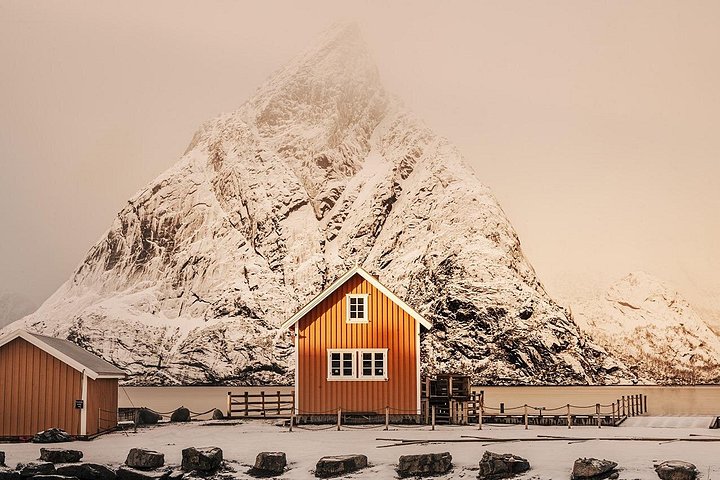
In winter the village is quiet, with fewer demonstrations and reduced cafe hours, but the buildings and the setting are as atmospheric as in summer, and the low light is kind to them. It is a strong choice for curious adults, school-age children and anyone who wants more than a photo stop.
What to expect
The experience
A walk through preserved village buildings: boathouse, cod liver oil factory, smithy, post office, fisherman's cabin and bakery.
Best time
Summer for craft demonstrations and the bakery; any season for the buildings and atmosphere.
How long
One to two hours, longer if you add the cafe and a walk around Å.
Tips
Check seasonal hours before driving, park past the tunnel, and plan a stop in Å at the end of an E10 day.
Quick picks
- Best for
- Visitors who want to understand the history behind the red cabins.
- Families
- Described as child-friendly, with real buildings and boats to explore.
- Couples
- A quiet, atmospheric stop at the end of the road.
- Pair with
- Reine and Hamnøy, the E10 drive and a kayak trip in Reinefjorden.
- Time needed
- One to two hours.
Good questions
Is the museum open in winter?+
The museum is open year-round, but hours vary by season. Check the museum's own pages for the current pattern before you travel.
What can I see inside?+
A boathouse, cod liver oil factory, tenant farmer's cottage, smithy, post office, fisherman's cabin and bakery, plus the story of the village owner and the fishing seasons.
Is there a cafe?+
Yes, a cafe is open daily in summer, and the bakery runs from June to the end of September, baking in an 1878 stone oven.
Where do I park?+
Just past the tunnel, about a three-minute walk to the centre of Å. There are public toilets and a souvenir shop.
How long should I allow?+
One to two hours is enough for the buildings and a walk around the village, and longer if you stop for the bakery or a cafe break.