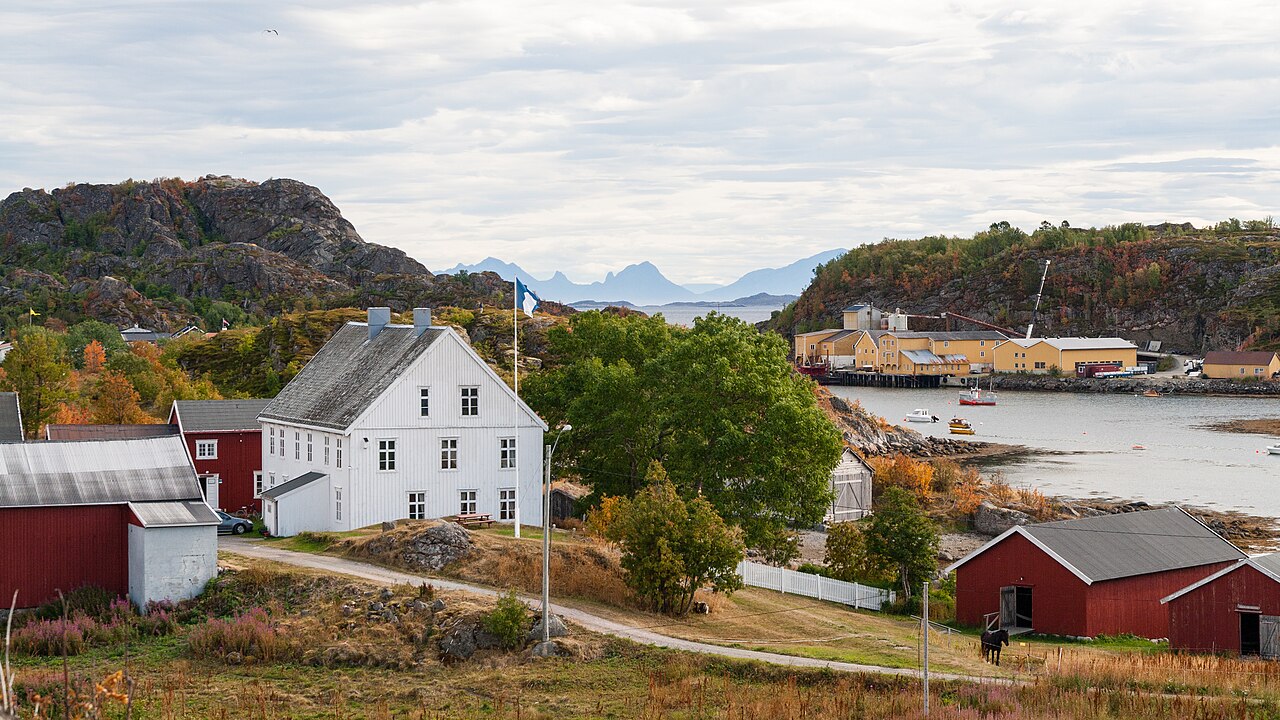
The Lofoten Museum tells the history of the Lofoten fisheries from a surprising angle: the home of the merchant. The manor house was completed in 1815 for Caspar Lorch, who traded and exported fish there and rented cabins to winter fishermen, and it stands on the site of the medieval town of Vágar. Beside it are the authentic rorbu cabins of the working fishermen, several boathouses holding a large collection of traditional wooden boats, a general store and a garden with historic perennials. The contrast between the manor and the cabins is the museum's best idea, and it shows how much of the fishing economy depended on a few trading families. It is a calm, thoughtful visit, and it adds depth to a trip that is otherwise about scenery.
What you will find
The main house is furnished to show how a wealthy trader lived, while the cabins and boathouses show the other side of the story, where hundreds of seasonal fishermen slept, stored gear and processed the catch. The wooden boats are a highlight for anyone who likes craftsmanship, and the general store gives a feel for how goods moved through the community. The setting, close to the water and surrounded by hills, is peaceful.
When it is open
Opening hours change by season. As a general pattern the museum is open every day in summer, on most days in spring and autumn, and on a reduced weekly schedule in winter, with some weekdays closed. A combination ticket is offered with nearby attractions, including the Lofoten Aquarium, the Otholith and the Espolin Gallery, all within walking distance. Check the museum's pages for the days that apply to your visit before you set out.
How to fit it in
It is a short drive from Svolvær, which makes it an easy half-day with the aquarium and the gallery, and a sound plan for a day when the weather keeps you off the mountains. Allow about an hour for the museum itself. It is best for adults and school-age children interested in history, and the boats and cabins give younger children something to see. If you want only one heritage museum on a short trip, choose this one for the story of trade and Å for the village itself.
What to expect
The experience
A manor house from 1815, rorbu cabins, boathouses with traditional wooden boats, a general store and a historic garden.
Best time
Summer for daily opening; off-season on its reduced weekly schedule, so check the days first.
How long
About an hour for the museum, longer with the combination ticket venues nearby.
Tips
Check which weekdays it opens in winter, and ask about the combination ticket that includes nearby attractions.
Quick picks
- Best for
- Visitors who want the story of the fishing trade, not only the scenery.
- Families
- Boats, cabins and a general store keep school-age children interested.
- Couples
- A calm, wet-weather hour near Svolvær.
- Pair with
- Svolvær town, the aquarium nearby and the Trollfjord safari.
- Time needed
- About an hour, or half a day with the combination ticket.
Good questions
Who built the manor house?+
The manor was completed in 1815 for Caspar Lorch, a merchant who traded and exported fish and rented cabins to winter fishermen.
Is it open in winter?+
Yes, on a reduced weekly schedule with some days closed. Opening hours vary by month, so check the museum's page before travelling.
Is there a combination ticket?+
A combination ticket covers the museum plus the Lofoten Aquarium, the Otholith and the Espolin Gallery, which are all within walking distance.
Where is it?+
Near Kabelvåg, a short drive from Svolvær, on the site of the medieval town of Vágar.
How long does it take?+
About an hour for the museum, or a half day if you also visit the nearby attractions.