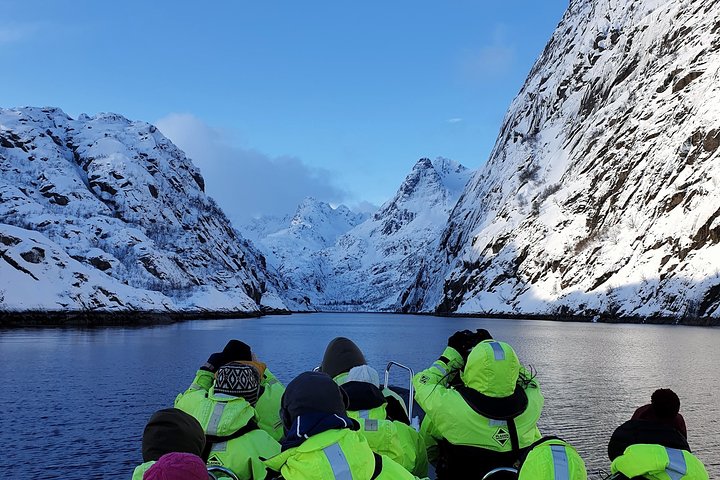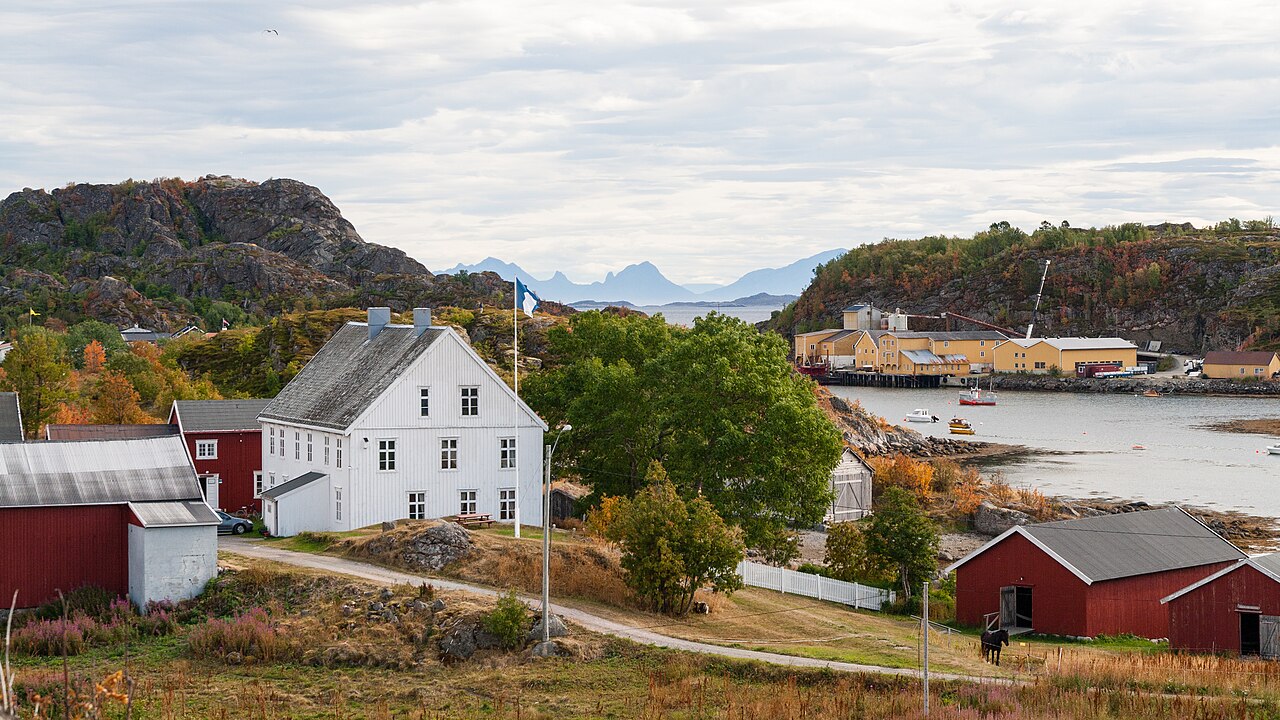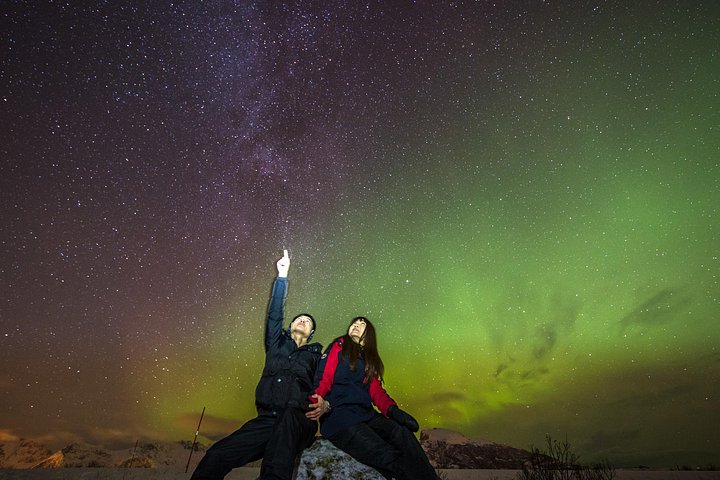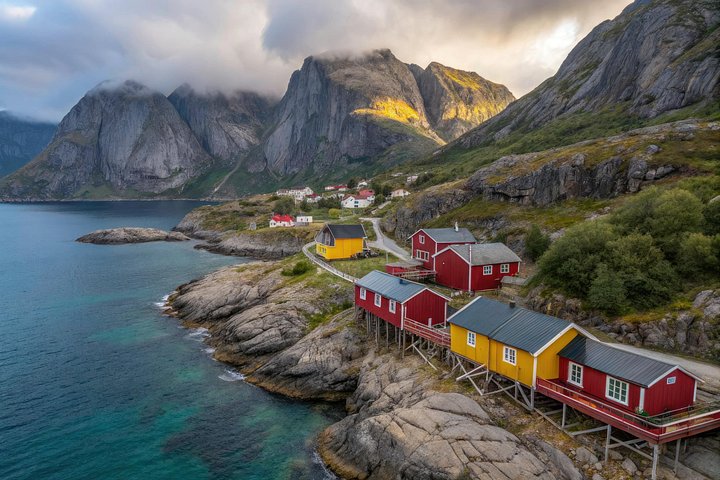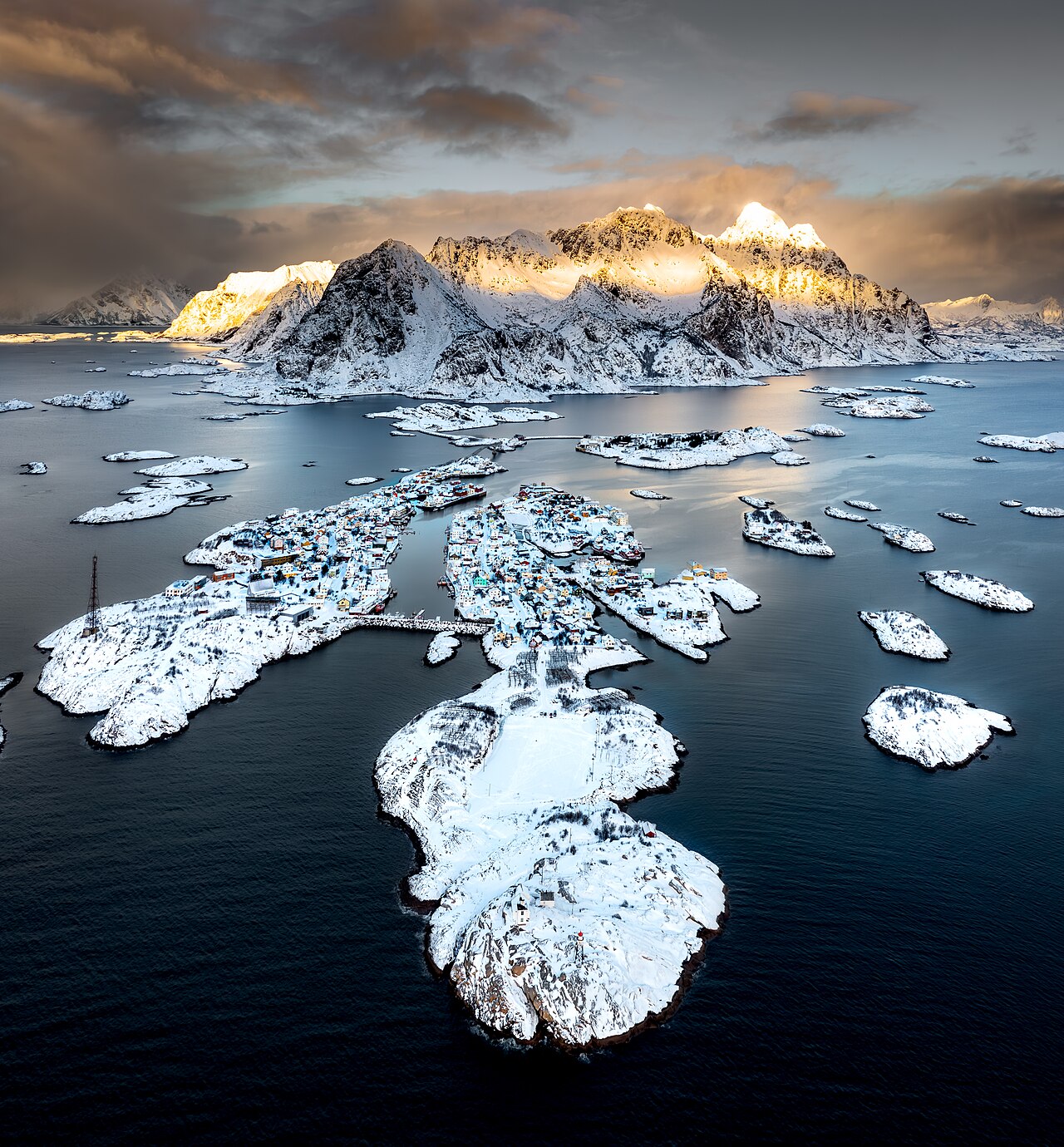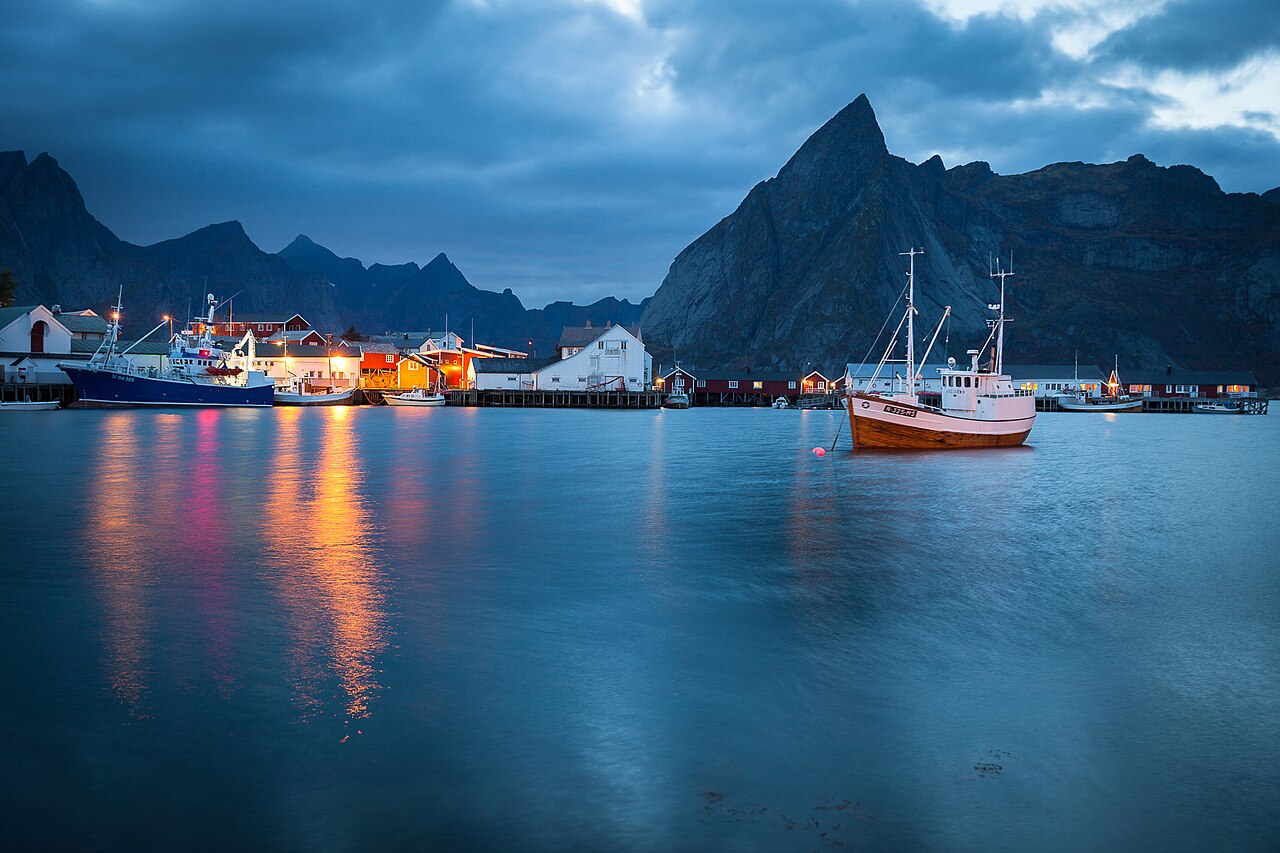
Svolvær is the main town of Lofoten and the place most visitors fly into, board the coastal steamer at or base themselves in. It is small by any city standard but busy by island standards, with a working harbour, shops, restaurants, a quayside with fishing boats, and the islet of Svinøya linked by a bridge and lined with old cabins. Above the town rises Svolværgeita, the Svolvær Goat, a twin-horned rock that is one of the best-known climbing summits in the islands. Climbers traditionally cross the gap between the two horns, a ritual that has made the peak famous. You do not need to climb it to enjoy it: from the harbour the horns stand out against the sky, and in clear weather the view from the road is enough. The town is also where many Trollfjord safaris, aurora tours and day trips start.
Walking the town
Start at the harbour, follow the quay past the boats and cross to Svinøya, where the old cabins and the sea views give the best sense of the fishing past. The town centre has everything you need for supplies, from groceries and outdoor gear to cafes and restaurants, and in the dark season the harbour lights reflect beautifully in the water. Art galleries and small shops fill gaps in the day, and the nearby museums and ice bar are within walking distance.
The Goat
The Svolværgeita climb is a serious route for experienced climbers, usually with a guide, and it should not be treated as a casual hike. The peak is visible from many points in town and from the road to Kabelvåg. For most visitors the pleasure is to look up at it, photograph it and imagine the exposure. If you want to approach on foot, ask locally about route conditions, and do not attempt the final section without climbing experience and gear.
Why it matters for planning
Svolvær is the logistics hub. It has the most hotel beds, the most restaurants and the departure points for the Trollfjord, so a night or two here makes sense at the start or end of a trip. It is also the cheapest and easiest place to buy supplies before heading to the quieter west.
In winter the town stays open and lively compared with the villages, which makes it the safest base for aurora trips when weather is poor. Treat it as a gateway with its own charm, and give it a half day, not a full one.
What to expect
The experience
A self-guided walk around Svolvær harbour and the Svinøya quarter, with the Svolværgeita peak above town.
Best time
Any season; clear days for the Goat, dark evenings for harbour lights and aurora departures.
How long
Two to four hours for a relaxed walk, shops and a meal.
Tips
Stock up on groceries before heading west, and do not attempt the Goat climb without a guide and experience.
Quick picks
- Best for
- A practical first or last stop with easy sights and good services.
- Families
- Easy walking, harbour boats and cafes suit most ages.
- Couples
- A harbour stroll and dinner before an aurora tour.
- Pair with
- Magic Ice Bar, Lofoten Museum and the Trollfjord safari.
- Time needed
- Half a day.
Good questions
What is Svolværgeita?+
The Svolvær Goat, a twin-horned rock above the town and a famous climbing summit in Lofoten.
Can I climb it?+
It is a serious route for experienced climbers, usually with a guide. Most visitors simply admire it from town.
Is Svolvær worth a stop?+
Yes as a hub: it has services, harbour atmosphere and the departure points for boat trips and aurora tours.
Is it free?+
Walking the town and looking at the peak is free. You pay for meals, tours and museums.
How do I get there?+
Svolvær has an airport, a coastal steamer stop and road links along the E10, and is about two hours by road from Reine.