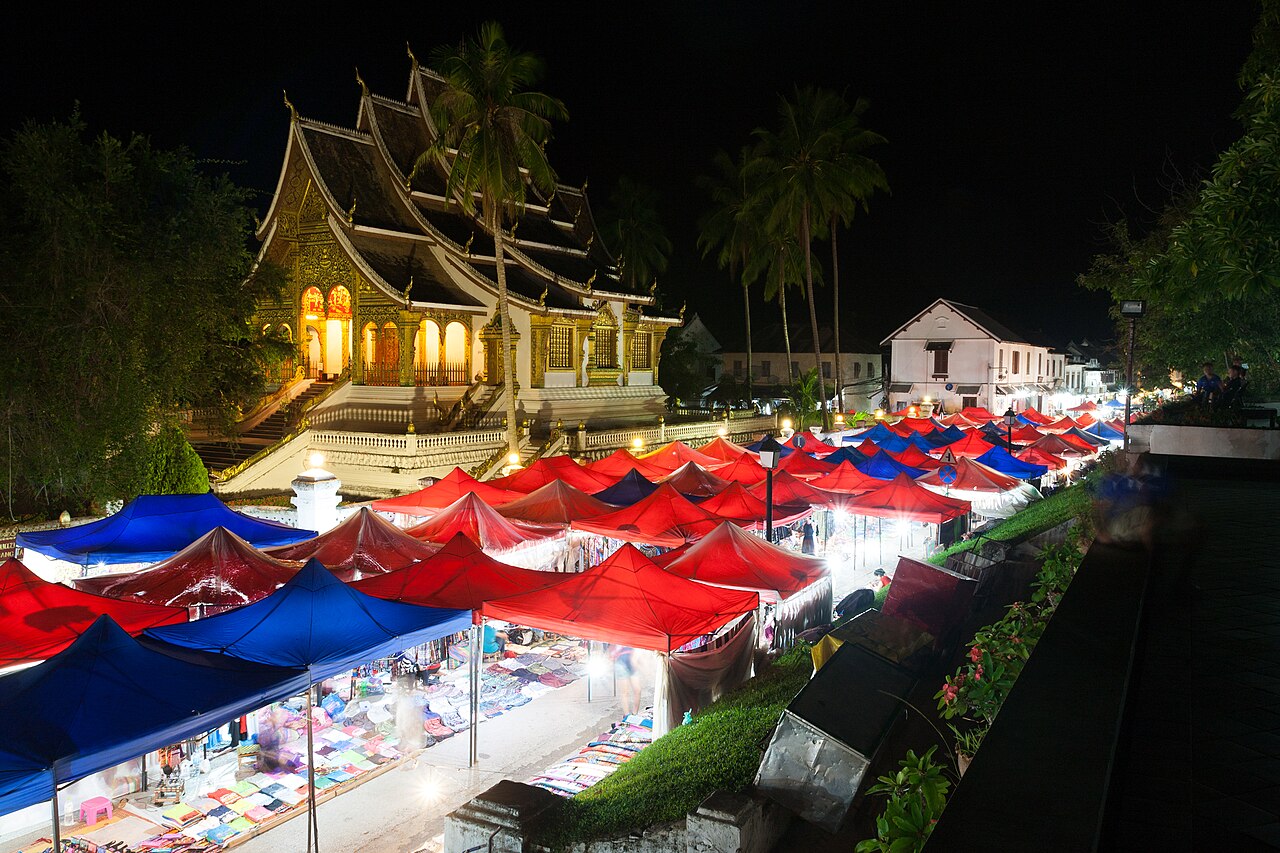
The Morning Market, called Talad Sao in Lao, is a narrow market lane tucked behind the tourism office, running parallel to the main street on the Mekong side of the old town. It opens at around six in the morning, just after the alms-giving ceremony ends, and it winds down by about half past ten, so it is a short, concentrated burst of local life. The stalls sell vegetables, herbs, fruit, fish from the river, meat, eggs, river weed, dried chillies and the pastes and sauces that make up Lao cooking, along with ready-to-eat snacks such as sticky rice, grilled sausages, sweet coconut pancakes and baguettes. Most of the shoppers are local cooks, monks' helpers and restaurant staff, and the atmosphere is friendly and unhurried rather than touristy. Entry is free, and it is a good place to eat a cheap breakfast, take photographs with permission and see ingredients before you try them in a cooking class. It takes about forty-five minutes to an hour to wander, and it is within easy walking distance of the Royal Palace Museum, the night market and most old town hotels. If you want a larger market that is more local still, the bigger Phosy Market on the edge of town sells everything from produce to household goods.
Go early, because the market has a short life. By mid-morning most of the best produce is gone, the lane is quieter and many vendors are packing up. A good plan is to watch the alms round at dawn, then walk straight to the market and arrive just as the stalls fill. You will see baskets of herbs, banana flowers, bamboo shoots, tiny aubergines, Lao chillies, fermented fish sauce and trays of buffalo skin and river fish that rarely appear on tourist menus.
Many items will be unfamiliar, so ask what something is called and how it is cooked, as vendors are usually happy to explain with gestures and a smile.
Eating here is part of the point. Look for stalls selling freshly grilled sticky rice parcels, Lao sausage, coconut pancakes, noodle soup, fried dough and steamed snacks wrapped in banana leaf, and eat where the turnover is high and the food is cooked in front of you. Coffee comes strong and sweet, often with condensed milk, and a baguette with fillings is a legacy of the French era.
If you are cautious about street food, choose cooked items served hot and avoid raw salads and ice at the start of your trip, then add more adventurous choices as you settle in.
Markets are also places to be considerate. Ask before taking photographs of people or their stalls, and do not photograph a vendor and walk away without buying something. Keep to the edge of the lane to let shoppers pass, carry small kip notes, and bargain only gently, since prices for food are low and margins are thin. Do not touch produce unless you intend to buy it, and be careful with bags in the narrow lane. Visitors are welcome, but this is a working place for locals first.
The market pairs naturally with a cooking class or a morning food tour, many of which start with a walk through the stalls to choose ingredients. If you are doing the alms ceremony, you can combine the two in about two hours and be back at your hotel for breakfast before the day heats up. Compare it with the night market, which is for shopping and evening food, and the larger Phosy Market, which is for everyday goods.
For most visitors it is the most authentic and inexpensive way to taste the town in the morning, and it makes a great contrast with the evening scene. Wear closed shoes in case of wet floors, bring a small bag, and allow time to sit down with a coffee and watch the lane fill up.
What to expect
The experience
A free walk along a narrow lane of produce, fish, meat and snack stalls, with plenty of ready-to-eat breakfast food, running from about six in the morning to mid-morning.
Best time
Right after the alms round, from around six to eight, when the stalls are full and the lane is busiest; most vendors pack up by about half past ten.
How long
Forty-five minutes to an hour, longer if you stop for breakfast.
Tips
Arrive early, carry small kip, ask before photographing people, eat where food is cooked fresh and hot, and wear closed shoes.
Quick picks
- Best for
- Food lovers and early risers who want to see local life and eat a cheap breakfast.
- Families
- Colourful and lively for children, but the lane is narrow and can be wet, so hold hands and wear closed shoes.
- Couples
- A shared breakfast of sticky rice, sausage and coffee after the alms round.
- Pair with
- The alms-giving ceremony before, then a cooking class or food tour.
- Time needed
- About an hour.
Good questions
What time does the Morning Market open and close?+
It opens around six in the morning, just after the alms round, and most stalls close by about half past ten. Go early for the best choice.
Where is the Morning Market?+
In a small lane behind the tourism office, parallel to the main street on the Mekong side of the old town, a short walk from the Royal Palace Museum.
What can I eat there?+
Sticky rice, grilled sausage, coconut pancakes, noodle soup, baguettes, fried snacks and fruit, all cooked or sold fresh. Choose hot, freshly cooked items first.
Is it free to enter?+
Yes, there is no entrance fee. Bring small kip notes for snacks, produce and coffee.
Is there a bigger local market?+
Yes, the Phosy Market on the edge of town is larger and sells everything from produce to household goods, with a more local feel.