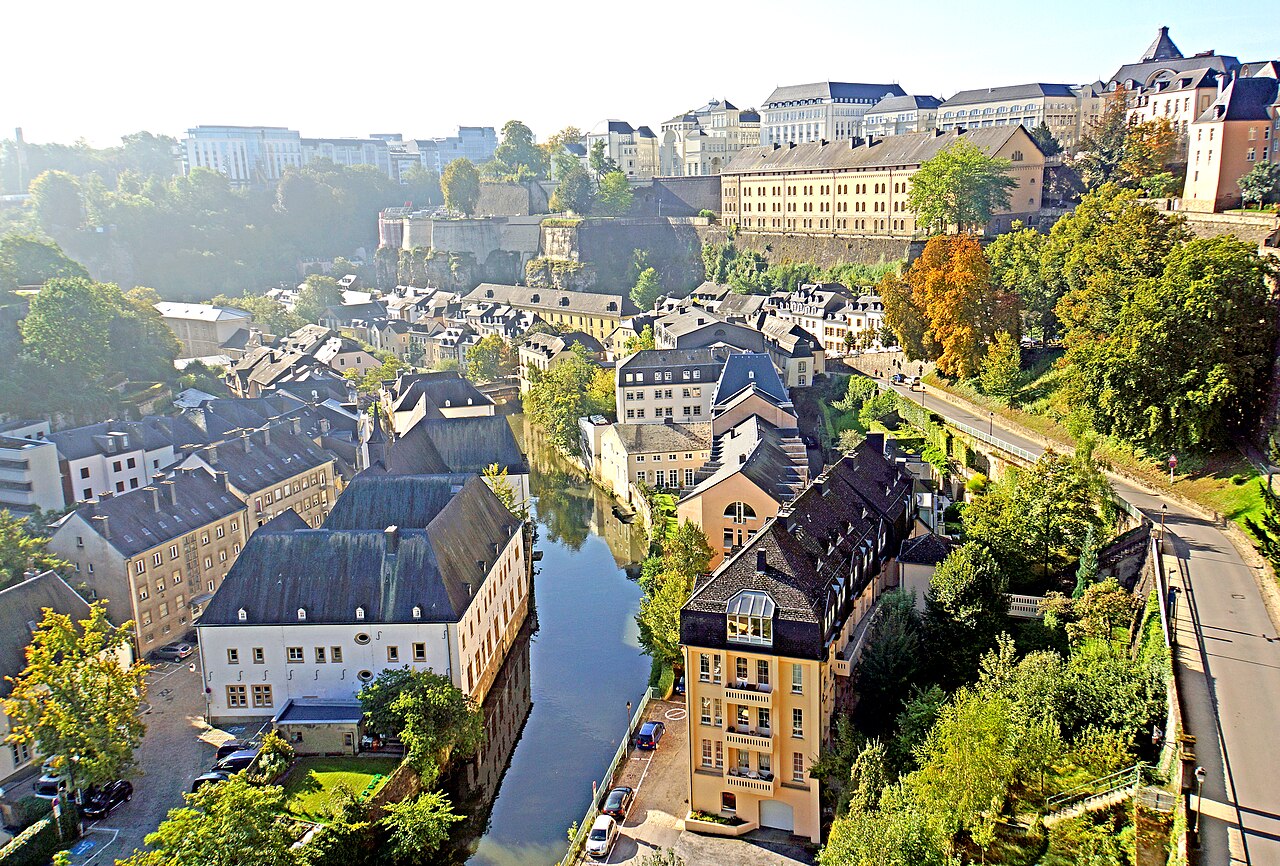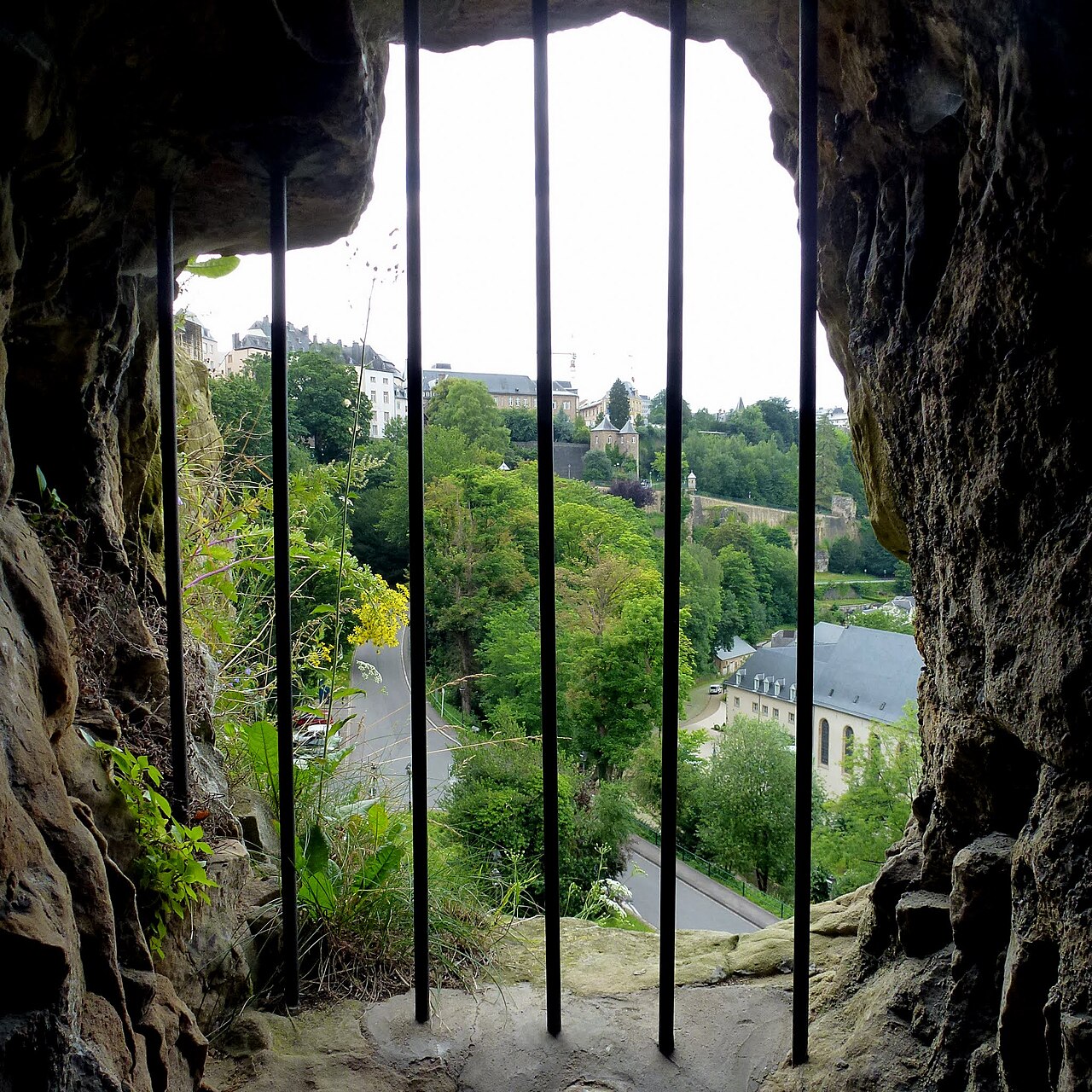
The Pétrusse is a small river that has carved a deep, winding valley through the centre of Luxembourg City, separating the old upper town from the station district to the south. Over the centuries the valley was a moat, a defensive line and a place of industry; today it is a long ribbon of lawns, flower beds, tree-lined paths and viewpoints that gives the city much of its character. The most famous crossing is the Adolphe Bridge, a graceful double stone arch completed in 1903 that links the old town with the new districts and frames one of the best views in the capital. Further along the valley you pass the Passerelle, an older viaduct, and the Casemates of the Pétrusse, part of the defences that once guarded the southern approaches. Walking the valley floor gives you a very different angle on the city from the Corniche, with cliffs and fortress walls rising above the path on both sides.
How it works
The valley is a public park, free to enter at any time, with paths that run along the river and up to the viewpoints on both rims. There is no ticket and no fixed route. The simplest plan is to start on the upper town side near the Place de la Constitution, where the golden figure of Gëlle Fra stands on her tall column, a memorial to Luxembourgers who fought in the First World War, then walk down to the valley floor and follow the paths beneath the bridges.
The tourist office also offers guided walks of the valleys in season.
What to expect
The walk is gentle on the valley floor and steeper where paths climb back to the rim. Spring brings blossom and summer brings flower displays, while autumn colours reward a late afternoon walk. The Adolphe Bridge is at its best from below, where you can see the full sweep of its arches against the sky, and from the upper deck, where the view runs down the gorge towards the towers of the old town.
Cyclists share some of the paths, and you will also see joggers, picnickers and families feeding the ducks. Benches are plentiful, and a few cafés and kiosks are close to the rim.
Getting there
The valley is in the middle of the city and easy to reach on foot from the Place d’Armes, the station or the Corniche. Several points have lifts or stairs between the rim and the floor. The City Train and the e-bike rental both run through the valley, so if you want the views without the climbs, you can combine them with a walk.
Making the most of it
A good half-day loop starts at the Place de la Constitution, drops to the valley floor, passes beneath the Adolphe Bridge and climbs back to the old town by the stairs near the Passerelle. In the evening, the bridges are lit and the valley is quiet, which makes a good counterpoint to a day spent in museums.
Families will like the open lawns, and photographers will find the light is best in the early morning or an hour before sunset. Wear comfortable shoes, since paths are partly cobbled and slopes can be slippery after rain. If the weather turns, the nearby museums are a short walk away.
What to expect
The experience
A self-guided walk through a green gorge, beneath bridges and fortress walls.
Best time
Early morning or the hour before sunset, in spring for blossom or autumn for colour.
How long
About ninety minutes to two hours at an easy pace.
Tips
Wear shoes with grip, since paths can be slippery after rain, and look back at the Adolphe Bridge from below.
Quick picks
- Best for
- A free, scenic walk that shows the city’s gorges and bridges up close.
- Families
- Open lawns, benches and ducks make it easy with children; watch the slopes.
- Couples
- Quiet paths and lit bridges in the evening.
- Pair with
- The Corniche, the Place d’Armes and the City Train.
- Time needed
- A relaxed half-day with a coffee stop.
Good questions
Is the Pétrusse Valley free to visit?+
Yes, it is a public park open at all times with no ticket needed.
What is the Adolphe Bridge?+
A double stone arch bridge completed in 1903 that links the old town with the southern districts.
Who is Gëlle Fra?+
The golden woman on a tall column at the Place de la Constitution, a memorial to Luxembourgers who fought in the First World War.
How long does a walk take?+
About ninety minutes to two hours for a loop from the Place de la Constitution, plus stops.
Is it suitable for pushchairs?+
Parts of the valley floor are fine, but slopes and stairs make some sections hard; check the route first.