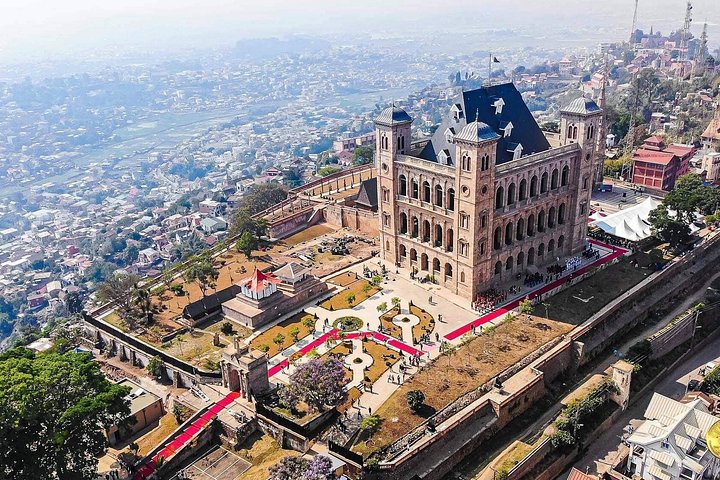
Ambohimanga is a hill about half an hour's drive north of Antananarivo that the Merina people have long regarded as sacred. For generations it was both a fortress and a spiritual centre, the place where kings were associated with the founding of the highland kingdom, and it is recognised by UNESCO as a World Heritage property. A walled compound crowns the summit, entered through narrow stone gateways that were once sealed at night by rolling a huge stone disc across the opening. Inside you find modest wooden royal houses, enclosures for ceremonies, old trees that are still treated with reverence and terraces with long views over the surrounding countryside. The atmosphere is quieter and more contemplative than the capital below. Local guides explain the symbolism of the sites, the royal customs and the taboos that are still respected by many Malagasy visitors, for whom the hill is a place of pilgrimage as well as a monument. The contrast with the busy Rova in the city is useful: the Rova shows the palace of the later monarchy, while Ambohimanga gives a feel for the older, more defensive and more sacred side of royal life. The visit is short enough to fit into a morning or afternoon, which is why most travellers combine it with other sights in the capital.
Plan the visit around the hill's practical details. The drive from central Antananarivo can be slow because of traffic on the way out of the city, so allow about an hour each way at busy times and start early if you want to combine the hill with a city tour. The site has an entrance fee and visits are normally guided, with the guide explaining the history as you walk between the gateways, houses and sacred places.
Paths are cobbled and uneven, and there are steps, so wear shoes with grip. Check opening hours with your driver or tour operator, because access can change and some areas may be closed on certain days or for ceremonies.
Respect for local custom matters here. Many Malagasy people come to Ambohimanga to honour their ancestors, so dress modestly, keep voices low, ask before photographing people and follow your guide's advice about which areas are off limits or require removing shoes or hats. Your guide will point out the sacred trees, the royal bath and the spot where the kings are said to have held audiences, and will explain why certain objects may not be brought on to the hill.
Treat the explanations as the real attraction, since the buildings themselves are simple and the meaning is in the stories.
The best conditions are in the dry months, when paths are firm and the views are clear, although mist on the hilltop in the cooler season gives the compound an atmospheric feel. During the rains, expect slippery stone and sudden showers, so carry a light waterproof layer. Pair the hill with the Rova, the Lemurs' Park or a walk through the Upper Town for a full day of highland history, and keep some cash for the entrance fee, small tips and craft stalls near the entrance.
Allow a little extra time for the views. From the terraces you can look across the highland landscape of terraced paddies and red-brick villages, which helps explain why the site was chosen for defence, and the quiet around the old trees is a welcome change after the city. If you are short of time, a morning visit leaves the afternoon free for the Rova or a stroll through the Upper Town.
What to expect
The experience
A guided walk through the walled compound, its gateways, royal houses and sacred places, with a short drive from Antananarivo.
Best time
Morning, for clearer air and fewer visitors, in the dry months.
How long
About two hours on the hill plus the drive each way.
Tips
Dress modestly, wear shoes with grip, carry some cash for the entrance fee and follow your guide on areas that are off limits.
Quick picks
- Best for
- History lovers and anyone who wants the cultural side of the highlands.
- Families
- Short and varied, with plenty to explore, though paths are uneven and the history suits older children best.
- Couples
- A calm, atmospheric half day away from the traffic of the capital.
- Pair with
- Pair it with the Rova of Antananarivo and the Lemurs' Park for a full day.
- Time needed
- Allow half a day including the drive.
Good questions
Where is Ambohimanga?+
It is on a hill about half an hour's drive north of central Antananarivo, though traffic can lengthen the journey.
Why is Ambohimanga important?+
It is a fortified royal hill associated with the Merina kings and still a sacred place for many Malagasy people. It is a World Heritage property.
Do I need a guide?+
Visits are normally guided, and the guide explains the history, the symbolism and the local customs that visitors are expected to respect.
Is it suitable for children?+
Yes for most children, although the paths are cobbled and uneven and the stories are best appreciated by older children.
How long does the visit take?+
Allow about two hours on the hill and half a day in total including the drive from the capital.