The Tsiribihina River winds across western Madagascar toward the Mozambique Channel, and a journey by boat down its length is one of the country's classic travel experiences. Travellers drift past rice fields, fishing villages, sandbanks, cliffs and herons, stopping to walk to waterfalls and camp on the riverbank under a vast sky. The pace is slow and the river is the road, which makes it a welcome contrast with the long, bumpy drives that dominate most of the island. Tours begin in the town of Miandrivazo or nearby and end near Belo-sur-Tsiribihina, from where the journey continues by road toward Morondava. The Kirindy forest is the wildlife finale. This dry deciduous forest near Morondava is known for the fosa, a lithe, cat-like predator that is the largest carnivore on the island, as well as for several kinds of lemur, including tiny nocturnal mouse lemurs and the giant jumping rat. Most animals are seen on night walks with a local guide, using a torch with a red filter, and daytime walks reveal sifakas, chameleons, birds and reptiles. The forest is a very different habitat from the eastern rainforest, and the contrast is part of the appeal.
The trip is best arranged as a multi-day tour with an operator. The river descent is usually part of a longer itinerary of five days or more, covering the journey from the highlands, the boat trip, a visit to the Kirindy forest and a stop at the Avenue of the Baobabs.
Accommodation is simple, often in tents or basic lodges, and meals are prepared by the crew. Ask the operator about the exact route, the comfort level of the boats and what is included, such as park fees, guides and meals, and bring a sleeping layer for cool nights.
The river trip is relaxed but not luxurious. Expect sun, wind and dust on the water, so bring a hat, sunglasses, sun protection and a light layer. Insects can be a nuisance at dusk, so carry repellent. Pack valuables in a dry bag and keep your camera protected from splashes. The boats usually travel in daylight, with stops for walks and swimming where the guide considers it safe, and the crew will advise on local customs and where to camp.
Timing is crucial. The dry season, roughly April to October, is the best time for the river and the forest, because water levels are manageable, roads are open and wildlife is easier to see. The wet season brings heavy rain, flooded tracks and sometimes closures, so check access before you commit.
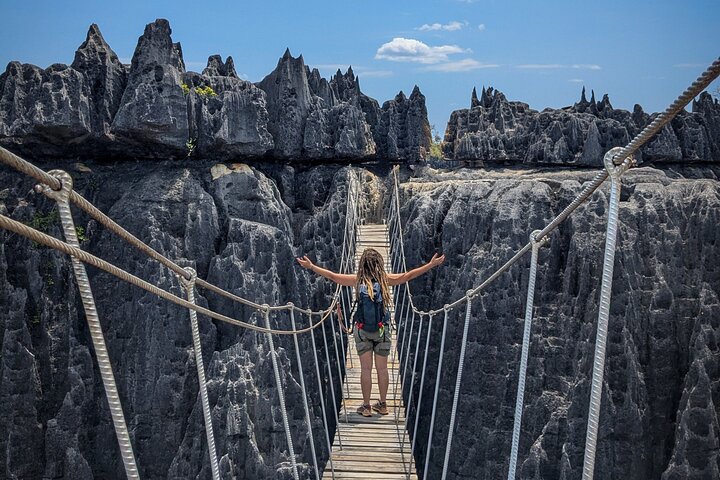
Wildlife viewing is never guaranteed, even at Kirindy, but patient night walks usually turn up some of the smaller nocturnal species. Combine the journey with the Tsingy de Bemaraha and the Avenue of the Baobabs for the full west-coast circuit, and allow slack for delays on the road.
Above all, bring patience and a sense of humour. Delays, dust and simple conditions are part of the experience, and the rewards are the quiet of the river, the stars over the camp and the thrill of a torchlit walk in the forest. Travel light, pack in soft bags and keep a small first-aid kit, and tell the operator about any medical needs or allergies before departure.
What to expect
The experience
A guided multi-day trip with a boat journey down the river, simple camping or lodges and walks in the Kirindy forest, including a night walk.
Best time
The dry season, roughly April to October.
How long
Five days or more from Antananarivo.
Tips
Bring sun protection, a dry bag, repellent and a warm layer for cool nights, and confirm what the tour includes.
Quick picks
- Best for
- Adventurous travellers who want a slow river journey and dry-forest wildlife.
- Families
- Better for older children who are comfortable with camping and long days.
- Couples
- A memorable, away-from-it-all journey, though comfort is basic.
- Pair with
- Pair it with the Avenue of the Baobabs and the Tsingy de Bemaraha.
- Time needed
- Allow five days or more.
Good questions
What is the Tsiribihina River trip?+
A slow boat journey down a river in western Madagascar through villages, cliffs and farmland, usually combined with camping and walks.
Will I see a fosa at Kirindy?+
The fosa is elusive. Sightings are never guaranteed, but night walks at Kirindy reveal other nocturnal species such as mouse lemurs.
How comfortable is the trip?+
Accommodation is simple, often tents or basic lodges, and meals are prepared by the crew. Ask your operator for details.
When is the best time to go?+
The dry season, roughly April to October, when water levels and roads are most reliable.
Can I combine it with the Tsingy?+
Yes. The river and Kirindy are commonly linked with the Avenue of the Baobabs and the Tsingy de Bemaraha in a west-coast circuit.