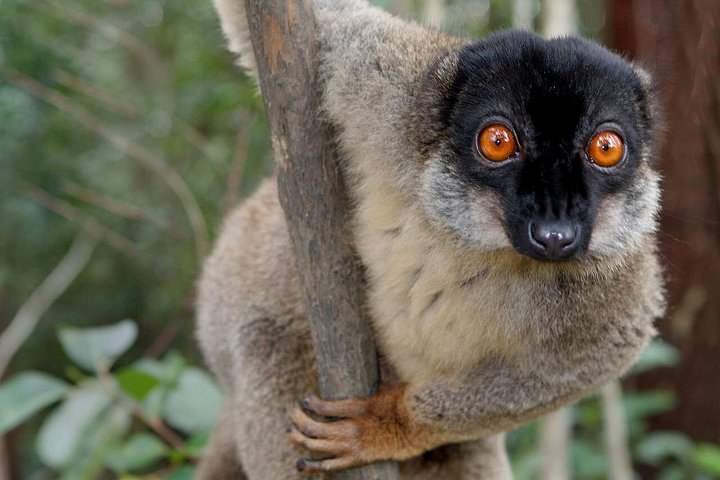
Lokobe National Park occupies the southeastern tip of Nosy Be and protects some of the last remaining native lowland rainforest on the island. Most of Nosy Be has been cleared for sugar cane, ylang-ylang and other crops, so Lokobe feels like a window onto what the island once looked like. Visits usually begin with a short trip by outrigger canoe, called a pirogue, from a village on the coast, followed by a guided walk on forest trails under tall trees, ferns and hanging vines. The main attraction is the black lemur, whose males are black and females chestnut, but guides also look for chameleons, geckos, snakes, frogs and birds along the way. The walk is a rewarding contrast with the beaches and boat days that dominate a Nosy Be stay. You are in a humid forest, with the sounds of insects and birds overhead, and the guide is the key to the experience, because many animals are perfectly camouflaged and are found only by someone who knows where to look. Several visits end with a Malagasy lunch in a village, which adds a cultural element to the nature outing, and the canoe trip itself, gliding past mangroves on calm water, is a highlight for many travellers.
Practical planning makes the day smoother. Lokobe is a short drive from the main tourist areas of Nosy Be, and most visitors go with a guide or tour that arranges the transfer, the canoe and the park guide. The walk is generally moderate, with some uneven and muddy ground, so wear closed shoes with grip, long light trousers and a hat, and carry water and insect repellent. Binoculars are useful for birds and for lemurs high in the canopy. A zoom lens helps with photography because the light under the trees is low.
Wildlife viewing is never guaranteed, but black lemurs are commonly seen on this kind of walk, and guides also point out small reptiles that are easy to miss, including tiny leaf chameleons and camouflaged geckos on the bark. Guides may show you the nocturnal sportive lemurs resting in tree holes during the day.
Keep your distance from the animals, never feed them and follow the guide's instructions on noise and where to step. The park fee and the guide are normally part of a tour, and it is worth asking the operator exactly what is included.
Timing affects comfort. The rainy season brings heavy showers and mud, and the sea crossing can be choppy, so confirm conditions with your hotel before you go. The drier months are generally easier for walking and for the canoe trip. Pair Lokobe with a boat day to Nosy Komba and Nosy Tanikely for a mix of forest and sea, or arrange a combined tour, and keep a small amount of cash for tips, drinks and local crafts.
Keep the experience in perspective. Lokobe is a small park, and the pleasure lies in the quiet walk, the canoe ride and the chance to watch lemurs going about their day, not in covering distance. Take your time at each stop, listen for movement in the leaves and let the guide set the pace, since the best sightings often come when the group is still and silent. Leave nothing behind and take any rubbish out with you.
What to expect
The experience
A guided forest walk on foot after a short outrigger canoe trip, often finished with a Malagasy lunch in a village.
Best time
Morning, when animals are most active and the forest is cooler, in the drier months.
How long
Four to six hours including the canoe trip and the walk.
Tips
Wear closed shoes with grip, carry water and repellent, bring binoculars and follow your guide on where to step.
Quick picks
- Best for
- Wildlife lovers staying on Nosy Be who want a forest day to balance the beaches.
- Families
- Good for active children who enjoy canoes and looking for animals, though the trails can be muddy.
- Couples
- An unusual shared outing, with a canoe ride and a village lunch.
- Pair with
- Pair it with the Nosy Komba and Nosy Tanikely boat day.
- Time needed
- Allow half a day, or a full day with lunch.
Good questions
Where is Lokobe National Park?+
It is on the southeastern tip of Nosy Be and is normally reached by a short outrigger canoe trip from a coastal village.
Which animals can I see?+
Black lemurs are the main draw, along with chameleons, geckos, snakes, frogs and birds. Sightings are never guaranteed.
Do I need a guide?+
Yes, a park guide is used for the walk and is usually included in a tour. Guides are the reason you find camouflaged animals.
How hard is the walk?+
It is generally moderate, with uneven and sometimes muddy ground. Wear closed shoes with grip.
When is the best time to go?+
The drier months are easier for the walk and the canoe trip. The rainy season brings mud and a choppier sea.