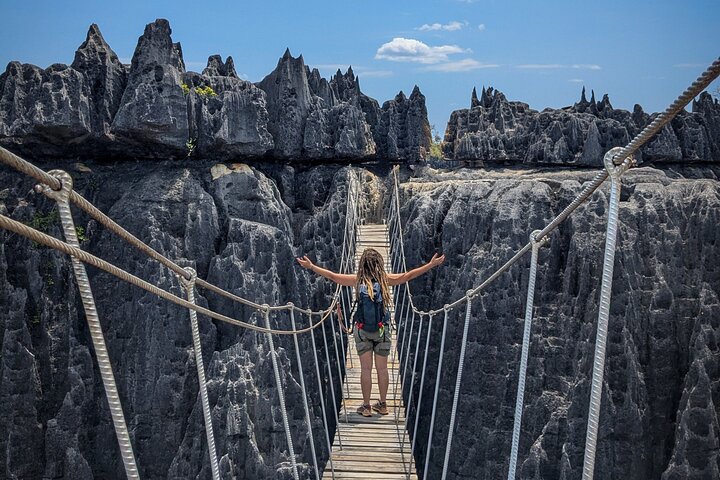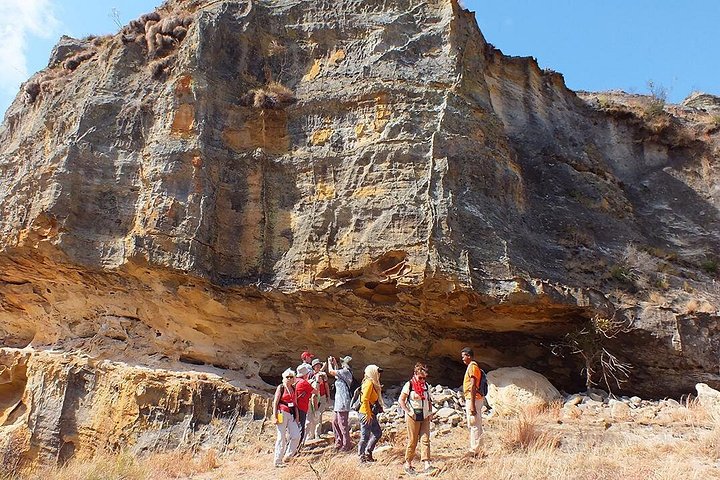
The Red Tsingy are an eroded landscape in the far north of Madagascar, not far from the city of Diego Suarez, also known as Antsiranana. Unlike the grey limestone needles of the Tsingy de Bemaraha, these formations are made of soft red and ochre rock that has been carved by rain into fluted pinnacles, ridges and knife-edged walls. A short walk leads to a viewpoint on the rim, and a path descends into the canyon, where you walk among the formations at the bottom. The colours change with the light, and the stone glows orange and pink when the sun is at the right angle. Because the site is small and close to a city, it is among the easiest ways to see a tsingy landscape in Madagascar, and it makes a good half-day outing for those who cannot make the long trip to the west. The rock is soft and crumbles easily, which is why it is important to stay on the marked paths and not climb the walls. The formations are constantly changing, with each rainy season reshaping the edges, and guides explain how the process works. The drive to the site passes villages, farmland and views of the surrounding hills, adding a sense of the region.
Getting there is simple with a guide or driver. The site lies a drive of about an hour or more from Diego Suarez on a road that can be rough, and tours normally include transport and a local guide. The walk is short, but the paths can be steep and loose, so wear closed shoes with grip and carry water.
The sun is strong in the canyon, so bring a hat and sun protection. There is a small entrance fee at the site, and it is worth asking the operator whether it is included in the tour price.
The best time of day is usually late morning to early afternoon, when the sun is high enough to light the canyon floor and bring out the red and orange tones. Early and late visits are quieter but darker inside the canyon. The rainy season can make the access road muddy and the paths slippery, so the drier months are generally the best choice.
Ask your operator about conditions, and consider combining the Red Tsingy with a swim at one of the nearby bays or with a visit to Amber Mountain for a fuller day in the north.
Remember that this is a fragile site. Stay on the paths, do not climb the walls and take your rubbish with you. Local guides can show you the best viewpoints for photographs and explain the geology, and tipping is appreciated. Because Diego Suarez is also a gateway to a lively region of bays, baobabs and national parks, allow a few days in the north and not just a single outing, and plan your onward flights or road journeys with plenty of slack.
Plan some time for the surrounding region. The road passes farmland, small villages and open countryside, and a driver will often stop at viewpoints for photographs. The north of Madagascar is hotter and drier than the highlands, so keep a bottle of water within reach and wear light, breathable clothing, and give yourself a relaxed lunch or a swim afterwards to round off the outing.
What to expect
The experience
A half-day guided trip by road from Diego Suarez, with a short walk to the rim and down into the canyon.
Best time
Late morning to early afternoon, when the sun lights the canyon floor, in the drier months.
How long
About half a day including the drive each way.
Tips
Wear closed shoes with grip, carry water and sun protection and stay on the marked paths.
Quick picks
- Best for
- Photographers and landscape lovers in the north of Madagascar.
- Families
- A short walk that older children enjoy, though paths are steep and loose in places.
- Couples
- A striking backdrop and an easy half day.
- Pair with
- Pair it with Amber Mountain National Park for a full day in the north.
- Time needed
- Allow half a day including the drive.
Good questions
What are the Red Tsingy?+
They are eroded formations of soft red and ochre rock near Diego Suarez in northern Madagascar, carved into pinnacles and ridges by rain.
Are they the same as the Tsingy de Bemaraha?+
No. The Tsingy de Bemaraha are grey limestone in the west, while the Red Tsingy are soft red rock in the far north.
How long does the trip take?+
A half day from Diego Suarez, including a drive of an hour or more each way.
Is the walk difficult?+
It is short, but the paths are steep and loose in places. Wear closed shoes with grip.
When is the best time to visit?+
Late morning to early afternoon for the colours, and in the drier months when the road and paths are firmer.